Vietnam has a large and varied aesthetic treatment market, particularly in Ho Chi Minh City, Hanoi and Da Nang. Clinics offer everything from basic facials and hydrating skin treatments to injectable procedures, medical lasers, microneedling and cosmetic surgery.
There is no single treatment that can objectively be called the best. The right option depends on the concern being treated, your skin, medical history, expectations, budget and tolerance for downtime. Some treatments are primarily cosmetic services, while others are medical procedures that require appropriate clinical assessment and expertise.
This guide looks at some of the most commonly sought aesthetic treatments in Vietnam, what they are generally used for and what to check before booking.
1. Botulinum toxin injections
Botulinum toxin injections are commonly used to temporarily soften expression lines caused by muscle movement. Typical treatment areas include forehead lines, frown lines between the eyebrows and crow's feet around the eyes.
The American Academy of Dermatology explains that botulinum toxin works by temporarily relaxing targeted muscles. Results are not permanent, and the effect commonly lasts around three to four months, although this varies between people and treatment areas.
In Vietnam, botulinum toxin injections are offered by dermatology, aesthetic medicine and plastic surgery providers. Hospitals such as FV Hospital also publicly list botulinum toxin among their non-surgical aesthetic services.
Before treatment, ask:
- Which botulinum toxin product will be used?
- Is the product authorised for the intended use in the relevant market?
- Who will perform the injections?
- What medical qualifications does the injector have?
- How many units are planned?
- What result is realistically expected?
- What are the risks and possible adverse effects?
Botulinum toxin injections are medical procedures. The American Academy of Dermatology stresses that safe injection requires detailed knowledge of facial anatomy.
Seek urgent medical care if symptoms such as significant difficulty swallowing or breathing develop after a botulinum toxin treatment.
2. Hyaluronic acid dermal fillers
Dermal fillers are injectable materials used to add volume, modify facial contours or soften certain lines and folds. Hyaluronic acid fillers are among the most widely used types.
Common treatment areas can include:
- Lips
- Cheeks
- Chin
- Jawline
- Nasolabial folds
- Selected facial contouring areas
Results are temporary and vary according to the product, injection site, amount used and individual patient factors.
Fillers should not be treated like a routine beauty service. The US Food and Drug Administration warns that accidental injection of filler into a blood vessel can cause serious complications, including tissue damage, visual impairment, blindness or stroke.
Before booking filler treatment in Vietnam, ask for the exact product name and manufacturer. You can also ask to see the unopened product packaging before injection.
Avoid choosing a provider solely because it advertises inexpensive filler per millilitre. Injector training, product authenticity, anatomical knowledge and the ability to recognise and manage complications are much more important considerations.
3. Laser treatments for pigmentation and sun damage
Laser and light-based treatments are widely offered by dermatology and aesthetic clinics in Vietnam. Different systems may be used for concerns including pigmentation, uneven skin tone, sun spots, vascular lesions, scars, unwanted hair and signs of photoaging.
The American Academy of Dermatology notes that lasers can be used for several skin concerns, including age spots, wrinkles, acne scars and some types of pigmentation. However, different laser wavelengths and devices have different indications.
This means that asking simply for a "laser facial" is not enough. Before treatment, find out:
- What condition is being treated?
- What device and wavelength will be used?
- Why is that device suitable for your skin?
- How many sessions may be needed?
- How much downtime is expected?
- What is the risk of temporary or persistent pigmentation changes?
This is particularly relevant in Vietnam's sunny climate. After many laser procedures, careful sun protection becomes an important part of reducing unwanted pigmentation and supporting recovery.
4. Laser treatment for acne scars
Acne scar treatment is a common reason people visit aesthetic dermatology clinics. Depending on the type and depth of scars, treatment may involve fractional lasers, microneedling, subcision, chemical peels, fillers or combinations of techniques.
The American Academy of Dermatology emphasises that acne scars are not all the same and that treatment should be selected according to the scar type.
Laser treatment can make certain scars less noticeable, but it does not simply erase them. Improvement may also require multiple sessions.
Before paying for a laser scar package, ask whether the clinician has assessed whether your scars are:
- Ice pick scars
- Boxcar scars
- Rolling scars
- Raised scars
- A mixture of several types
A generic package may not address every scar type equally well.
5. Microneedling
Microneedling creates controlled microscopic injuries in the skin using small sterile needles. The treatment is also known as collagen induction therapy.
According to the American Academy of Dermatology, dermatologists use microneedling for concerns including acne scars, uneven skin texture, large pores, dark spots, fine lines and some other types of scarring.
Microneedling may be performed alone or combined with other treatments. Some clinics also offer radiofrequency microneedling, which delivers energy through needles at controlled depths.
The distinction matters because ordinary microneedling and radiofrequency microneedling are not the same treatment and have different devices, risks and costs.
Ask:
- Who performs the procedure?
- Is a sterile single-use needle cartridge used?
- What needle depth is planned?
- Is radiofrequency energy involved?
- What problem is the treatment intended to improve?
- How much redness or downtime should you expect?
Microneedling that penetrates the skin should be approached as a medical or clinical procedure rather than something to perform casually in an unregulated environment.
6. Chemical peels
Chemical peels apply controlled chemical solutions to the skin to remove layers of damaged surface cells. They vary from superficial treatments with limited downtime to deeper medical peels requiring substantially more recovery and clinical supervision.
Depending on the formulation and depth, chemical peels may be used for:
- Uneven pigmentation
- Acne-related concerns
- Rough texture
- Fine lines
- Sun-damaged skin
The word "peel" covers treatments of very different strengths. A light spa peel is not equivalent to a medium or deep medical chemical peel.
Ask for the chemical being used, its concentration, expected depth and recovery period. People with darker skin tones may have a greater risk of post-inflammatory pigmentation after inappropriate or overly aggressive treatments, so individual assessment is important.
7. Hydrafacial and hydradermabrasion treatments
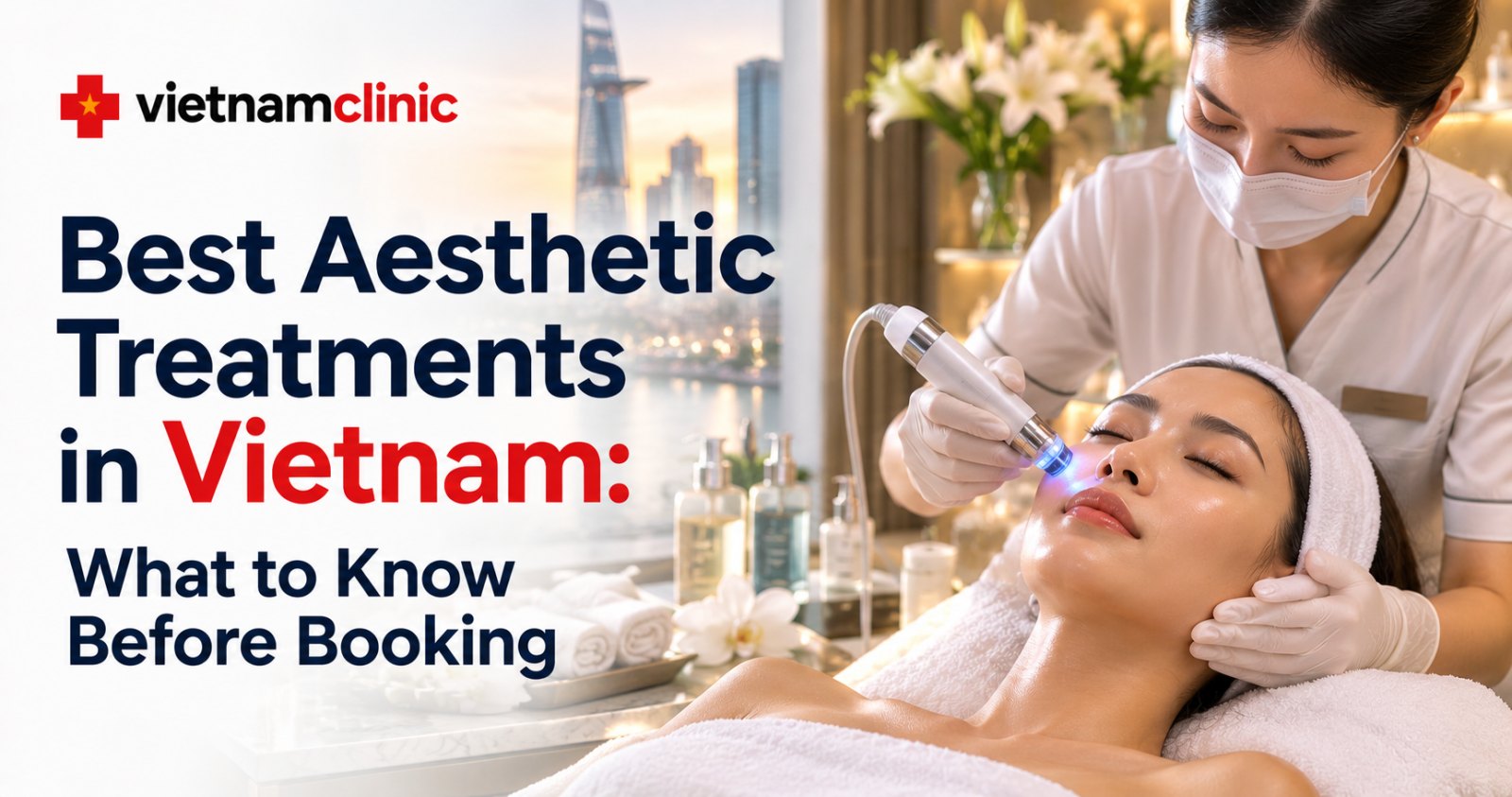
Hydradermabrasion treatments are popular in Vietnamese beauty and aesthetic clinics because they generally require little or no downtime.
The best-known branded example is Hydrafacial, which combines cleansing, exfoliation, extraction and application of topical solutions using a specialised device.
These treatments are generally aimed at temporary improvements in hydration, surface texture and appearance rather than major structural changes to the skin.
Before booking, check whether the clinic is offering the actual branded Hydrafacial treatment or using "hydrafacial" generically to describe another hydradermabrasion system.
For people who primarily want a low-downtime facial before an event or during a trip, this type of treatment may be more practical than an aggressive laser or peel.
8. Skin boosters and injectable hydration treatments
Skin boosters are increasingly common on aesthetic clinic menus in Vietnam. The term generally refers to small injections of products intended to improve skin hydration or texture rather than provide the volume associated with traditional fillers.
However, "skin booster" is a broad marketing term rather than one single medical product.
Different clinics may use:
- Hyaluronic acid formulations
- Polynucleotide products
- Combination injectable products
- Other branded formulations
Do not choose an injectable simply because it is described as a skin booster. Ask for the exact product, ingredients, manufacturer, intended use and evidence supporting the treatment.
Any product injected through the skin also introduces medical considerations such as infection, bruising, allergy and vascular complications depending on the substance and technique.
9. Radiofrequency skin tightening
Radiofrequency devices deliver controlled energy to tissue and are used in various aesthetic treatments aimed at skin tightening or rejuvenation.
The category includes substantially different technologies. Some treatments deliver energy from the skin surface, while radiofrequency microneedling introduces needles into the skin before delivering energy.
Treatment results vary and may be gradual rather than immediate.
Before booking, ask for the device name and whether the treatment is:
- Non-invasive radiofrequency
- Fractional radiofrequency
- Radiofrequency microneedling
- Another energy-based procedure
The US Food and Drug Administration notes that aesthetic devices can produce unwanted effects and that results are not guaranteed simply because a device is marketed for cosmetic purposes.
10. Intense pulsed light treatments
Intense pulsed light, usually called IPL, is not a laser. It produces broad-spectrum light that can be used for certain pigmentation, vascular and hair-related concerns.
IPL is frequently marketed as a general photofacial, but its suitability depends on the condition and skin characteristics.
Ask what the practitioner intends to treat and whether IPL is appropriate for your skin tone and recent sun exposure. Tanned skin can affect the safety of some light-based treatments, making this especially relevant for travellers spending time outdoors in Vietnam.
11. Laser hair removal
Laser and light-based hair reduction is widely available in Vietnamese aesthetic clinics and beauty centres.
Treatment usually requires several sessions because hairs respond differently depending on their growth phase. The effectiveness and risks also depend on factors including hair colour, skin tone and the technology used.
Before purchasing a multi-session package, confirm:
- Which device is used
- Whether it is a laser or IPL system
- Who operates the device
- How many sessions are estimated
- The interval between sessions
- Whether maintenance treatments may be needed
- What happens if you move or leave Vietnam before completing the package
For expatriates, package validity can be as important as the advertised discount.
12. Medical facials and acne-focused treatments
Not every aesthetic treatment needs to involve injections or energy devices.
Dermatology clinics may offer treatment plans combining appropriate skin care, comedone extraction, chemical exfoliation and prescription or non-prescription products for acne-prone skin.
The important distinction is between treating an actual dermatological condition and receiving a cosmetic facial.
Persistent inflammatory acne, severe acne or acne that is causing scarring deserves medical assessment rather than repeatedly receiving facials without a diagnosis or treatment plan.
Which aesthetic treatment is best for your concern?
The most appropriate treatment depends on what you actually want to improve.
Fine lines caused by facial movement
Botulinum toxin may be considered for certain dynamic wrinkles, particularly in areas such as the forehead, between the eyebrows and around the eyes.
Loss of facial volume or contour
Dermal fillers may be considered for selected patients when additional volume or structural contouring is the goal.
Pigmentation and sun spots
Depending on the diagnosis, options may include topical treatment, chemical peels, lasers or light-based procedures. Not every dark spot should automatically be treated with a laser.
Acne scars
Options can include microneedling, fractional laser, subcision, chemical peels or combinations of techniques. The correct choice depends heavily on scar type.
Uneven texture and mild signs of aging
Microneedling, selected laser treatments, chemical peels or other resurfacing procedures may be discussed depending on the skin and desired downtime.
Hydration and temporary skin refreshment
Hydradermabrasion and conventional facial treatments generally involve less downtime than medical resurfacing procedures, although their effects are also more limited.
What to check before choosing an aesthetic clinic in Vietnam
Aesthetic clinics in Vietnam range from medical dermatology and plastic surgery centres to spas and beauty salons. The distinction becomes particularly important when treatment involves needles, prescription products, medical devices or invasive procedures.
The American Academy of Dermatology notes that cosmetic procedures may appear simple but can require detailed medical knowledge of the skin and underlying anatomy to perform safely.
Before booking a medical aesthetic treatment, check:
- Who will perform the procedure
- Their medical qualification and relevant training
- Whether the facility provides the type of medical service advertised
- The exact product or device being used
- Whether the product packaging can be shown before treatment
- Expected results and realistic limitations
- Common and serious risks
- Expected downtime
- Number of sessions required
- Complete cost
- Follow-up arrangements
- What happens if you develop a complication
Credentials, clinicians, products, prices and available technologies can change, so confirm these details directly with the provider.
For more general guidance, see How to Choose an English-Speaking Clinic in Vietnam and What to Check Before a Medical Appointment in Vietnam.
Be cautious with very cheap injectables
Large price differences deserve investigation, particularly for fillers and botulinum toxin products.
The FDA has previously warned about counterfeit versions of injectable cosmetic products. Counterfeit or improperly handled injectables can create risks that have nothing to do with the skill of the injection technique itself.
Before an injectable treatment, ask to see:
- Product name
- Manufacturer
- Packaging
- Expiry date
- Batch or lot information where available
For fillers, ask how much product will be used and whether the syringe is opened specifically for you.
Think about Vietnam's climate before treatment
Vietnam has strong year-round ultraviolet exposure in many parts of the country. That matters when planning treatments that make skin temporarily more sensitive to sunlight.
Laser resurfacing, pigmentation treatments and chemical peels may require careful sun avoidance and sunscreen use during recovery.
If you are visiting Vietnam primarily for tourism, consider whether your plans involve beaches, swimming, outdoor excursions or extended sun exposure before scheduling an aggressive skin treatment.
A procedure that requires several days of strict sun avoidance may not fit comfortably into the middle of a beach holiday.
Do not book several aggressive treatments at once without a clear plan
Aesthetic clinics may offer combination packages involving lasers, injections, peels and other procedures during the same visit.
More treatment does not automatically mean better results. Combining procedures can change irritation, swelling, infection risk and recovery requirements.
The FDA notes that the safety of using dermal fillers in combination with botulinum toxin and other treatments has not necessarily been evaluated in clinical studies for every combination.
Ask why each treatment is being recommended and whether there is an advantage to performing them together rather than at separate visits.
How much do aesthetic treatments cost in Vietnam?
There is no standard national price list. Costs vary substantially by city, provider, practitioner, product brand, device, treatment area and number of sessions.
Simple facials may cost far less than medical injectables or energy-based treatments. Injectable prices can also vary according to units or syringes used, while laser treatments may be priced per area or session.
When comparing prices, confirm whether the quote includes:
- Consultation
- Anaesthetic cream if needed
- Product or disposable materials
- Treatment itself
- Medication or aftercare products
- Follow-up
- Additional sessions
Promotional prices are common in the aesthetic market. Ask what the regular price is, what the promotion includes and whether the treating clinician is the same regardless of the discount.
A practical approach before booking
Start with the concern you want to address rather than choosing a treatment because it is popular on social media or heavily discounted.
For medical aesthetic procedures, an appropriate clinician should assess your skin, medical history, current medicines and treatment goals before recommending a procedure. You should understand the expected benefit, limitations, alternatives, risks and recovery requirements before agreeing to treatment.
Vietnam offers a wide range of aesthetic services, but the best treatment is not a universal product or machine. It is the option that is appropriate for your individual concern, performed by a suitably qualified professional with authentic products or properly maintained equipment and a clear plan for follow-up.
Frequently Asked Questions
What are the most popular aesthetic treatments in Vietnam?
Commonly available treatments include botulinum toxin injections, dermal fillers, laser treatments, microneedling, chemical peels, hydradermabrasion, skin boosters, radiofrequency procedures and laser hair reduction. Availability varies between clinics and cities.
Is Botox available in Vietnam?
Botulinum toxin injections are offered by dermatology, aesthetic medicine and plastic surgery providers in Vietnam. Ask for the exact product being used and confirm that the person performing the injections has appropriate medical training.
Are dermal fillers safe in Vietnam?
The location does not determine whether a filler procedure is safe. Important factors include the injector's training, anatomical knowledge, product authenticity, injection technique and ability to recognise and manage complications.
Which treatment is best for acne scars?
The appropriate treatment depends on the type of acne scars. Options may include microneedling, fractional lasers, subcision, chemical peels, fillers or combinations of treatments, so a skin assessment should come before purchasing a treatment package.
Can I have a laser treatment while travelling in Vietnam?
Possibly, but some laser treatments require careful sun avoidance and several days of recovery. Discuss your travel, swimming and outdoor plans with the provider before scheduling treatment.
Should I choose an aesthetic clinic based on price?
Price can be compared, but it should not be the only factor. For medical aesthetic treatments, check the practitioner's qualifications, the exact product or device, expected results, risks, aftercare and how complications would be managed.
Sources

Writer
Tan Nguyen
Medical writer for Vietnam Clinic. MD, Vietnam National University Ho Chi Minh City.