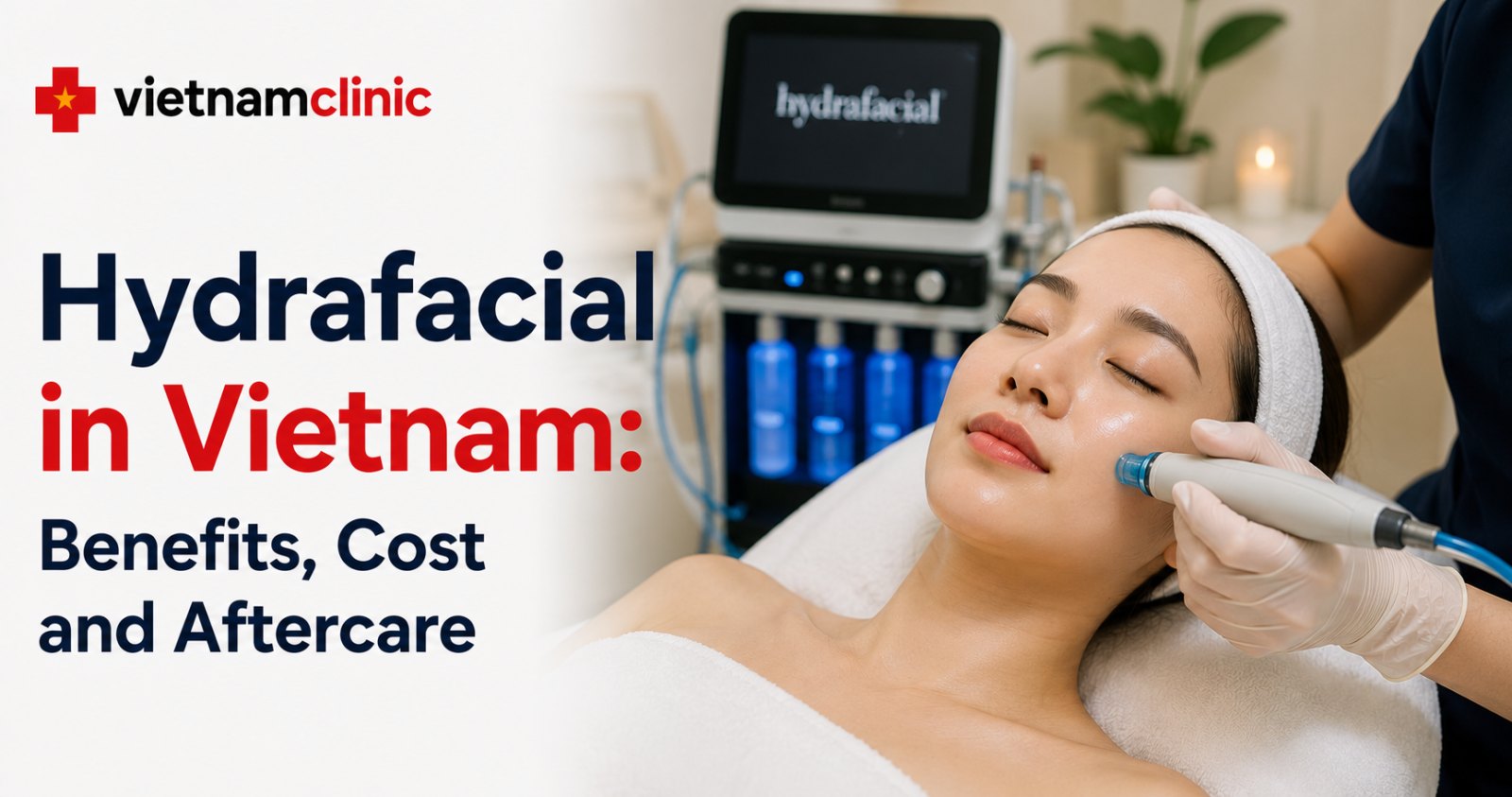
Hydrafacial has become a widely offered facial treatment in Vietnam, particularly in larger cities such as Ho Chi Minh City, Hanoi and Da Nang. It combines cleansing, exfoliation, extraction and hydration in one session and is commonly marketed to people looking for smoother, brighter or more hydrated-looking skin without the recovery associated with more aggressive cosmetic procedures.
One important point for anyone comparing providers in Vietnam is that Hydrafacial is a specific branded treatment, while terms such as hydro facial, aqua facial, aqua peeling and hydradermabrasion may be used for treatments performed with different devices. They should not automatically be assumed to be the same service.
This guide explains how Hydrafacial works, what benefits are reasonably supported, what treatments can cost in Vietnam, how to compare providers and what to expect before and after a session.
What is a Hydrafacial?
Hydrafacial is a non-invasive facial treatment performed with a specialised device. The manufacturer describes its patented Vortex-Fusion technology as combining cleansing, exfoliation, extraction and hydration during a continuous treatment.
Depending on the treatment level and provider, a session may include:
- Cleansing.
- Physical exfoliation.
- A chemical peel step.
- Suction-based extraction of debris from pores.
- Hydrating serum infusion.
- Targeted boosters.
- LED light therapy.
- Lymphatic drainage in some higher-tier treatments.
The exact protocol varies. Hydrafacial currently describes Signature, Deluxe and Platinum treatment levels, with additional steps and customisation available beyond the basic treatment.
A provider in Vietnam may also offer a locally named package combining Hydrafacial with other skincare procedures. Ask which steps are included rather than assuming that every treatment advertised under a similar name follows the same protocol.
What are the potential benefits?
Hydrafacial is primarily a cosmetic skin treatment rather than a treatment for a medical disease.
Common goals include improving the appearance of:
- Dull skin.
- Dry or dehydrated-looking skin.
- Rough texture.
- Congested pores.
- Blackheads.
- Fine lines.
- Uneven-looking tone.
- General skin radiance.
The official Hydrafacial treatment information states that the procedure is designed to cleanse, exfoliate, extract and hydrate while improving the appearance of concerns such as dullness, fine lines and pores.
There is also some published clinical research. A small study published in the Journal of Clinical and Aesthetic Dermatology evaluated a series of Hydrafacial clarifying treatments in people with mild to moderate acne. Researchers reported improvements in measures of acne severity and patient satisfaction, although the study was small and further independent research is needed.
This distinction is important. A Hydrafacial may improve the appearance and feel of the skin, but it should not be presented as a cure for acne, rosacea, pigmentation disorders or another diagnosed skin condition.
If you have persistent or severe acne, recurrent rashes, significant pigmentation changes or another medical skin concern, a dermatologist may be more appropriate than choosing a facial treatment based on marketing claims.
How much does a Hydrafacial cost in Vietnam?
There is no standard Hydrafacial price across Vietnam. Prices vary according to the city, provider, device, treatment length, products and additional steps.
One English-language example is MD Glam in Da Nang, which currently publishes VND 850,000 per session for a service described as Aqua Peeling/Hydrafacial.
Other Vietnamese providers advertise Hydrafacial-style facial services at different prices, but direct comparison is difficult because some are not necessarily using the official Hydrafacial device and consumables.
For this reason, it is more useful to ask what the price actually includes than to search only for the cheapest advertised Hydrafacial.
Before booking, confirm:
- Whether the treatment uses an official Hydrafacial device.
- Whether the price is for the basic treatment or an upgraded package.
- Which serums and boosters are included.
- Whether extraction is included.
- Whether LED therapy is included.
- How long the treatment lasts.
- Whether consultation or skin assessment is included.
- Whether taxes or additional charges apply.
Prices and packages can change, so confirm the current total directly with the provider.
Hydrafacial versus aqua facial or aqua peeling
This is particularly important in Vietnam because several skincare businesses use similar terminology.
Hydrafacial is a trademarked brand and treatment system. Aqua facial, hydro facial, aqua peeling and hydradermabrasion are broader terms that may refer to treatments using another manufacturer's equipment.
A treatment using a different device is not automatically inferior, but it should not be presented as identical simply because the treatment steps appear similar.
If you specifically want the branded Hydrafacial treatment, ask:
- Is this an official Hydrafacial treatment?
- Which Hydrafacial machine is being used?
- Are genuine Hydrafacial tips and solutions used?
- Which treatment level am I booking?
The official Hydrafacial website provides information about its technology and treatment structure that can help you understand what the branded service normally includes.
Choosing a provider in Vietnam
Hydrafacial is less invasive than surgery, injections or many laser procedures, but provider choice still matters.
Check who assesses your skin
A good consultation should consider your skin type, current irritation and the products or treatments you are already using.
Tell the provider if you have:
- Active acne inflammation.
- Open wounds or broken skin.
- A current rash.
- Sunburn.
- Cold sores.
- Eczema or dermatitis.
- Rosacea or very reactive skin.
- Recent cosmetic procedures.
- Current prescription skincare.
If there is uncertainty about whether the treatment is suitable because of a medical skin condition, ask a dermatologist or other appropriately qualified healthcare professional.
Check hygiene
Ask how reusable equipment is cleaned and whether treatment tips and other components that should be single-use are changed between clients.
The treatment involves direct contact with facial skin, fluids and extracted material, so appropriate infection-control procedures are important even though it is non-surgical.
Be cautious with exaggerated claims
Claims that a facial can permanently remove pores, cure acne, erase wrinkles or provide medical treatment for skin disease should be treated cautiously.
The likely result is more modest: cleaner-feeling, hydrated and temporarily brighter-looking skin, with results varying between individuals.
What happens during the treatment?
A typical session starts with cleansing and exfoliation. The device then uses specialised tips and suction during different treatment stages.
A chemical exfoliation step may be used to loosen surface debris and help clear pores. Extraction follows, using suction rather than traditional manual squeezing in the standard Hydrafacial protocol.
Hydrating solutions are then applied to the skin. Depending on the package, targeted boosters or LED therapy may be added.
Treatment length varies, but many sessions fall within approximately 30 to 60 minutes depending on the protocol and add-ons.
You can normally leave immediately after treatment because significant recovery time is not usually required.
Does Hydrafacial hurt?
The procedure is generally designed to be relatively comfortable. The suction may feel unusual and some parts of the face can be more sensitive than others.
People with sensitive or irritated skin may experience more discomfort, redness or temporary sensitivity.
Tell the practitioner immediately if you experience significant burning, pain or another unexpected reaction during the session.
Possible side effects
Hydrafacial is generally considered a low-downtime cosmetic treatment, but temporary reactions can occur.
These may include:
- Mild redness.
- Temporary tightness.
- Dryness.
- Increased skin sensitivity.
- Temporary irritation.
People with sensitive or compromised skin may react more strongly.
A facial treatment should not cause severe pain, extensive blistering, major swelling or significant skin injury. Contact an appropriate healthcare professional if you develop a severe or worsening reaction after treatment.
Hydrafacial aftercare
Aftercare should be adapted to your skin and the exact products used during treatment. Follow the instructions provided by the treating professional.
For most people, keeping the routine simple immediately afterwards is sensible.
Use gentle skincare
Avoid aggressively scrubbing or exfoliating freshly treated skin. A gentle cleanser and moisturiser are usually easier on the skin than multiple active products immediately after treatment.
Protect your skin from the sun
Exfoliation can temporarily make skin more sensitive. Use appropriate broad-spectrum sunscreen and limit unnecessary intense sun exposure.
This is especially relevant in Vietnam because strong ultraviolet exposure can occur throughout much of the year.
Ask when to restart active ingredients
If you normally use retinoids, exfoliating acids, benzoyl peroxide or other potentially irritating active ingredients, ask the provider when they should be restarted.
The answer can depend on the strength of the treatment and your usual skincare regimen.
Avoid adding another aggressive treatment immediately
Do not automatically combine Hydrafacial with a chemical peel, laser procedure, microneedling or another significant cosmetic treatment simply because both are available at the same clinic.
Ask a suitably qualified professional whether the timing and combination are appropriate for your skin.
Can you wear makeup after a Hydrafacial?
Many people want Hydrafacial before a holiday event, wedding or photos because there is usually little visible downtime.
However, freshly treated skin can be temporarily more sensitive. If possible, follow the provider's advice about how soon to apply makeup and make sure brushes, sponges and applicators are clean.
If you are having the treatment specifically before an important event, consider avoiding your first ever session immediately before the event. This allows for the possibility of unexpected redness or irritation.
How long do the results last?
The immediate cosmetic effect can include smoother, more hydrated and brighter-looking skin. Duration varies according to skin type, skincare routine, environment and the treatment performed.
Hydrafacial's own information emphasises both immediate visible effects and repeated treatments over time, but there is no universal schedule that every person needs to follow.
Be cautious if a provider insists that you need frequent treatments without first assessing your skin and goals.
Hydrafacial is optional cosmetic maintenance for most clients, not a medical necessity.
Can Hydrafacial help acne?
It may help some people with congestion and mild acne-related concerns because the treatment includes exfoliation and extraction.
A published prospective study involving people with mild to moderate acne reported improvement after a series of clarifying Hydrafacial treatments. However, the evidence base remains much smaller than for established medical acne treatments.
Moderate or severe inflammatory acne, painful cysts, acne scarring or persistent breakouts deserve medical assessment rather than relying solely on facials.
Who should check before having a Hydrafacial?
Ask the provider or an appropriate healthcare professional about suitability if you have an active skin disease, significant irritation, infection, open wounds or have recently undergone another cosmetic procedure.
Also disclose:
- Prescription skin medication.
- Recent isotretinoin use.
- Known allergies.
- Pregnancy or breastfeeding.
- Previous reactions to chemical exfoliants.
- Recent laser, peel, waxing or microneedling treatments.
Different Hydrafacial protocols can use different acids, boosters and other products, so suitability can depend on the exact treatment rather than only the name Hydrafacial.
Questions to ask before booking
Before paying for a treatment in Vietnam, ask:
- Is this the official Hydrafacial treatment or another hydradermabrasion system?
- Which treatment level or package is included?
- What is the total price?
- Are boosters or LED therapy extra?
- Who performs the treatment?
- How is the equipment cleaned between clients?
- Are treatment tips single-use where required?
- Are there any reasons this treatment may not suit my skin?
- What skincare should I avoid before and after treatment?
- Who should I contact if I have an unexpected reaction?
If you are unfamiliar with healthcare or aesthetic providers in the country, How to Choose an English-Speaking Clinic in Vietnam provides additional questions about communication and provider checks. You can also use What to Check Before a Medical Appointment in Vietnam when a dermatologist or medical consultation is more appropriate.
Frequently Asked Questions
The answers below cover common practical questions about Hydrafacial treatment in Vietnam. Individual suitability and skincare advice should be confirmed directly with the provider or an appropriate healthcare professional when medical skin conditions are involved.
How much does a Hydrafacial cost in Vietnam?
Prices vary by city, provider and treatment package. One Da Nang clinic currently publishes an Aqua Peeling/Hydrafacial session at VND 850,000, but official branded treatments, boosters and more extensive packages may cost differently, so confirm the exact service and total price directly.
Is Hydrafacial the same as an aqua facial?
Not necessarily. Hydrafacial is a specific branded system using patented technology, while aqua facial, hydro facial and aqua peeling can refer to similar treatments performed with other devices. Ask which machine and products are being used if you specifically want the official treatment.
What are the main benefits of a Hydrafacial?
The treatment is designed to cleanse, exfoliate, extract and hydrate the skin. It may improve the appearance of dullness, congestion, texture, fine lines and hydration, although results vary and it should not be considered a cure for a medical skin condition.
Is there downtime after a Hydrafacial?
Significant downtime is not usually expected, although mild redness, tightness or sensitivity can occur temporarily. Follow the provider's aftercare instructions and protect treated skin from unnecessary sun exposure.
Can Hydrafacial help with acne?
It may help with congestion and some mild acne concerns, and a small clinical study reported improvements after a series of clarifying treatments. Persistent, inflammatory or severe acne should be assessed by a healthcare professional rather than managed only with cosmetic facials.
What should I avoid after a Hydrafacial?
Avoid aggressive exfoliation and follow the provider's advice about retinoids, acids and other potentially irritating products. Use gentle skincare and appropriate sun protection, and ask before combining Hydrafacial with another cosmetic procedure.
Conclusion
Hydrafacial in Vietnam is widely available as a non-invasive option for cleansing, exfoliation, extraction and hydration. It may temporarily improve the appearance of dullness, congestion, texture and hydration with relatively little downtime.
Cost varies significantly between providers, and treatments advertised as Hydrafacial, aqua facial or aqua peeling are not necessarily identical. Before booking, confirm the device, treatment steps, total price, hygiene standards and aftercare instructions. If you have active or persistent skin disease, consider a dermatology assessment before choosing a cosmetic facial.
Sources

Writer
Tan Nguyen
Medical writer for Vietnam Clinic. MD, Vietnam National University Ho Chi Minh City.