If you are searching for MBBS in Ho Chi Minh City, start by checking the exact medical degree a university awards. The institutions below offer undergraduate Medicine programmes, commonly described on their Vietnamese pages as Y khoa leading to a Bác sĩ Y khoa qualification. This guide compares seven relevant medical schools in the city; it does not assume that every award is formally named MBBS or automatically recognised in another country. Alongside the curriculum, applicants need to compare teaching language, clinical placements and the admissions route that applies to their previous education.
MBBS medical schools in Ho Chi Minh City
The shortlist is based on official Medicine programme pages, faculty information and current admissions notices for institutions in Ho Chi Minh City. Seven providers could be verified within this scope; other health degrees, short courses and schools elsewhere were excluded. The order introduces specialist public institutions before private providers and a newer programme. It is an editorial comparison of study options, not a ranking of licensing outcomes, and the term MBBS is used to address the search topic rather than rename each university’s qualification.


Pham Ngoc Thach University of Medicine
Pham Ngoc Thach University of Medicine provides an undergraduate Medicine option within a specialist medical institution in Ho Chi Minh City. Applicants searching for MBBS should request the exact award title and current programme specification, rather than relying on terminology used by an intermediary. Its undergraduate admissions information is separate from postgraduate clinical training announcements. Confirm whether your educational background is eligible for the intended intake and what language evidence is required. Ask about the sequence of classroom and hospital learning, the relevant teaching sites and costs beyond tuition before comparing offers.

VNU-HCM University of Health Sciences
VNU-HCM University of Health Sciences lists Medicine in its current undergraduate admissions information. Its campus address is in Dong Hoa, Ho Chi Minh City, within the VNU urban area, which matters when estimating travel and accommodation costs. For an MBBS-related shortlist, compare the actual medical programme and qualification instead of assuming an international label from the university network’s name. Ask about entry conditions for your previous education, teaching language and clinical placements. Keep undergraduate admission requirements separate from the university’s postgraduate specialty routes, which are intended for a different stage of training.

Nguyen Tat Thanh University
Nguyen Tat Thanh University offers a six-year Medicine programme with integrated teaching and hospital learning described by its Faculty of Medicine. It is one of the city’s private-university options for applicants researching MBBS-style undergraduate medical study. Ask the faculty for the official award title and programme documents, as well as the language used in lectures, examinations and patient-facing training. Compare the full course cost and the clinical timetable for your intake. Treat any claim about practising abroad as something to verify independently with the authority that will assess your qualification.
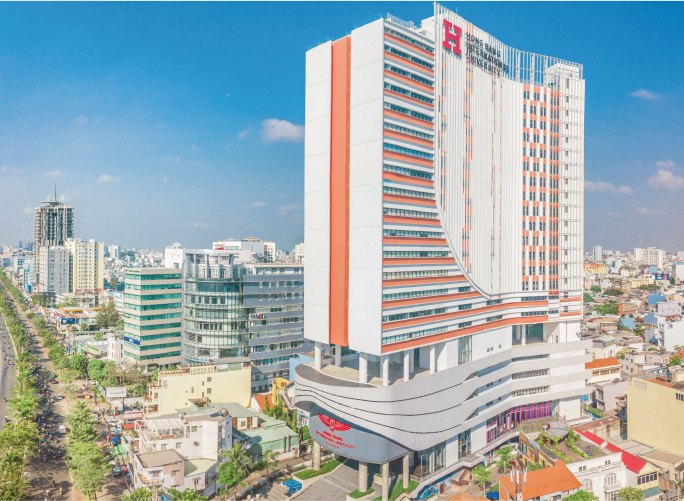
Hong Bang International University
Hong Bang International University’s official Medicine page describes a six-year programme and identifies a doctor qualification. This provides a concrete programme to examine when researching MBBS in Ho Chi Minh City. Confirm the exact study track, teaching language and admission conditions directly with the university, particularly if your prior schooling was outside Vietnam. Ask how hospital practice is arranged and what language competence it requires. The programme’s promotional references to international opportunities should not be read as automatic recognition; compare the actual award, curriculum and clinical training requirements.

Van Lang University Faculty of Medicine
Van Lang University’s Faculty of Medicine describes a six-year medical programme with a generalist and family-medicine orientation. Its hospital partnerships provide useful context for comparing clinical learning, but applicants should request the actual placement plan for their cohort. For an MBBS search, establish the official qualification name before comparing it with degrees in other countries. Ask how the curriculum, assessment language and supervised practice fit your educational background and future plans. Include tuition and placement-related travel in your budget, and confirm eligibility through the university’s current admissions information.

HUTECH School of Medicine and Health Sciences
HUTECH’s Medicine programme is a newer option, with its School of Medicine and Health Sciences established in June 2026. The university states that the course lasts six years and awards a Bác sĩ Y khoa qualification. Applicants researching MBBS should consider that precise award and the programme’s recent introduction when comparing it with established schools. Ask for the current curriculum, clinical placement arrangements and teaching-language requirements. Verify which facilities and supervision arrangements are already operating, and do not infer accreditation or foreign licensing eligibility from references to international educational standards.
Questions to settle before choosing a medical degree
Ask the university to name the qualification exactly as it will appear on the award documents and provide the current programme specification. MBBS is a useful search term, but it should not replace the formal degree title in an application or recognition enquiry. Compare course length, clinical training and graduation requirements using the actual programme documents, and keep copies of the information supplied for your intake.
Admission to a medical programme and permission to practise after graduation are separate matters. Before paying fees, check the entry route for your previous qualifications, language requirements and the full cost of study. If your plans depend on professional recognition in another country, ask the relevant authority about the specific institution and programme. A university’s partnership, marketing statement or English-language website is not a substitute for that assessment.
For language planning, consider lectures and exams alongside communication with patients during clinical learning. The Vietnam Clinic guide to English-speaking universities in Vietnam offers broader context for comparing university environments. Use it to frame questions, then obtain programme-specific answers about academic and clinical language, accommodation and support before choosing your medical school.
University of Medicine and Pharmacy at Ho Chi Minh City publishes a six-year undergraduate Medicine programme leading to the Bác sĩ Y khoa qualification. It is a relevant starting point for an MBBS search, provided you distinguish the actual Vietnamese award from an assumed English degree label. Read the university’s current undergraduate admissions notices and ask which route applies to your school qualifications. Request confirmation of teaching and assessment languages, clinical placement requirements and the complete fee schedule. Any recognition needed in your intended country of practice should be checked against the exact programme and award.