Source-based provider information
About ACC Chiropractic Clinic Ho Chi Minh City
Two ACC clinics in Ho Chi Minh City
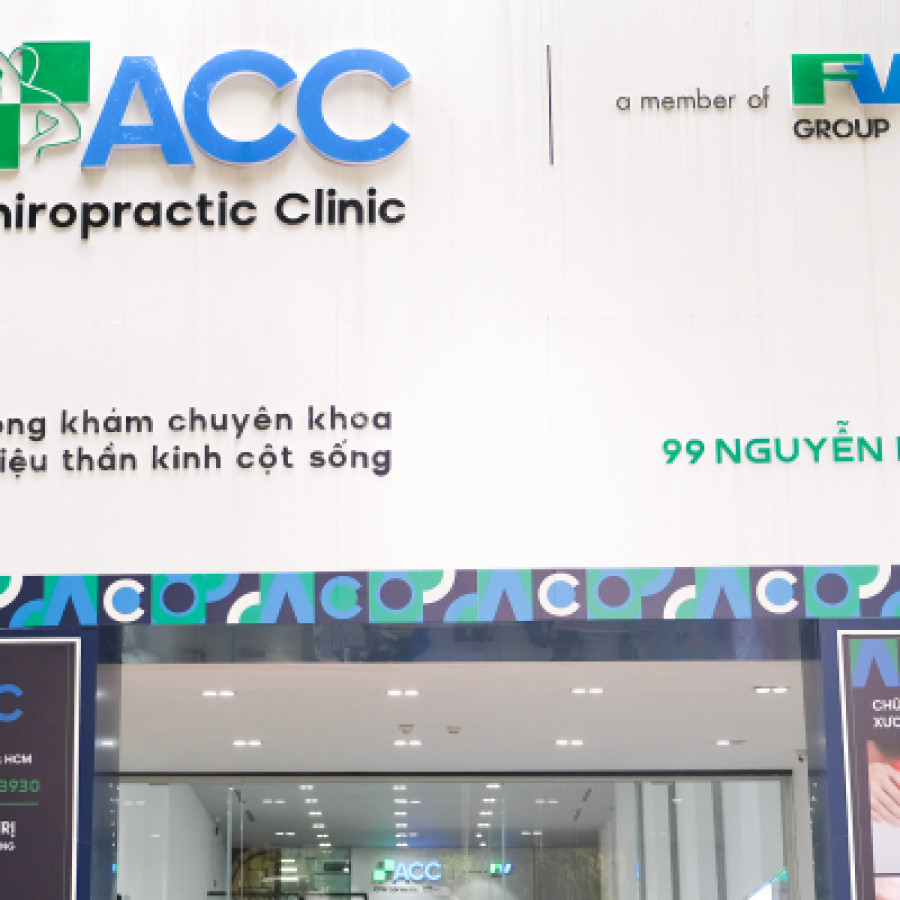
ACC operates two clinics in Ho Chi Minh City: ACC Nguyen Du at 99 Nguyen Du, Ben Thanh Ward and ACC Tan Da on the first floor of Tan Da Court, 86 Tan Da, Cho Lon Ward. This profile covers both city locations because the provider presents them as part of the same ACC service, but their telephone numbers and opening hours differ. Patients should name the preferred branch whenever booking, ordering a ride or arranging follow-up.
ACC’s model combines chiropractic assessment with physiotherapy and rehabilitation. Its English site describes a process beginning with medical-history review and clinical examination, followed by an explanation of findings, an individual plan and discussion of cost. The clinics also publish gait and foot assessment, custom orthotics, sports recovery and technology-assisted rehabilitation.
This is conservative musculoskeletal care, not an emergency department or a substitute for every type of medical assessment. New weakness, loss of bladder or bowel control, major trauma, fever with severe back pain or symptoms of stroke require urgent hospital evaluation rather than a routine spinal appointment.
What chiropractic and physiotherapy may involve
The official service scope includes chiropractic care, physiotherapy, rehabilitation exercise, sports-injury recovery, post-surgical rehabilitation and post-stroke rehabilitation. The precise combination should follow assessment rather than being sold as a fixed package for a symptom alone. Back or neck pain can have many causes, and a responsible plan should identify when imaging, medical referral or another professional is needed.
ACC describes both passive physiotherapy—such as selected physical modalities and manual techniques—and active rehabilitation using supervised movement and exercise. Active work may focus on strength, endurance, mobility, balance or coordination. Ask which element addresses the stated problem, how progress will be measured and what can safely be practised at home.
Chiropractic manipulation is not appropriate for every patient or every spinal complaint. Tell the clinician about osteoporosis, cancer, infection, inflammatory disease, recent surgery, anticoagulants, pregnancy, vascular conditions and previous fractures. Before any neck manipulation, discuss alternatives, expected benefit and material risks. Consent should be specific to the proposed technique rather than assumed from attendance.
Readers comparing options can review Vietnam Clinic’s guides to chiropractors in Ho Chi Minh City and physiotherapy and rehabilitation centres in Ho Chi Minh City. These comparisons do not diagnose a condition or endorse a treatment plan.
Assessment, gait analysis and rehabilitation equipment
ACC’s facilities page lists a podoscope, treadmill-based gait analysis, motion capture and CAD-CAM 3D foot measurement. These tools may contribute to an assessment of foot shape, pressure and movement. A scan or gait report should be interpreted alongside symptoms, physical examination, footwear and activity rather than treated as proof that orthotics are automatically required. Ask what finding the proposed device is intended to address and how success will be reviewed.
Published treatment equipment includes shockwave therapy, Class IV laser, DTS spinal decompression, ATM2 active therapeutic movement and the Pneumex PneuBack rehabilitation programme. These are different modalities with different indications and evidence. Device names and promotional descriptions should not replace an explanation of diagnosis, contraindications, dose, likely course and alternatives.
For shockwave or high-intensity laser, disclose pregnancy, reduced sensation, bleeding risk, cancer history, implanted devices and medicine that alters skin or tissue response. Protective measures, including appropriate eye protection for laser, should be explained. Spinal decompression may not be suitable for people with instability, fracture, infection or certain postoperative conditions; ask why it is recommended in your case.
Rehabilitation should be periodically reassessed. Useful outcome measures might include walking tolerance, range of motion, functional tasks, strength or return-to-sport criteria rather than pain scores alone. If symptoms worsen or neurological changes appear, the plan should be reconsidered rather than automatically extended.
Preparing for a first appointment
Bring identification, a medication and allergy list, previous imaging and reports, surgical records and a concise history of when symptoms began. Describe what aggravates or relieves the problem and any numbness, weakness, balance change or bowel and bladder symptoms. Wear clothing that allows the relevant area and movement to be examined.
Ask who will perform the initial assessment and what professional qualification they hold. ACC describes international chiropractic doctors and a physiotherapy and rehabilitation team, but the role of each person should be clear. Confirm whether treatment is planned at the first visit, how long the appointment will take and whether any imaging must be obtained elsewhere.
The provider publishes indicative starting fees in its FAQ, while noting that total cost depends on the individual plan. Request a written estimate showing consultation, treatment sessions, devices, orthotics, reassessment and any package terms. A recommendation for multiple sessions should include the clinical rationale and a review point; do not assume that paying for the longest course produces a better outcome.
English-language information is extensive, but the structured language field remains empty because the official branch pages do not list languages for every clinician and therapist. International patients should request the language they need and confirm that instructions, consent and home exercises will be understandable.
Branch contacts and opening hours
ACC Nguyen Du is at 99 Nguyen Du, Ben Thanh Ward. Its telephone is (028) 3939 3930 and hotline +84 946 740 066. Published hours are Monday–Friday 07:30–17:30, Saturday 07:30–16:45 and Sunday 07:30–12:15. This is the more central branch, close to Ben Thanh Market and Independence Palace.
ACC Tan Da is on the first floor of Tan Da Court, 86 Tan Da, Cho Lon Ward. Its telephone is (028) 3838 3900 and hotline +84 941 970 909. It opens Monday, Tuesday and Friday 08:30–17:00, with a 12:30–14:00 lunch break; Wednesday and Thursday 08:30–12:30; and Saturday 08:00–15:00, with a 12:00–13:00 break. It is closed on Sunday.
Because the two schedules cannot be accurately represented as one weekly timetable, the structured hours field is intentionally left empty. Use the branch-specific hours above and reconfirm around public holidays. ACC also publishes a general appointment route through its website, Facebook Messenger, Zalo and hotline 0911 660 252. A submitted request should be treated as pending until the clinic confirms the branch and time.
Allow time for registration and traffic, particularly when crossing between central districts and Cho Lon. If mobility is limited, ask about lift access, drop-off and the distance from reception to the treatment area. Do not infer accessibility or payment methods from third-party map attributes; these details should be confirmed directly.
Rehabilitation after surgery, stroke or sports injury
Post-surgical rehabilitation should be coordinated with the operating surgeon’s restrictions. Bring the operative note, discharge plan and any limits on weight-bearing, range or loading. The rehabilitation professional should know whether there are implants, wound concerns or a scheduled review. New swelling, fever, wound drainage, calf pain or breathing difficulty requires medical assessment rather than simply modifying exercise.
For stroke rehabilitation, clarify whether the patient is medically stable, what neurological and functional goals are realistic and how carers will be trained. ACC is an outpatient clinic; a patient who needs inpatient nursing, acute medical monitoring or emergency management requires a hospital-based service. Ask how progress is communicated to the neurologist or rehabilitation physician.
Sports rehabilitation should move from symptom control to graded loading and sport-specific function. Ask for objective return-to-running or return-to-play criteria and how recurrence risk will be managed. A rapid reduction in pain after a passive modality does not by itself prove that tissue capacity and movement control are ready for full training.
Custom orthotics should include a fitting and review plan. Clarify expected adaptation, footwear compatibility, adjustments and what happens if symptoms worsen. Insoles may support a broader plan, but they are not a universal solution for knee, hip or back pain.
When a hospital or medical specialist is needed
Seek urgent hospital care for new limb weakness, numbness around the groin or saddle area, loss of bladder or bowel control, sudden severe headache, facial droop, speech difficulty, chest pain, severe breathing difficulty, major trauma or suspected fracture. Fever, unexplained weight loss, cancer history or severe night pain alongside back pain warrants medical assessment.
After any manual treatment, sudden severe neck or head pain, dizziness with neurological symptoms, double vision, difficulty speaking, loss of coordination or weakness requires emergency evaluation. Do not wait for the next clinic appointment. Vietnam’s ambulance number is 115.
For stable musculoskeletal problems, ACC offers a broad conservative-care pathway across its two HCMC clinics. The quality of the individual plan depends on a defensible assessment, clear professional roles, informed consent, measured progress and timely referral when the presentation falls outside chiropractic or outpatient rehabilitation care.
Services and facilities
- Chiropractic assessment and treatment
- Physiotherapy
- Exercise-based rehabilitation
- Sports-injury rehabilitation
- Post-surgical rehabilitation
- Post-stroke rehabilitation
- Gait and foot assessment
- CAD-CAM 3D foot scanning
- Custom orthotics
- Shockwave therapy
- Class IV laser therapy
- DTS spinal decompression
- ATM2 active therapeutic movement
- Pneumex PneuBack rehabilitation
- Home-exercise guidance and progress review
Specialties
- Chiropractic care
- Physiotherapy
- Musculoskeletal rehabilitation
- Spinal conditions
- Sports injuries
- Postoperative rehabilitation
- Neurological rehabilitation
- Gait and orthotic assessment