Source-based provider information
About Australian Dental Clinic Da Nang
Australian Dental Clinic Da Nang, also branded locally as Nha khoa Úc Châu, is at 51–53 Đường 2 Tháng 9 in Hòa Cường. The clinic publishes a broad mix of general and restorative dentistry, implants, crowns and veneers, orthodontics, whitening, root-canal treatment, periodontal care and extractions. Its English-language network site specifically presents English-speaking dental care in Hanoi and Da Nang, while the branch site publishes a local telephone, email, dentists, prices and split daily opening hours.
Starting with diagnosis rather than a cosmetic package
A first visit should establish oral health before deciding on whitening, veneers or crowns. Bring recent X-rays, a list of medicines and allergies, previous implant or root-canal records and details of any heart condition, anticoagulant use, diabetes, pregnancy or reaction to anaesthetic. Explain pain, swelling, bleeding, sensitivity, bite changes and how long the problem has been present.
Ask for a written diagnosis tooth by tooth, supported by clinical findings and imaging when needed. A useful plan distinguishes urgent disease control from elective appearance changes and offers reasonable alternatives. For example, a heavily advertised crown is not automatically preferable to a filling, onlay or monitoring, and an extraction should not be proposed without discussing whether the tooth can predictably be saved. Request the treating dentist's name and role for each stage.
General dentistry and preventive care
The official price list includes examination-related care, scaling, fillings, periodontal treatment, night guards and children's dentistry. Preventive care should include an assessment of gum health, decay risk, existing restorations and home technique—not only a cleaning. Ask whether radiographs are indicated based on symptoms and history rather than taken routinely without explanation.
For scaling, clarify whether treatment is a routine cleaning or deeper periodontal therapy and whether more than one visit is needed. Persistent gum bleeding, tooth mobility or recession may require charting and follow-up. A night guard should be made from an appropriate impression or scan and reviewed for fit; it can protect teeth from grinding but does not by itself diagnose the cause of jaw pain, headache or sleep-related breathing problems.
Root-canal treatment and saving a tooth
The branch price list publishes root-canal treatment for children and adults, with fees varying by tooth and technique. Root-canal care is intended to disinfect and seal the inner tooth when the pulp is irreversibly inflamed or infected. Ask what tests and X-rays support the diagnosis, whether treatment is expected in one or several visits and whether a crown or other final restoration will be required afterwards.
Pain can temporarily increase after treatment, but facial swelling, fever, difficulty swallowing or rapidly worsening symptoms need prompt review. Obtain copies of pre- and postoperative images if you will continue care abroad. If prognosis is uncertain, discuss retreatment, referral or extraction before committing. The person performing the procedure should explain instrument separation, persistent infection and restoration failure as possible complications rather than promising a permanently problem-free tooth.
Extractions and wisdom teeth
The clinic lists routine, children's and wisdom-tooth extractions, including piezotome-assisted wisdom-tooth removal. A surgical device does not determine whether extraction is necessary. Ask the dentist to show the tooth position, proximity to nerves or sinus and the reason removal is recommended. For an impacted lower wisdom tooth, discuss nerve-injury risk and whether additional imaging or specialist input is indicated.
Before extraction, disclose anticoagulants, bleeding disorders, bisphosphonates and other bone medicines, immune suppression and prior radiotherapy. Do not stop prescribed medication on your own. Obtain written instructions covering bleeding, food, cleaning, smoking, pain relief and emergency contact. Persistent heavy bleeding, breathing or swallowing difficulty, spreading swelling, fever or loss of sensation that does not improve needs clinical reassessment.
Dental implants require staged planning
The clinic publishes several implant systems and implant-focused dentists, as well as a separate implant room. Implant treatment usually involves assessment of bone, gums, bite, medical risk and the space available for the final tooth. Ask for the implant manufacturer, model, diameter and length, whether bone grafting or sinus work is proposed, the surgical guide if relevant and who performs surgery and restoration. Keep the implant passport, batch or serial information and operative record.
A quoted implant price may refer only to the fixture rather than the abutment, crown, scan, graft, temporary tooth or maintenance. Request an itemised total and a timetable that reflects healing rather than holiday dates. Smoking, uncontrolled diabetes, active gum disease and poor cleaning can increase risk. A traveller should remain locally long enough for early review and identify who will manage infection, looseness or restoration problems after returning home.
Crowns, veneers and tooth preparation
Australian Dental Clinic Da Nang publishes metal-ceramic and all-ceramic crown options, plus porcelain veneers. These restorations differ in preparation, appearance, repairability and cost. Ask why a tooth needs full coverage, how much healthy structure must be removed and whether a less invasive option is possible. Veneers are not reversible once significant enamel is reduced.
Material brand and origin should be recorded on the invoice and warranty documentation. Discuss shade in natural light, bite, gum margins and the plan for provisional restorations. A warranty is not the same as a biological guarantee: decay, gum disease, grinding, trauma and changes in supporting teeth can affect longevity. Clarify what the policy covers, which maintenance visits are required and whether a remake includes travel or only laboratory work.
Orthodontics and clear aligners
The clinic publishes metal and ceramic braces, self-ligating systems, growth-related phase-one treatment and Invisalign. Orthodontics requires records, bite analysis and a plan that considers gums, jaw relationships and tooth roots. Ask which named dentist supervises treatment, the expected duration, whether extractions, expansion or temporary anchorage devices may be needed and how emergencies are handled between visits.
Clear aligners require disciplined wear and may need attachments, enamel reduction or refinements. A traveller should not begin a long course without a realistic schedule for in-person checks. Request access to records and a transfer plan if moving countries. Retention after active movement is essential; ask which retainer, how long it should be worn and what replacement costs. The clinic publishes licences for dentists Nguyễn Đăng Tường Linh and Hoàng Ngọc Anh Thi and orthodontic training in their profiles, but patients should still confirm who is assigned to their case.
Whitening and aesthetic expectations
The price list includes in-clinic and take-home whitening. Whitening changes natural tooth colour but does not lighten crowns, fillings or veneers. Existing restorations may therefore look mismatched afterwards. Sensitivity and gum irritation can occur, and untreated decay, cracks or gum disease should be addressed first. Ask what product and concentration are used, how soft tissue is protected and what to do if sensitivity becomes significant.
Aesthetic planning should preserve function and healthy tissue. Photographs and digital previews can help communication but do not guarantee an exact result. Be cautious about choosing many crowns solely to achieve a colour change when less invasive whitening or orthodontics may meet the goal. Ask how the proposed shape affects speech, cleaning and bite, not only how it appears in a front-facing photograph.
Children and family appointments
The clinic's published services include children's extractions and root-canal fees as well as general dentistry. For a child, ask whether the assigned clinician routinely treats the relevant age group and how anxiety, consent and pain control will be managed. A parent should receive an explanation of why an X-ray, filling, pulp treatment or extraction is necessary and what happens if care is postponed.
Primary teeth guide eruption and support eating and speech; they should not be dismissed simply because they will eventually fall out. At the same time, every procedure should be proportionate. Bring the child's health history and medicines, and avoid promising that treatment will be painless. Facial swelling, fever, trauma to a permanent tooth or difficulty breathing or swallowing requires urgent dental or hospital assessment.
Private rooms, infection control and records
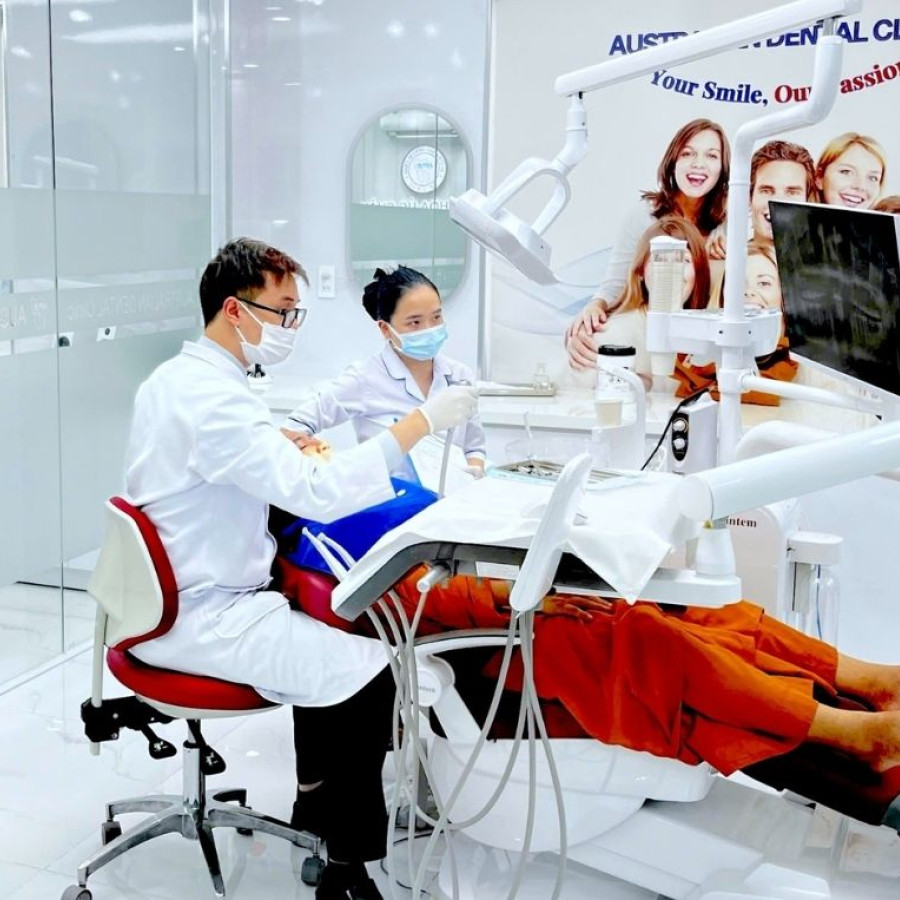
The branch publishes one private treatment room per dental chair and a separate enclosed implant room. It also describes sterilisation protocols. Patients can still ask practical questions: which instruments are single-use, how reusable items are sterilised and how surfaces and waterlines are managed. Packaging should be opened for the patient where appropriate. Privacy is useful for discussion, but it does not by itself prove clinical quality.
Request copies of X-rays, scans, photographs, treatment notes, material labels, prescriptions and invoices. International patients should receive generic medicine names and English documentation where available. If laboratory work is involved, ask where it is made, what material is ordered and how adjustments are handled. Records are particularly important for implants, orthodontics and extensive restorative work that may need maintenance elsewhere.
Da Nang contact details and current hours
The branch-specific contact is +84 915 296 266 and nkucchaudanang@gmail.com. The clinic is at 51–53 Đường 2 Tháng 9, Hòa Cường Ward, Da Nang. Its own current site publishes hours of 08:30–12:00 and 14:00–18:30 Monday through Saturday, and 08:30–12:00 and 14:00–17:30 on Sunday. The midday closure matters when planning a same-day consultation or collecting records.
The wider English network also publishes +84 906 200 434 for WhatsApp, Viber and Zalo across its Hanoi and Da Nang clinics. State the Da Nang branch in every message and ask which dentist is available. A photograph can help triage an enquiry but cannot establish a diagnosis or final quote. Confirm appointment, total duration, local follow-up and payment before arranging travel around treatment.
Comparing dental treatment as a visitor
This clinic may suit international patients who value an English enquiry route, published dentists and prices, private rooms and a broad treatment menu. The absence of a clinic operating-licence number on the reviewed official pages means patients should ask to see the current facility licence and the assigned dentist's registration before invasive treatment; company registration is not a substitute.
Vietnam Clinic's guide to dental clinics in Da Nang can help compare alternatives. Prioritise diagnosis, named clinician, preservation of healthy tissue, infection control, complete cost, records and follow-up over speed or a promotional transformation.
Services and facilities
- Dental examination and treatment planning
- Dental scaling and preventive care
- Dental fillings
- Periodontal treatment
- Root-canal treatment
- Routine tooth extraction
- Wisdom-tooth extraction
- Piezotome-assisted wisdom-tooth extraction
- Dental implants
- Dental crowns
- Porcelain veneers
- Metal and ceramic braces
- Invisalign clear aligners
- Growth-related orthodontic treatment
- In-clinic teeth whitening
- Take-home teeth whitening
- Children's dentistry
- Night guards
Specialties
- General dentistry
- Implant dentistry
- Restorative dentistry
- Cosmetic dentistry
- Orthodontics
- Endodontics
- Periodontal care
- Oral surgery
- Children's dentistry
Languages
- Vietnamese
- English