Source-based provider information
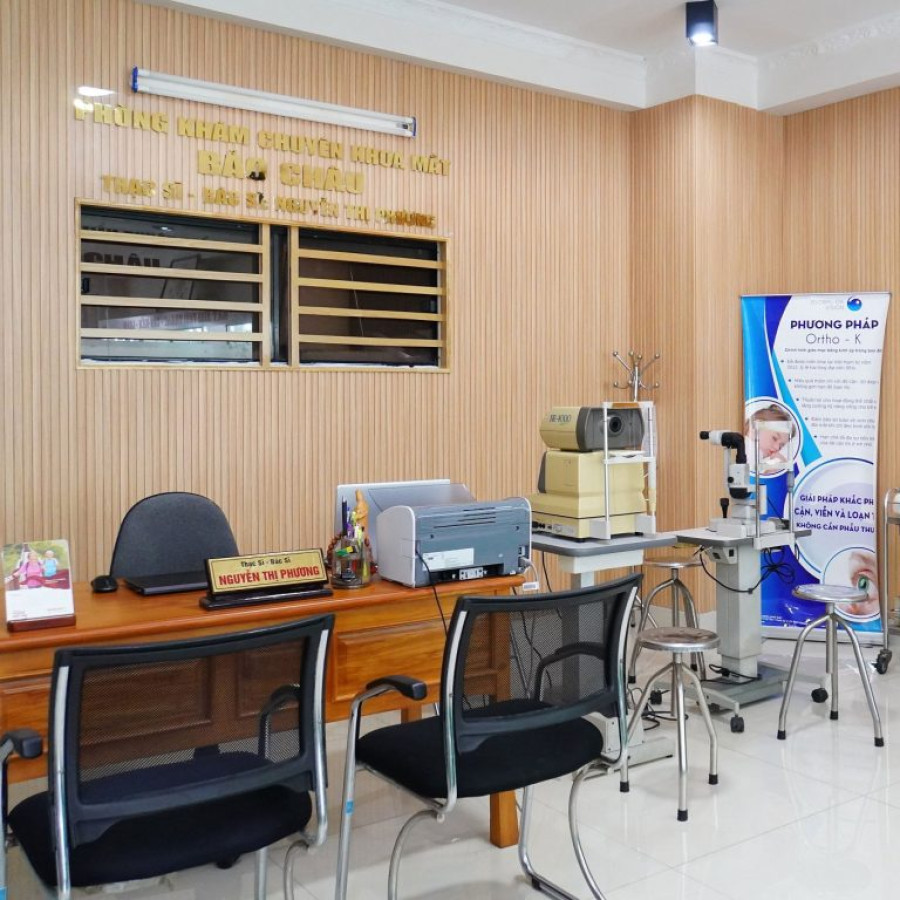
About Bao Chau Eye Clinic
Bao Chau Eye Clinic is an outpatient ophthalmology practice on Dien Bien Phu Street in Da Nang. Its official site highlights general eye examinations, refraction, removal of superficial foreign bodies and strabismus assessment, with additional educational material on dry eye, children's eye problems and diabetic retinal disease. The clinic is suitable for planned assessment, not a substitute for a hospital eye emergency department.
The practice identifies MSc MD Nguyen Thi Phuong as its clinical lead and describes her as deputy head of the Eye Department at Da Nang Hospital. That current hospital appointment could not be independently confirmed on an official hospital page, so patients who need a named specialist should confirm who will actually examine them when booking.
What a general eye examination may cover
A routine eye visit should begin with the reason for attendance and relevant history: blurred vision, pain, redness, discharge, flashes, floaters, double vision or a change in one eye. Depending on the problem, an ophthalmic assessment may include visual acuity, refraction and examination of the front and back of the eye.
The clinic promotes periodic examination as a way to identify disease or risk before vision is permanently affected. Ask which tests are included in the booked visit and whether pupil-dilating drops may be needed. Dilation can blur near vision and increase light sensitivity for several hours, so visitors may wish to bring sunglasses and avoid driving afterward.
Refraction and blurred vision
Bao Chau specifically lists refraction assessment for problems such as myopia and astigmatism. Refraction measures the lens prescription that gives the clearest vision, but blurred sight is not always caused by glasses alone. Cataract, corneal disease, retinal disease, dry eye and other conditions can produce similar complaints.
Bring current glasses, contact-lens details and previous prescriptions if available. Contact-lens wearers should ask whether lenses must be removed for a period before measurement. Children may require cycloplegic drops to relax focusing and obtain a more reliable result; confirm the process and expected duration when booking.
Children's eye checks
The clinic's educational content discusses childhood tearing, strabismus, congenital cataract, ptosis, retinopathy of prematurity, amblyopia, refractive error, congenital glaucoma and retinoblastoma. Publication of these conditions does not mean every diagnosis or surgical treatment is available at the clinic, but it supports a paediatric assessment and referral role.
Parents should mention premature birth, family eye disease, abnormal photographs, white pupil reflex, head tilting, closing one eye, sitting unusually close to screens or difficulty at school. A child can have reduced vision in one eye without complaining. Early assessment matters because visual development and amblyopia treatment are time-sensitive.
Strabismus and double vision
Strabismus, also called squint or crossed eyes, is a highlighted service area. Evaluation should distinguish a longstanding childhood alignment problem from a new deviation. In children, refractive correction and amblyopia therapy may be part of the pathway before surgery is considered. Adults may need investigation of nerve, muscle, thyroid or neurological causes.
Sudden double vision or a newly turned eye, especially with facial weakness, severe headache, drooping eyelid, imbalance or another neurological symptom, needs urgent medical assessment. It should not wait for a routine clinic slot. Ask whether Bao Chau will assess the problem or direct the patient immediately to a hospital.
Dry-eye symptoms
The clinic publishes guidance on dryness, burning, redness, fluctuating vision, light sensitivity and watering. Dry eye can be related to tear production, evaporation, eyelid problems, contact lenses, medicines, autoimmune disease or environmental exposure. A proper assessment should look for the cause rather than recommend drops only from the symptom name.
Bring a list of current eye drops and other medicines. Avoid starting antibiotic or steroid drops without an eye professional's direction. Preservatives, contact-lens use and incorrect treatment can complicate the ocular surface. Ask about lid hygiene, screen habits and follow-up if artificial tears or another treatment is recommended.
Foreign bodies and minor eye injuries
Bao Chau lists removal of eye foreign bodies. A superficial particle may cause irritation or a corneal abrasion, but high-speed metal, glass, chemicals or penetrating trauma can damage deeper structures. Do not rub the eye or try to remove an embedded object with fingers or tools.
Chemical exposure requires immediate continuous irrigation with clean water or saline and urgent assessment. High-velocity injury, severe pain, marked light sensitivity, reduced vision, an irregular pupil or visible penetration should go directly to an emergency ophthalmology service. The clinic's website does not describe a 24-hour emergency pathway.
Diabetes and retinal risk
The site includes information on diabetic retinopathy among causes of vision loss. People with diabetes can develop retinal damage without early symptoms, so scheduled dilated retinal examination may be important even when vision seems unchanged. Ask whether the clinic provides retinal imaging or dilation and how results are documented.
Bring the duration and type of diabetes, recent glucose or HbA1c information, blood-pressure history and any previous retinal report. If advanced disease, injections, laser or surgery are suspected, confirm which hospital or specialist service receives referrals. The official clinic pages do not document those procedures as on-site services.
Preparing for an appointment as a visitor
Write down when symptoms began and whether one or both eyes are affected. Bring glasses, contact-lens packaging, current drops, medication and relevant medical records. If you have had cataract, laser, retinal or glaucoma surgery, include the procedure date and implant or operative information where possible.
The website is in Vietnamese and does not publish guaranteed English-language consultations. International residents and travellers should request language support in advance or bring an interpreter. Clear communication is especially important for visual symptoms, drug allergies, consent and instructions on when to return.
Address, contact and booking
The clinic is on the second floor at 394B Dien Bien Phu, Thanh Khe District, Da Nang. Its official hotline is 0916 225 151, and the published email is drphuongdanang@gmail.com. The website provides an appointment-request form.
No current opening timetable appears on the official pages reviewed, so patients should arrange a confirmed time rather than arrive based on third-party listings. Ask whether the appointment is with Dr Nguyen Thi Phuong or another ophthalmologist, how long the examination may take and whether dilation is likely.
What remains unverified
The clinic site does not publish a health-facility licence number, accepted insurance, payment methods, consultation languages or named diagnostic devices. Statements about imported modern equipment are too general to identify which tests are available. These fields have therefore been left empty rather than inferred.
The site also contains patient numbers, testimonials and descriptions of reputation. These are marketing claims and do not establish treatment outcomes. Ask for a written diagnosis, test results, prescription and referral plan instead of relying on popularity or years of activity.
When a hospital eye department is necessary
Go urgently to a hospital for sudden loss or marked reduction of vision, a curtain or shadow across the field of view, new flashes with many floaters, severe eye pain with nausea, chemical burns, penetrating trauma, high-speed foreign bodies or sudden double vision with neurological symptoms. Delays can affect whether sight is recoverable.
Bao Chau may be useful for non-emergency assessment and follow-up, but its public information does not show inpatient care, operating theatres or round-the-clock emergency cover. For alternatives and hospital-based options, see our guide to eye clinics in Da Nang.
Questions to ask before leaving
Confirm the diagnosis or working diagnosis, which eye is affected, whether vision has been measured with best correction and what follow-up interval applies. Ask what change should trigger earlier review and whether the prescribed drop contains an antibiotic, steroid, pressure-lowering medicine or lubricant.
If referral is needed, obtain a concise note and copies of any images or measurements. Travellers should know whether it is safe to fly, drive, swim or wear contact lenses. Written instructions are particularly helpful when the consultation and the patient's usual language are different.
Services and facilities
- General ophthalmology consultation
- Comprehensive eye examination
- Visual acuity assessment
- Refraction assessment
- Myopia and astigmatism assessment
- Paediatric eye examination
- Strabismus assessment
- Amblyopia assessment
- Dry-eye assessment
- Superficial eye foreign-body assessment and removal
- Diabetic eye-risk assessment
- Ophthalmology follow-up
Specialties
- Ophthalmology
- Refraction
- Paediatric ophthalmology
- Strabismus
- Dry eye