Source-based provider information
About Black Hair Clinic
Surgical hair restoration in Hanoi
Black Hair Clinic is a hair-transplant practice in the Van Quan urban area of Ha Dong, Hanoi. Its current website focuses on autologous transplantation: follicles are taken from the patient’s own donor area and implanted where hair is thinner or absent. The clinic publishes services for scalp hair, eyebrows and facial hair rather than presenting itself as a general dermatology or cosmetic-surgery centre.
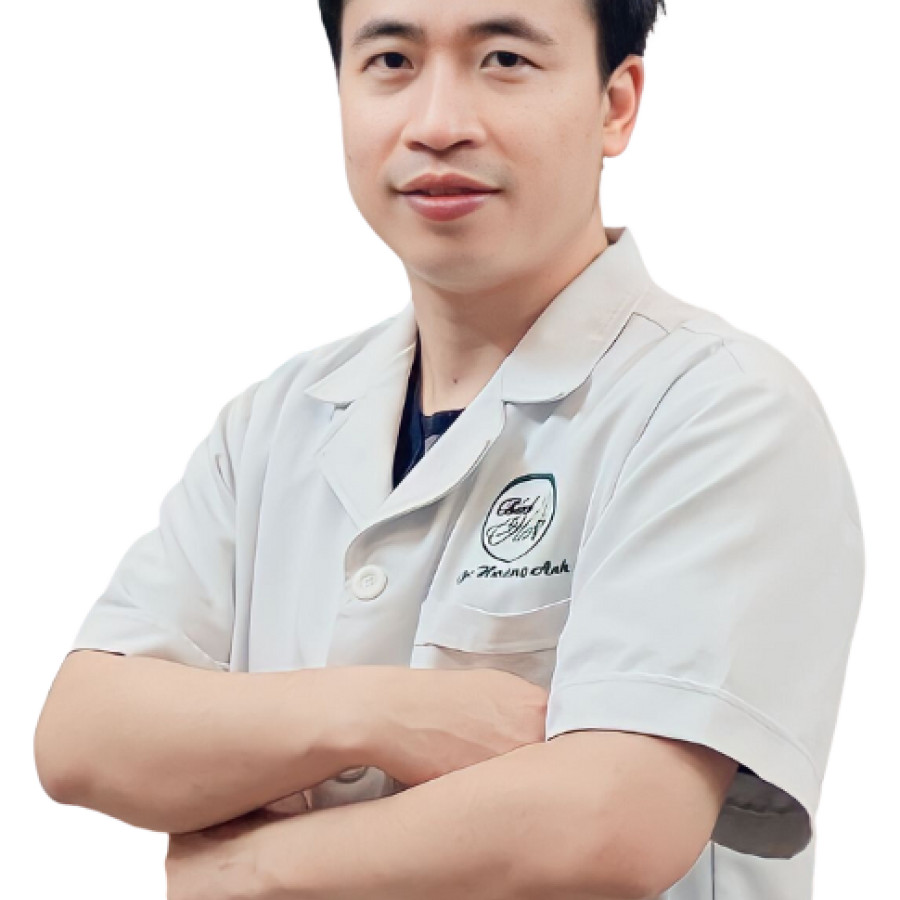
The clinic’s method pages describe Micro DHI and FUE transplantation, preliminary hair analysis, procedure planning and postoperative support. Black Hair names MSc MD Hoang Anh as its treating hair-transplant doctor. His official profile states that he graduated as a general doctor from the Vietnam Military Medical Academy, completed a master’s degree at Hanoi Medical University and worked in surgery at Military Hospital 103. These biographical statements come from the clinic and should be considered alongside a direct discussion of who will perform each part of the procedure.
Hair transplantation is elective surgery, not an ordinary salon service. A useful assessment should establish why hair is being lost, whether loss is stable, the quality and density of the donor area, what coverage is realistically possible and how future loss around transplanted follicles will be managed. People comparing providers can also use Vietnam Clinic’s overview of hair-transplant clinics in Vietnam, while remembering that inclusion in a guide does not replace an individual medical consultation.
DHI and FUE: what the clinic actually offers
Black Hair’s website explains that its FUE technique removes follicular units from a donor area, usually at the back of the scalp, before they are implanted in the recipient area. Its principal current offering is presented as Micro DHI Platinum, in which extracted follicles are placed using a direct-implantation pen. The clinic also publishes consultation pathways for beard and eyebrow transplantation.
The labels DHI and FUE do not by themselves predict the result. Candidates should ask how the donor follicles will be extracted, who designs the hairline, who performs extraction and implantation, how grafts are counted, how density is planned and what happens if the available donor supply is limited. Ask the clinic to distinguish follicular units from individual hairs when giving a quotation; they are not interchangeable measures.
The official site promotes very high survival rates and long-term guarantees. This profile does not reproduce those claims as expected outcomes. Growth, density, scarring and the need for later treatment vary according to diagnosis, donor characteristics, surgical handling, healing and ongoing hair loss. A written plan should describe the number of grafts proposed, the areas covered and the limits of what one session can achieve without overharvesting the donor region.
Establishing the cause of hair loss first
A transplant redistributes follicles; it does not correct every cause of shedding or thinning. Before committing, tell the clinician when the loss started, whether it is gradual or sudden, whether relatives have a similar pattern and which treatments have already been tried. Bring a list of medicines and supplements, recent laboratory results and photographs that show the progression. Previous scalp surgery, burns, inflammatory scalp disease, alopecia areata and scarring alopecia can change candidacy and planning.
Diffuse shedding after illness, childbirth, rapid weight loss, severe stress or a medication change may require investigation rather than immediate surgery. Active inflammation, infection or unstable hair loss can also affect the decision. Women with diffuse thinning need particular attention to donor density because the supposedly permanent donor zone may itself be affected. Ask whether the clinic recommends a dermatology assessment or blood tests before accepting surgery and what evidence supports any non-surgical treatment proposed.
Be cautious of pressure to decide from photographs alone. Remote images may help with an initial estimate, but they cannot fully show hair calibre, scalp condition, miniaturisation or donor density. A face-to-face examination should precede final graft numbers and consent. If the explanation does not address future loss, donor limitations and alternatives—including choosing no procedure—seek another opinion.
Planning the procedure as an international patient
Black Hair provides a web form for a preliminary consultation and hair-condition description. The site publishes 0888 200 286 and blackhairselfimplant@gmail.com. Its service pages state opening hours of 09:00–20:00 from Monday to Sunday, but an appointment is still advisable because a consultation, procedure and postoperative review require different amounts of time.
The public website is predominantly Vietnamese. Some forms include English labels, but the clinic does not explicitly confirm English-speaking clinical care. Before paying a deposit or booking travel, ask which language the surgeon and consent documents use and whether an interpreter can remain available during planning, consent and discharge. Important details—risks, medicines, aftercare and emergency contacts—should be understood without relying on a sales conversation or automated translation alone.
The clinic advertises packages that may include accommodation, airport transfer, medication and aftercare products. Confirm in writing exactly what is included, who provides transport or lodging, the number of nights, cancellation terms and which clinical costs could be added. Do not choose dates around the assumption that the visible crusting or swelling will disappear immediately. Build in enough time for the first wash, an early review and unexpected delay before flying or beginning a tightly scheduled tour. Vietnam Clinic’s medical-tourism planning guide covers practical questions worth settling before an elective procedure abroad.
Address, licence information and contact details
Black Hair’s 2025 operating-licence page gives the practice address as B6-TT15, Van Quan Urban Area, Van Quan Ward, Ha Dong District, Hanoi. Older pages still display A2-TT14 or only TT15, so patients should send the clinic a message and request a map pin before travelling. The B6-TT15 address is used here because it appears on the most recent official licence information. The clinic’s Google Maps link also points to the Van Quan area.
The same official page describes the operator as a household business, names Nguyen Thuy Huong as legal representative and gives a separate complaints contact. However, its licensing sentence contains an internal inconsistency: it refers to Hanoi authorities and also to the Quang Ninh health department. For that reason, this profile does not state a licence number or treat the website text as independent regulatory verification. Ask to see the current facility licence and the practising certificates of the clinicians involved before undergoing surgery.
The clinic does not publish accepted insurers or direct-billing arrangements. Elective hair transplantation is often self-funded, but coverage depends on the policy and indication. Ask for an itemised written quotation in Vietnamese dong, including consultation, tests, anaesthesia, graft extraction and implantation, medicines, washes, aftercare products, reviews, taxes and any revision policy. The website does not clearly confirm card acceptance, bank-transfer terms or refund rules, so these should be agreed before a deposit.
Preparing safely for transplantation
A preoperative review should cover medical conditions, previous operations, allergies, bleeding problems, tendency to form keloid scars and all prescription or non-prescription products. Mention anticoagulants, antiplatelet drugs, anti-inflammatory medicines, minoxidil, finasteride, vitamins and herbal supplements. Do not stop a prescribed drug based only on generic website advice; the prescribing doctor and operating clinician should provide an individual plan.
Ask whether blood tests or infection screening are required, what local anaesthetic is used, how pain and anxiety are managed and whether food or drink restrictions apply. Clarify hair washing, shaving and clothing instructions. A button-front or wide-neck top can avoid rubbing the recipient area after the procedure. If travelling alone, ask whether someone should accompany you back to the hotel and whom to contact after hours.
Before consent, discuss bleeding, infection, swelling, temporary shedding, numbness, pain, folliculitis, visible scarring, uneven growth, an unnatural hairline, poor graft growth and depletion of the donor area. Ask to see healed results for patients with similar hair type and loss pattern, not only early or carefully selected images. A guarantee or warranty should be read in full: eligibility, exclusions, follow-up obligations, photographic documentation and any costs of a revision must be explicit.
Recovery, follow-up and travel timing
The clinic’s aftercare material says a DHI session commonly lasts several hours and may be divided when a large number of grafts is planned. Its guidance discusses gentle washing after the first few days and temporary restrictions on strenuous exercise, swimming, hot bathing, tight hats, alcohol and smoking. These are general descriptions; follow the instructions issued for your specific operation because technique, wound condition and medication can change the schedule.
Ask for a written day-by-day plan covering sleep position, washing, saline spray if used, medicines, sun protection and the expected pattern of swelling, crusting and shedding. Confirm when the first review will occur and how photographs or concerns will be assessed after you leave Hanoi. Travellers should know whether prescribed medication can be carried through their next destination and should keep the prescription and clinic documentation.
Contact the clinic promptly for increasing redness, discharge, worsening pain, persistent bleeding, fever, marked swelling or an unexpected change in the donor or recipient areas. Seek urgent hospital care for difficulty breathing, fainting, chest pain, a severe allergic reaction or other systemic symptoms. A hair-transplant clinic is not a substitute for an emergency department.
Verified services include hair-loss consultation and hair analysis, FUE hair transplantation, Micro DHI hair transplantation, hairline and scalp restoration, eyebrow transplantation, beard and moustache transplantation, treatment planning and postoperative follow-up. The website also describes optional packages with accommodation and airport–clinic transfer, but availability and inclusions must be confirmed for the intended dates.
The official sources reviewed do not verify on-site laboratory testing, an inpatient bed, wheelchair access, international insurance billing, home visits or teleconsultation as formal services. The clinic is best understood as a specialised elective hair-restoration practice. Patients with sudden unexplained hair loss, active scalp disease or complex medical risks may need a dermatologist, physician or hospital assessment before surgery is considered.
Services and facilities
- Hair-loss consultation
- Hair and scalp analysis
- FUE hair transplantation
- Micro DHI hair transplantation
- Scalp hair transplantation
- Hairline restoration
- Eyebrow transplantation
- Beard transplantation
- Moustache transplantation
- Treatment planning
- Post-transplant follow-up
- Postoperative hair-care guidance
- Optional accommodation packages
- Optional airport transfer packages
Specialties
- Hair restoration
- Hair transplantation
- FUE transplantation
- DHI transplantation
- Eyebrow restoration
- Facial hair restoration