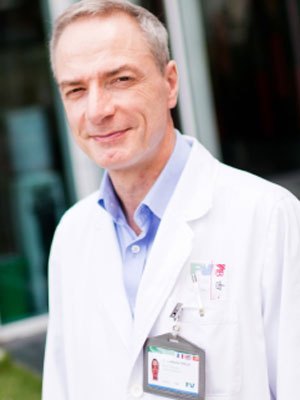
Source-based provider information
About Guillaume Orieux
Dermatology leadership and training at FV Hospital
Dr Guillaume Orieux is Head of the Dermatology Department at FV Hospital in Ho Chi Minh City. FV records that he joined the hospital as a senior dermatology consultant in 2008 and has led the department since 2009. Before moving to FV, his published experience included private practice and hospital dermatology in France, work at Hanoi French Hospital and a senior consultant role in London.
His official hospital biography lists medical training at University Paris VI in 1985, a specialist degree in Dermatology and Venereology from University Paris VII in 1987, earlier training in leprology, and additional University Paris V training in surgical treatment of skin tumours in 2006. These details help patients understand his professional focus; they are not a promise that every skin concern will need surgery or that he personally performs every service available within FV Hospital.
Conditions covered by his published clinical interests
FV lists Dr Orieux's special interests as psoriasis and phototherapy, blistering diseases, skin cancer, pigmentation disorders, paediatric dermatology, sexually transmitted diseases, laser dermatology and cosmetic dermatology. This is a broad specialist scope rather than a list of confirmed diagnoses. A consultation begins by identifying the problem, its duration, previous treatment and whether tests, observation, referral or treatment are appropriate.
Common reasons to seek dermatology assessment include a persistent or changing rash, recurrent scaling, unusual blisters, pigment changes, a lesion that bleeds or evolves, or a chronic condition that has not responded to initial care. Bring photographs showing earlier stages if the appearance changes over time. A list of current medicines, creams, supplements and allergies is particularly useful because treatment itself can alter the skin and some reactions are medication-related.
Psoriasis, phototherapy and long-term follow-up
Psoriasis can affect more than visible plaques, and its severity cannot be judged from one photograph alone. Dr Orieux's published interest includes both psoriasis and phototherapy. At an appointment, patients can expect discussion of the areas involved, itch or pain, nail or joint symptoms, previous medicines and the impact on daily life. Treatment choice may depend on extent, location, other health conditions and what has already been tried.
Phototherapy is a supervised medical treatment rather than ordinary sun exposure. If it is considered, ask which type is proposed, how often visits are needed, what eye and skin protection is required and how response and cumulative exposure are monitored. This matters for expatriates and travellers because a multi-session course may be difficult to complete during a short stay. Patients already under dermatology care should bring the name and dose of prior systemic or biologic treatments rather than interrupting them without medical advice.
Assessment of suspicious lesions and skin cancer
FV identifies skin cancer and surgical treatment of skin tumours among Dr Orieux's areas of expertise and training. A lesion may need closer examination, photography, biopsy or referral for a procedure before a firm diagnosis can be made. Cosmetic removal is not an appropriate first step when a mole or growth is changing, irregular, repeatedly bleeding or otherwise suspicious, because tissue diagnosis and treatment margins may matter.
Prepare information about when the lesion appeared, how it has changed, previous skin cancers, sun exposure, immune suppression and family history. If a biopsy is recommended, ask what type will be performed, where pathology is processed, how results will be communicated and whether a further operation could be needed. International patients should request copies of the pathology report, clinical notes and images for follow-up in another country.
Pigmentation, laser and cosmetic dermatology
The hospital's Laser Clinic uses Fotona systems and VISIA skin imaging for selected pigmentation, acne, scar, vascular, hair-reduction, tattoo and rejuvenation concerns. Dr Orieux's profile includes laser and cosmetic dermatology, but the presence of a technology does not mean that every mark is suitable for laser. Diagnosis comes first, particularly for a new pigmented lesion or a condition that may worsen with heat or light.
FV's laser information explains that settings are adjusted for the skin condition, treatment area and skin tone. This is important in Vietnam's diverse patient population because darker skin tones may be more prone to post-inflammatory pigment change. Ask about the specific device and wavelength, expected number of sessions, downtime, sun protection, likely temporary reactions and alternatives.
Cosmetic procedures should have the same consent standard as medical treatment. Results vary, and temporary redness, swelling, crusting or pigment changes may occur depending on the procedure. Patients should disclose recent tanning, isotretinoin or other medicines, a tendency to scar, herpes history and previous energy-based treatment. Avoid scheduling a first laser session immediately before a flight or major event without understanding the recovery window.
Paediatric dermatology and family preparation
Paediatric dermatology is another published interest. For a child's appointment, bring a parent or legal guardian, information about birth and medical history, vaccinations where relevant, medicines, allergies and photographs of intermittent symptoms. Note whether the rash is associated with fever, breathing symptoms, food, a new product, school exposure or another family member with similar signs.
Children may not describe pain or itch precisely, and some adult treatments are not suitable for them. Ask how the diagnosis was reached, what should be applied, the correct quantity and duration, and which warning signs require earlier review. If a skin problem is part of a broader illness, the dermatologist may coordinate with paediatrics or another hospital department.
Venereology, sexual health and confidentiality
Dr Orieux holds a specialist qualification in dermatology and venereology, and FV lists sexually transmitted diseases among his interests. Patients can describe genital rashes, sores, discharge, possible exposure or previous test results without assuming that every symptom is an infection. Examination and targeted testing may be needed because several dermatological conditions resemble sexually transmitted infections.
Bring the dates and type of possible exposure, previous treatment and relevant partner information. Ask which tests are appropriate, when results become reliable, whether repeat testing is needed and whether partners require assessment. Do not self-treat with leftover antibiotics or steroid cream before evaluation unless a clinician has advised it, as this can alter symptoms and complicate diagnosis.
Languages and appointment preparation for international patients
FV lists Vietnamese, English and French for Dr Orieux. Multilingual consultation can make it easier to discuss subtle symptoms, consent and treatment choices, but patients should still confirm the language of the booked appointment and whether an interpreter is needed for accompanying family members. FV's appointment system also offers interpreter-service requests.
Before the visit, prepare a concise timeline, photographs, previous biopsy or laboratory reports, a medication list and details of all products used on the skin. Remove heavy makeup from the area to be assessed when practical. For a widespread rash, clothing that allows examination is useful. Ask before stopping medicated creams because the dermatologist may want to see the untreated appearance or may prefer treatment to continue.
The Information and Appointment Centre is available at (028) 35 11 33 33, and the hospital publishes appointment@fvhospital.com. First-time patients are asked to arrive 15 minutes early for registration. Online requests do not guarantee the preferred slot; the exact time depends on confirmation and the doctor's availability.
Current consulting schedule and hospital location
Dr Orieux's official schedule is 08:00–12:00 and 14:00–17:00 from Monday to Friday, plus 08:00–12:00 on Saturday. Consultations are listed on the ground floor of FV Hospital's V Building. Schedules can change for leave, procedures or hospital commitments, so patients should obtain a confirmed appointment rather than relying only on the published timetable.
FV Hospital is at 6 Nguyen Luong Bang Street, Tan My Ward, Ho Chi Minh City. Bring a passport or identification document, insurance details and relevant medical records. Travellers should allow time for registration, investigations and possible return visits; a specialist consultation may lead to biopsy, pathology, treatment sessions or referral rather than a complete solution on the first day.
Insurance, teleconsultation and hospital support
FV has an Insurance Office that assists with Vietnamese social health insurance, private policies, reimbursement documents and conditional direct billing. Coverage depends on the policy, outpatient benefits, exclusions and any required guarantee of payment. This profile records Vietnam National Health Insurance only as an eligible hospital pathway; it does not imply that a specific dermatology service will be fully covered. Confirm benefits with the insurer and FV before treatment.
FV also operates an institution-wide teleconsultation service, and its booking form allows patients to request a remote visit with a preferred specialist. The hospital does not state on Dr Orieux's profile that he is always available remotely, so teleconsultation is not marked as a guaranteed structured service here. Even when offered, a video call may not provide the lighting, touch, magnification or biopsy required for a skin diagnosis, and the doctor may recommend an in-person examination.
When dermatology is not the right first destination
Routine and complex skin problems can be evaluated through the Dermatology Department, but some symptoms require more urgent care. Rapid facial or tongue swelling, breathing difficulty, widespread blistering with fever, extensive skin peeling, severe medication reactions, uncontrolled bleeding or a very unwell child should be treated as potential emergencies. FV publishes a separate 24-hour emergency number, (028) 35 11 35 00.
Patients researching specialists can compare this profile with Vietnam Clinic's guide to the best dermatologists in Ho Chi Minh City. A ranking is not a diagnosis or referral. The practical choice should reflect the condition, the clinician's relevant expertise, language needs, insurance arrangements and the ability to complete investigations and follow-up.
Official sources reviewed: FV Hospital's doctor profile, appointment service, Laser Clinic, insurance assistance and FV Anywhere pages. Information checked 4 November 2026.
Services and facilities
- Dermatology consultation
- Psoriasis assessment
- Phototherapy planning and follow-up
- Blistering skin disease assessment
- Skin cancer and suspicious lesion assessment
- Pigmentation disorder assessment
- Paediatric dermatology consultation
- Sexually transmitted infection assessment
- Laser dermatology consultation
- Cosmetic dermatology consultation
Specialties
- Dermatology
- Venereology
- Skin cancer
- Psoriasis
- Phototherapy
- Pigmentation disorders
- Paediatric dermatology
- Laser dermatology
- Cosmetic dermatology
Languages
- Vietnamese
- English
- French