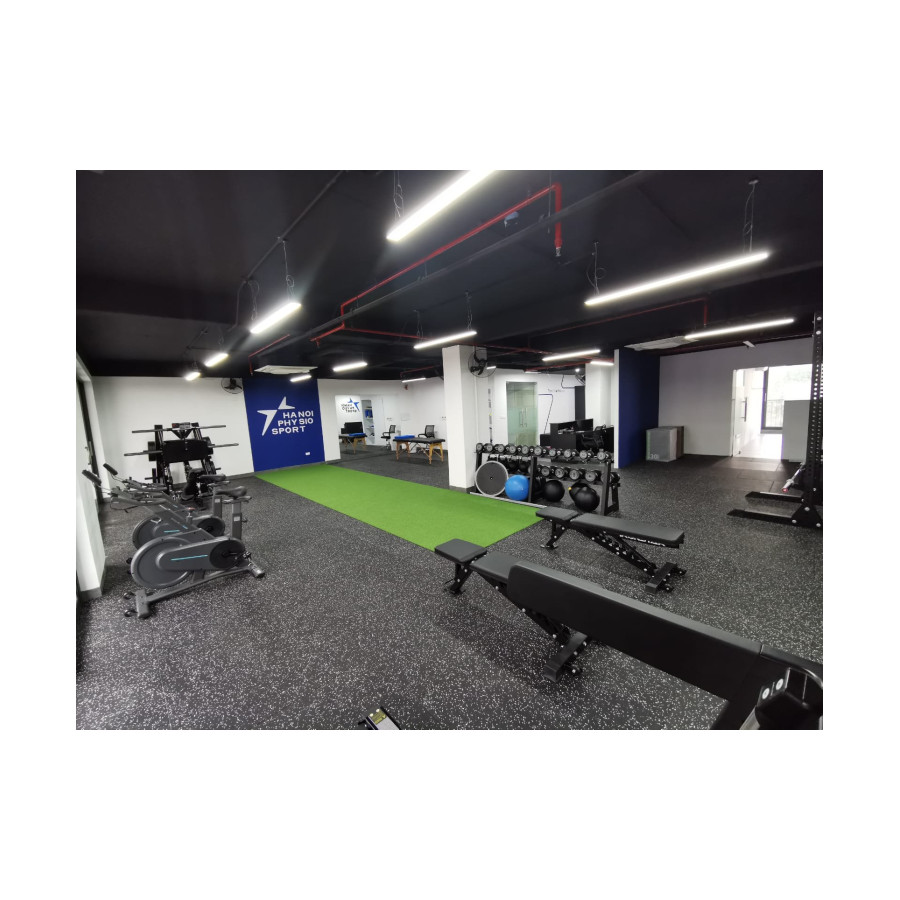
Source-based provider information
About Hanoi Physio Sport
Active rehabilitation in Tay Ho
Hanoi Physio Sport is a sports-physiotherapy clinic at 83 Xuan Dieu, Quang An, Tay Ho. Its model is built around assessment, progressive exercise and repeated measurement rather than a passive massage-only visit. The clinic works with athletes and active people of different levels, but its services are also relevant to residents recovering from a musculoskeletal injury, orthopaedic surgery or a loss of strength and movement that affects ordinary daily activity.
The provider groups care into an initial assessment and ongoing rehabilitation sessions. It also describes prevention and performance programmes built around strength, mobility, conditioning and the demands of a person's sport or lifestyle. This distinction is important: rehabilitation has a clinical recovery goal, whereas performance support starts from the capacity someone already has and seeks to prepare them for activity. The Hanoi physiotherapy centre guide offers a broader comparison of rehabilitation providers in the city.
What happens at the first assessment
The initial visit begins with a history covering the problem, previous injuries, current symptoms, training load, mechanism of injury, treatments already tried and the activities the patient wants to resume. A clinical examination and movement analysis then look at how the condition affects mobility, strength and function. The clinic says its physiotherapist discusses the findings, answers questions and proposes objectives and an individual programme.
New patients should bring relevant imaging reports, operative notes, medical referrals and a list of medicines when these relate to the condition. Comfortable clothing is necessary because the therapist may need to observe the affected area and movement in several positions. Hanoi Physio Sport specifically suggests shorts with a T-shirt or singlet and notes that it does not provide gowns. Footwear or sports equipment used during the activity—such as running shoes, a brace or a racket—may also be useful when the appointment concerns sport-specific mechanics, but patients should confirm this before travelling with bulky equipment.
The assessment should establish more than a pain score. Useful baseline measures may include range of motion, strength, balance, tolerance to load and the tasks the patient cannot yet perform. Those measures provide a reference for deciding whether the programme is working and when progression is reasonable.
Rehabilitation sessions and home exercise
Follow-up sessions combine targeted exercise, manual techniques and education. The clinic describes continuous reassessment so that the plan can change with symptoms, objective progress and functional goals. Sessions generally last 45–60 minutes, although the exact duration depends on the condition and treatment required. Patients should ask whether the quoted time includes reassessment, exercise instruction and any documentation needed for insurance.
The rehabilitation approach includes strength, flexibility, mobility, balance, core control and general or sport-specific conditioning where appropriate. Manual therapy may be used to support movement or symptom management, but it is not presented as the sole treatment. The clinic also provides an individual home-exercise programme and self-management guidance. Correct technique, dosage and progression matter; copying an exercise without understanding the intended load can delay recovery or provoke symptoms.
For longer pathways such as anterior cruciate ligament rehabilitation, Hanoi Physio Sport describes phased strength development, movement retraining, gym-based progression and objective return-to-sport testing. Recovery is not complete merely because walking is comfortable or pain has decreased. The relevant question is whether the knee, ankle, shoulder or other injured area can tolerate the speed, direction changes, contact and fatigue required by the person's actual activity.
Return to activity without arbitrary deadlines
A return-to-sport plan should connect clinic exercises to real demands. A runner may need graded impact and distance, while football, basketball or racket sports require deceleration, jumping, landing and rapid changes of direction. Someone returning to office work may instead need tolerance for sitting, lifting or commuting. Hanoi Physio Sport's published approach uses ongoing measures and adjusts the plan rather than applying one timeline to every patient.
Expatriates continuing care after moving country should request a concise summary of the initial findings, progress measures, current exercise doses and remaining restrictions. This makes handover to another physiotherapist or surgeon more useful than a list of appointment dates. Patients recovering after surgery should also keep the surgeon's protocol and clarify any procedure-specific limits. A physiotherapist can guide rehabilitation, but decisions about complications, medication, injections or further imaging may require the treating doctor.
Vietnam Clinic's national physiotherapy and rehabilitation overview can help explain how movement-focused clinics differ from hospitals and wellness providers.
When to seek medical or emergency assessment first
Physiotherapy is appropriate for many musculoskeletal problems, but some symptoms need urgent medical evaluation. A new inability to bear weight after major trauma, obvious deformity, an open wound, progressive weakness, loss of bladder or bowel control, numbness around the groin, fever with a hot swollen joint or sudden severe pain should not wait for a routine rehabilitation appointment. Chest pain, sudden breathlessness or signs of stroke are emergencies.
Unilateral calf swelling, warmth or unexplained pain after surgery, immobilisation or a long flight can indicate a blood clot. Sudden breathlessness or sharp chest pain may indicate a pulmonary embolism and requires emergency care. The clinic's own educational material highlights thrombosis risk during rehabilitation and the need to refer concerning symptoms. Vietnam Clinic's emergency numbers guide provides practical contacts for urgent situations in Vietnam.
Persistent symptoms that do not match a straightforward musculoskeletal pattern may also need a doctor. A responsible rehabilitation plan includes referral when imaging, prescription medicine, injection, surgical review or another specialty is needed.
Booking, language and insurance questions
The current Hanoi contact number for both WhatsApp and Zalo is +84 794 704 996. The dedicated clinic email is hanoiphysiosport@gmail.com, and the official site provides an online booking route. The wider Vietnam Physio Sport network labels WhatsApp as the English contact channel and Zalo as the Vietnamese channel, making WhatsApp the clearest first option for an international patient.
The clinic says a doctor's referral is often unnecessary for a physiotherapy assessment, but it also warns that an insurer or healthcare system may require one for coverage. Before booking, patients seeking reimbursement should ask the insurer whether the therapist, clinic, diagnosis and number of sessions qualify; whether pre-authorisation is required; and which invoice, referral and clinical report must be submitted. Hanoi Physio Sport does not publish a general direct-billing promise on the pages reviewed, so patients should expect to confirm payment and claim arrangements directly.
Published official pages do not give a reliable clinic timetable, and older contact material contains outdated phone numbers. For that reason, the current appointment time and service price should be obtained through the active booking channels rather than inferred from third-party listings.
Preparing for a productive course of care
Patients get more from rehabilitation when the goal is specific: returning to a five-kilometre run, climbing stairs without support, serving in tennis or completing a work shift. Tell the physiotherapist what improvement would change daily life, not only where it hurts. Report how the body responds in the hours and day after prescribed exercise, including swelling, sleep disturbance or loss of function.
Progress is rarely linear, but worsening neurological symptoms, increasing swelling or a sharp decline in capacity should trigger reassessment rather than automatic progression. The clinic's stated process includes discharge planning, self-management and a prevention programme once the patient can continue independently. A clear endpoint avoids turning rehabilitation into an indefinite series of appointments without measurable objectives.
Services and facilities
- Initial assessment: Medical and injury history, clinical examination and movement analysis
- Individual treatment plan: Objectives, expected session pathway and personalised progression
- Rehabilitation sessions: Targeted exercise, manual therapy and education with reassessment
- Manual therapy: Hands-on techniques selected for mobility and symptom management
- Therapeutic exercise: Strength, flexibility, mobility, balance and functional training
- Post-operative rehabilitation: Progressive recovery coordinated with surgical restrictions
- ACL rehabilitation: Phased strength, movement and objective return-to-sport testing
- Return-to-sport planning: Sport-specific load and performance progression
- Injury prevention: Risk-factor assessment, movement quality and conditioning
- Performance support: Strength, mobility and conditioning for sport and lifestyle goals
- Home exercise programme: Personalised exercises and self-management guidance
- Discharge planning: Independent-management plan and secondary prevention
Specialties
- Sports physiotherapy
- Musculoskeletal rehabilitation
- Post-operative rehabilitation
- ACL rehabilitation
- Return-to-sport rehabilitation
- Injury prevention
- Strength and conditioning
- Movement assessment
Languages
- English