Source-based provider information
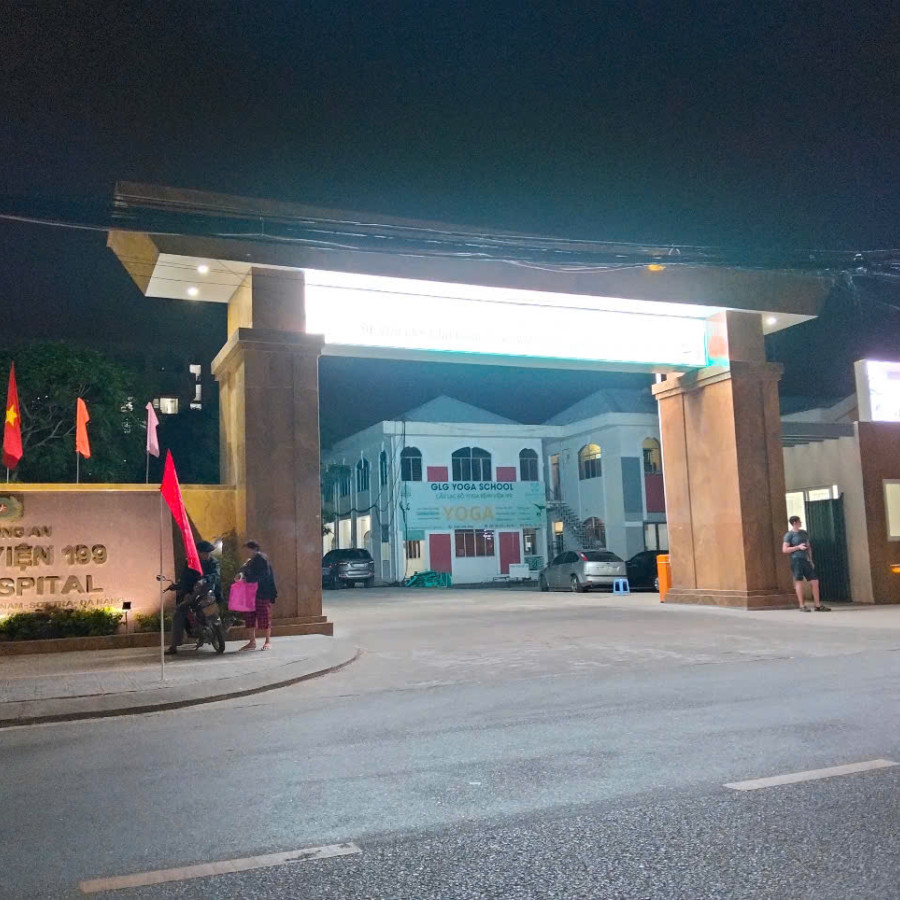
About Hospital 199 Da Nang
Hospital 199 is a general hospital operated under Vietnam’s Ministry of Public Security at 216 Nguyen Cong Tru Street in Da Nang. It was established by decision in 1999 and began operating in 2004. The hospital currently describes a 450-bed inpatient and outpatient institution with 27 specialties, five functional divisions and around 600 staff. Although it has a historic responsibility for police personnel, its official material also states that it treats members of the public.
This is a substantially broader setting than a single-specialty clinic. Published departments cover emergency medicine, internal medicine, cardiology, neurology, gastroenterology and endocrinology, respiratory and dermatology care, infectious diseases, orthopaedics, rehabilitation, gynaecology, anaesthesia, ENT and oral-maxillofacial dentistry. The hospital also promotes health screening, international insurance support, high-technology procedures and patient transport.
Emergency care and deciding where to go
The Medical Examination and Emergency Department states that it operates 24 hours a day. Use emergency care for breathing difficulty, chest pain, signs of stroke, severe injury, heavy bleeding, loss of consciousness, major burns, serious allergic reactions or rapidly worsening illness. Call Vietnam’s emergency number 115 when safe transport cannot be arranged independently.
The outpatient timetable is different from emergency availability. Hospital 199 publishes routine working hours from Monday to Friday, 07:00–11:00 and 13:30–16:30. Do not assume a specialist clinic is open at night or on weekends simply because the emergency department remains available. When symptoms are stable, call the hospital to confirm the appropriate department, consultation day and whether a referral or appointment is needed.
Registration for foreign patients
The hospital publishes a dedicated pathway for foreigners. Registration can be started online, by telephone or at the reception desk. Bring a passport or other identification, insurance documentation, a list of medicines and any useful medical reports or imaging. At reception, the patient supplies personal and health information before being directed to clinical examination, tests or diagnostic imaging when indicated.
After the clinician reviews the results, the hospital describes a consultation covering diagnosis and next steps, followed by payment and collection of prescriptions and records. International patients should request an itemised invoice, test results, imaging files, medication list and discharge summary in a form that can be used by another doctor. Ask early whether English versions or translated summaries are available.
Language and interpretation
Hospital 199 says that members of its team can communicate in English and that medical interpretation is available for foreign patients. Because language capability can vary by department and shift, confirm support for the exact appointment. Interpretation is particularly important for consent, allergy history, anaesthesia, complex diagnoses and discharge instructions.
Do not rely on a travel companion to interpret specialist terminology if a formal interpreter can be arranged. Repeat back the medication dose, follow-up date and warning signs before leaving. If an urgent admission occurs when an interpreter is not immediately present, show a written medication and allergy list and ask the team how language support will be provided.
Internal medicine and specialist departments
The official doctor directory identifies services in neurology, cardiology, gastroenterology and endocrinology, pulmonary and dermatology care, infectious diseases and general internal medicine. These departments cover concerns such as headache and seizures, heart disease, diabetes and other endocrine disorders, gastrointestinal and liver conditions, respiratory illness and infections. Exact clinic availability should be checked rather than inferred from the department name alone.
The hospital also lists gynaecology, ENT, odonto-stomatology and anaesthesiology. Its dental scope includes decay, pulp disease, tooth trauma, maxillofacial trauma, restoration and extraction. A general-hospital setting can be useful when symptoms cross specialties, but patients should still ask who is responsible for coordinating results and follow-up.
Orthopaedics, sports medicine and rehabilitation
Hospital 199 publishes an orthopaedic trauma, burns and sports-medicine department as well as a large rehabilitation and occupational-disease service. The rehabilitation department describes medical consultation, spinal treatment, sports medicine, geriatric and neuromuscular care, occupational therapy and speech therapy. Equipment listed includes electrotherapy, ultrasound, short-wave treatment, low- and high-power laser, magnetic bone stimulation, balance and walking equipment and spinal decompression.
These modalities should follow an individual assessment, not be selected solely from an equipment list. Bring previous scans and operative reports after a fracture, joint operation or neurological event. Ask for measurable goals, the proposed frequency of therapy and a home programme. Sudden weakness, loss of bladder or bowel control, a cold or pulseless limb or severe new trauma requires urgent medical evaluation rather than a routine rehabilitation session.
Diagnostics and high-technology services
The hospital publishes laboratory testing and diagnostic imaging as part of its assessment pathway. Recent official news also documents digital subtraction angiography and endoscopic intervention, while the wider site promotes high-technology services. These examples show capability in selected cases, but they do not mean every advanced procedure is continuously available or appropriate.
Ask which test is being recommended, why it is needed, whether contrast or sedation is involved and when a written result will be ready. Tell staff about pregnancy, kidney disease, contrast reactions, implanted devices and anticoagulants before relevant imaging or interventions. International patients who need continuity should request image files in a standard digital format and the interpreting report.
Health checks and administrative examinations
Hospital 199 offers general and occupational health checks, including examinations used for work-permit and other administrative purposes. Before booking, send the exact form or government requirement because a general wellness package may not contain every mandated item. Confirm whether photographs, passport copies, fasting tests, certified translations or specific validity periods apply.
Screening results sometimes identify a problem that needs a separate specialist appointment. Ask whether follow-up is included and how abnormal findings will be communicated. A health check is not a substitute for emergency care or targeted assessment of active symptoms.
Vietnamese and international insurance
The hospital publishes treatment through Vietnam’s national health-insurance system and support for international insurance. Vietnamese coverage depends on card validity, patient category, referral rules and whether treatment is in or out of network. Patients may need an insurance card or electronic record, identity document, referral and re-examination papers. Emergency rules differ, but documents should still be presented before discharge when possible.
For international insurance, Hospital 199 describes checking the policy and contacting the insurer about a fee guarantee. This is not evidence that every insurer, plan or treatment is accepted. Contact both the hospital and insurer before planned care. Ask whether direct billing has been authorised, which costs remain the patient’s responsibility and whether a deposit is required while approval is pending. Keep copies of the guarantee, invoice, medical report and claim forms.
Patient transport and care beyond Da Nang
Foreign-patient information includes transport from a residence to the hospital and transfer within Vietnam or internationally when needed. Transport should be matched to clinical condition: a normal car, ground ambulance and medically escorted transfer are not equivalent. Ask who assesses fitness to travel, what monitoring and staff accompany the patient and which receiving facility has accepted the transfer.
Air travel after an operation, acute illness or vascular event may require medical clearance. Insurance authorisation can also affect timing. Do not purchase a flight based only on an approximate discharge date when the patient may need ongoing oxygen, medication, wound review or mobility support.
Preparing for an outpatient visit or admission
Bring identification, insurance information, previous diagnoses, recent test results and the original packaging or a clear list of all medications. Note generic drug names where possible, because brand names differ between countries. If fasting may be required, verify the instructions with the hospital rather than skipping food or medicines without advice.
The campus is in Son Tra, east of the Han River. Allow time for traffic and registration. The hospital publishes a central hotline and email, but an appointment request is not confirmed until the department provides a date and time. For a wider comparison of emergency, inpatient and international-care options, see Vietnam Clinic’s guide to hospitals in Da Nang.
Verified services include 24-hour emergency assessment, inpatient and outpatient treatment, internal medicine, cardiology, neurology, gastroenterology, endocrinology, respiratory and infectious-disease care, dermatology, orthopaedics, burns, sports medicine, rehabilitation, gynaecology, ENT, dentistry, anaesthesia, health checks and patient transport. The hospital also supports Vietnamese and international insurance workflows and publishes services for foreign patients.
Documented infrastructure includes 450 beds, 20 outpatient consultation rooms, four higher-service examination areas, diagnostic testing and imaging, rehabilitation treatment rooms, occupational and speech-therapy facilities and an emergency department. No specific medical operating-licence number was found on the reviewed official pages, so that structured field remains empty rather than using the institution’s name or administrative history as a substitute.
Services and facilities
- 24-hour emergency care
- Outpatient medical examination
- Inpatient treatment
- General internal medicine
- Cardiology consultation
- Neurology consultation
- Gastroenterology consultation
- Endocrinology consultation
- Respiratory medicine
- Dermatology consultation
- Infectious disease care
- Orthopaedic trauma care
- Burns care
- Sports medicine
- Physical rehabilitation
- Occupational therapy
- Speech therapy
- Gynaecology
- ENT care
- Dental and oral care
- Anaesthesiology
- Diagnostic imaging
- Laboratory testing
- General health checks
- Occupational health checks
- Work permit health examinations
- International patient support
- Medical interpretation
- International patient transport
Specialties
- Emergency medicine
- Internal medicine
- Cardiology
- Neurology
- Gastroenterology
- Endocrinology
- Pulmonology
- Dermatology
- Infectious diseases
- Orthopaedics
- Sports medicine
- Rehabilitation medicine
- Occupational medicine
- Gynaecology
- Otorhinolaryngology
- Dentistry
- Anaesthesiology
Languages
- Vietnamese
- English