Source-based provider information
About NEWHAIR by Kho Thi
A specialist hair-transplant clinic in central Ho Chi Minh City
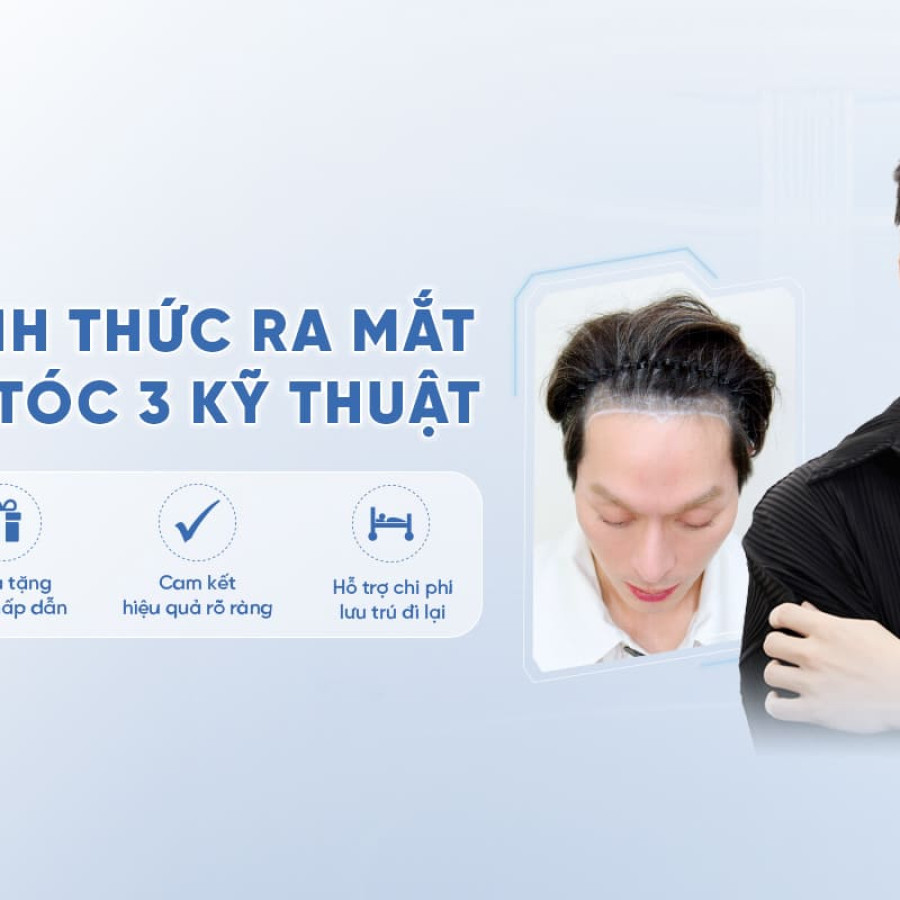
NEWHAIR by Khơ Thị is a hair-restoration clinic at 222–224 Tran Hung Dao, Cau Ong Lanh Ward, Ho Chi Minh City. Its official site identifies the operating company as Kho Thi Skincare & Clinic and publishes healthcare operating permit 06428/HCM-GPHĐ, issued by the Ho Chi Minh City Department of Health on 30 August 2019. The clinic’s central service is autologous hair transplantation: follicles are taken from the patient’s own donor area and implanted into an area of thinning or hair loss.
The provider describes a pathway that includes consultation, scalp and follicle assessment, hairline planning, donor extraction, preparation of follicles, implantation and postoperative care. It also publishes non-transplant hair-restoration services, but those should not be treated as equivalent to surgery or as proven solutions for every type of hair loss. A diagnosis matters because hereditary pattern loss, inflammatory scalp disease, scarring alopecia, medicine-related shedding and temporary telogen effluvium require different decisions.
Readers comparing surgical providers can use Vietnam Clinic’s hair-transplant clinic guide for Vietnam. The guide is a research starting point, not an endorsement or prediction of a result.
Technique, donor extraction and implantation
NEWHAIR currently promotes DHI autologous hair transplantation. Its procedure description says a micromotor punch is used to extract follicular units and a Choi implanter pen is used to place them in the recipient area. The clinic also explains FUE, FUT and DHI on its website, but the presence of an explanation does not mean every method is offered to every patient. Ask the surgeon to name the actual technique proposed, the punch diameter, whether recipient sites are created separately and which steps the surgeon personally performs.
The published process begins with examination and follicle imaging, followed by identification and preparation of the donor area. After local anaesthesia, follicular units are extracted, sorted and protected before implantation. The design of the hairline, angle, direction and density determine much of the visible result. Donor supply is finite: moving follicles redistributes hair but does not create new follicles or stop future loss in untreated areas. A sensible plan should protect the donor region and consider how the surrounding hair may change over time.
The website presents high graft-survival and success percentages. These are provider claims and should not be interpreted as a guaranteed personal outcome. Ask how a “graft” or “follicle” is counted, how survival is measured, what time point is used and whether the figure has been independently audited. Before-and-after galleries can illustrate the clinic’s work but cannot show how another person with different hair calibre, donor density or hair-loss pattern will respond.
Who will perform the procedure
The current clinic website names Aly Stephen Nah as a clinical adviser and identifies Tran Thanh Thai, Le Hoang Trung and Phan Mai Long among its doctors. Team pages contain education, experience and membership claims supplied by the clinic. Before paying, request the full name and current Vietnamese practice-licence details of the doctor assigned to your case and verify that the facility’s permitted scope covers the planned procedure.
Hair transplantation involves medical assessment, local anaesthesia, extraction and implantation. Ask which tasks are performed by the named doctor and which may be delegated to nurses or technicians. The consultation should cover the cause and stability of hair loss, scalp condition, donor density, expected graft number, planned coverage and alternatives. If the clinic cannot name the operating doctor before a deposit, clarify the cancellation and refund terms in writing.
Tell the doctor about chronic illness, allergies, keloid tendency, bleeding problems, scalp disease, smoking and every medicine or supplement. Do not stop anticoagulants, blood-pressure medicine or hair-loss treatment based on generic online instructions; changes require personalised medical advice. People with active scalp inflammation or unexplained shedding may need dermatological assessment before surgery.
Planning the visit from abroad
The clinic lists 08:00–20:00 every day from Monday to Sunday. Its official contacts are 0934 917 617, hotline 1900 6717 and tuvan@caytocnewhair.com. The English-language pages can help with initial research, but they do not prove that every clinician, consent form or follow-up channel is available in English. Confirm the consultation and operating language before booking flights.
A remote photograph can support an initial conversation but cannot fully assess scalp disease, donor miniaturisation, density or medical suitability. Ask when the in-person examination occurs and whether the graft estimate or price can change afterward. Request a written quotation in Vietnamese dong that specifies the estimated graft or follicular-unit count, technique, doctor, medicines, dressings, washing, follow-up, touch-up terms and taxes. Promotional per-graft prices or instalment offers can change and are not a complete surgical estimate.
Allow enough time in Ho Chi Minh City for the first postoperative checks and washing instructions. Ask when it is safe to fly, wear a helmet, exercise, swim, return to work and expose the scalp to sun. Plan transport after a long procedure rather than riding a motorbike yourself. Check whether travel insurance excludes elective cosmetic procedures and complications; most policies require explicit confirmation.
Recovery, follow-up and the published warranty
NEWHAIR publishes a follow-up and warranty policy with an outcome review at six to twelve months and a possible complimentary touch-up when the result does not meet the physician’s initially documented expectation, subject to the patient’s physiology, home care and the terms of a cooperation agreement. Obtain the complete current agreement before treatment. Ask what “effectiveness” means, which costs remain payable, whether travel and medication are excluded and what evidence is required.
A warranty is not a substitute for safe surgery, realistic planning or accessible complication care. Clarify who can review photographs after you return home, how quickly clinical questions are answered and whether the clinic will coordinate with a local doctor. Keep the operative note, doctor’s name, anaesthetic record, graft count, medication list and photographs. If future treatment is needed elsewhere, these records help protect the donor area from repeated overharvesting.
The clinic’s own educational material acknowledges possible swelling, numbness, infection and tissue injury. Contact the treating team promptly for worsening pain, increasing redness, pus, fever, foul odour, persistent bleeding or darkening skin. Severe allergic symptoms, breathing difficulty, chest pain, fainting or rapidly spreading swelling need urgent medical assessment rather than an ordinary follow-up message.
Questions that make a consultation more useful
Ask the doctor to map the donor and recipient areas and provide a range—not merely a single marketing number—for grafts and achievable density. Discuss whether the priority is the frontal hairline, temples, crown or scar coverage and what must be left for future loss. A very low juvenile hairline can consume donor follicles and age poorly; the design should make sense beyond the first postoperative photographs.
Clarify how existing hair loss will be managed after surgery. Transplanted follicles and native hair are different populations, and surgery does not automatically protect the latter. Ask about evidence, side effects and duration before agreeing to medicines, injections, PRP or other add-ons. The clinic advertises hair-cell and restoration programmes, but each additional service needs its own explanation and price.
Request unedited examples with similar hair type, loss pattern and follow-up duration, while recognising that another patient’s result is not a promise. Ask how the clinic handles poor growth, an unnatural angle, visible donor thinning or infection. The strongest plan is one that explains limitations and contingency routes as clearly as the intended aesthetic outcome.
When another type of care may be better
Surgery is not the correct first step for every person with hair loss. Sudden shedding, patchy loss, scalp pain, scaling, inflammation, eyebrow loss or signs of systemic illness can warrant medical investigation. A dermatologist may need to diagnose and stabilise the condition before transplantation is considered. A weak donor area, active disease or unrealistic coverage goal may also make surgery unsuitable.
For travellers, continuity matters as much as the procedure itself. Do not choose solely from a discount, celebrity gallery or claimed graft-survival rate. Verify the clinic permit, assigned doctor, technique, complete cost, donor strategy, complication plan and the feasibility of follow-up after leaving Vietnam. A credible consultation should leave space to decline or seek a second opinion without losing a large non-refundable payment.
Services and facilities
- Hair-loss consultation
- Scalp and follicle assessment
- Autologous hair transplantation
- DHI hair transplantation
- Micromotor follicular-unit extraction
- Choi-pen follicle implantation
- Hairline design
- Donor-area planning
- Hair transplantation for men
- Hair transplantation for women
- Post-transplant follow-up
- Non-surgical hair-restoration programmes
Specialties
- Hair restoration
- Hair transplantation
- DHI transplantation
- Hair-loss assessment
- Scalp and follicle analysis