Source-based provider information
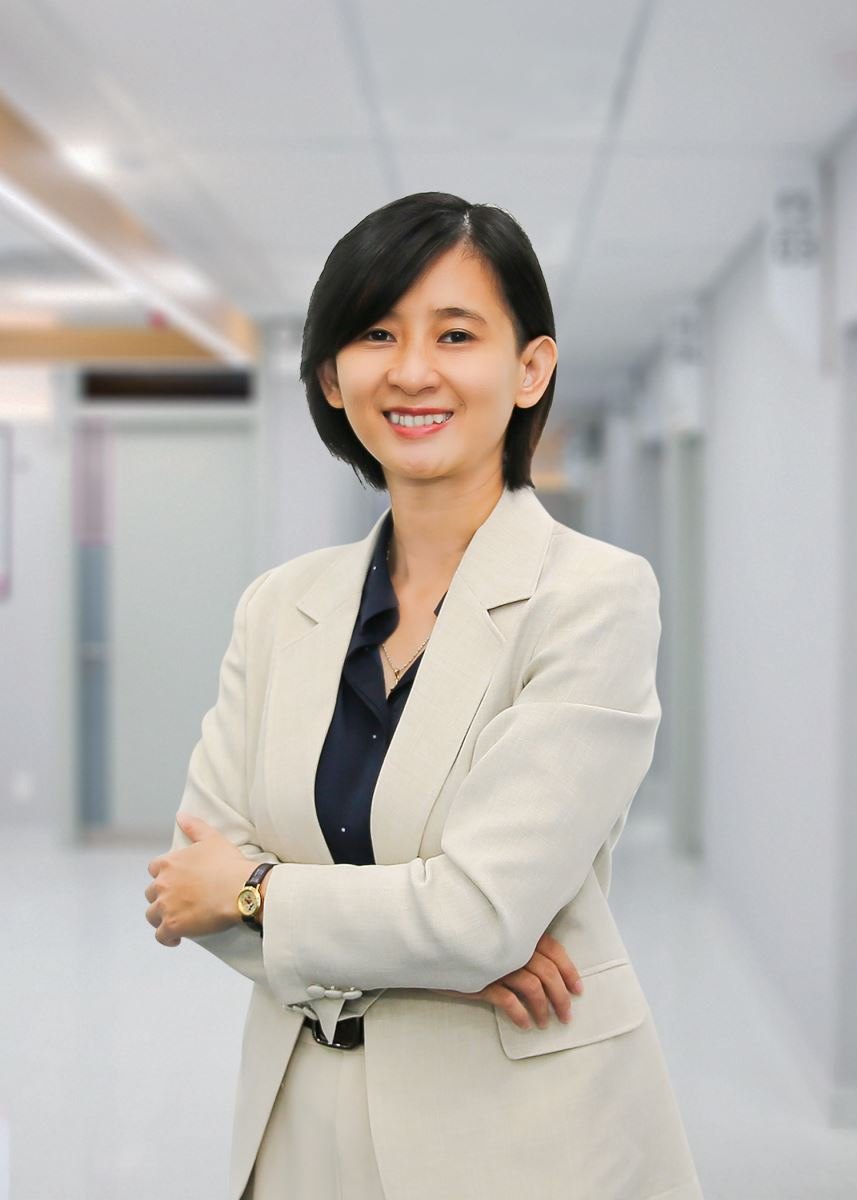
About Nguyễn Đức Như Thủy
Nguyễn Đức Như Thủy, MA, is an art therapist and Head of CarePlus Mental Health in Ho Chi Minh City. CarePlus describes her work as psychological counselling that uses visual-art processes alongside a psychodynamic approach. Her profile is relevant to children, adolescents and adults who may find it difficult to put emotional experiences into words, as well as people who prefer to explore feelings through both conversation and creative materials.
CarePlus says she trained in art therapy in Singapore and London and is a professional member of the Australian, New Zealand and Asian Creative Arts Therapies Association (ANZACATA). The clinic also lists training in suicide prevention and intervention through LivingWorks, screening for autism spectrum disorder in children through APPEA, and clinical supervision using art-therapy tools through ANZACATA. These details describe the qualifications published by her current clinic; they should not be read as a Vietnamese medical licence or as evidence that she practises psychiatry.
What art therapy can look like in practice
Art therapy is not an art lesson and clients do not need drawing skill. CarePlus explains that sessions may use pencils, charcoal, watercolour, crayons, collage, clay, fabric, yarn, images or three-dimensional objects. A client may create something and discuss it, choose from prepared images, or spend several sessions exploring one piece. The aim is psychological expression and reflection rather than producing an attractive artwork.
This format can be useful when direct conversation feels limiting. Images, colour, texture and metaphor can offer another way to notice emotions, conflicts or patterns. The therapist’s role is not to judge artistic ability or impose a fixed meaning on the work. A useful first consultation should explain how creative activity and conversation will be combined, how goals are agreed and how the client can decline a material or exercise that feels uncomfortable.
CarePlus lists art therapy and psychodynamic counselling as Ms. Thủy’s approaches. Psychodynamic work generally pays attention to recurring emotional and relational patterns, including how earlier experiences may shape current difficulties. Prospective clients should ask how she applies this approach to their particular concern, what progress might look like and how often the work will be reviewed.
Concerns and age groups in her published scope
Her official CarePlus profile lists children, adolescents and adults aged 18–50 among her target clients. It identifies emotional difficulties such as depression, anxiety and stress, along with childhood trauma, loss, bereavement, adjustment problems and relationship difficulties. The clinic reports experience with individual and group psychological intervention in schools, care centres and corporate counselling programmes.
These categories are broad. A profile match should be based on the person’s current needs, developmental stage and level of risk, not only on a familiar label. Parents seeking support for a child should ask whether the first meeting is with the parent, the child or both; how consent and confidentiality are handled; and how caregivers will receive feedback without undermining the child’s privacy. Adults may want to clarify whether the work is short-term and focused or open-ended.
Art therapy may help some people engage, but it is not automatically the best format for every problem. A client looking for a formal diagnosis, medication, neurodevelopmental assessment or a report for school, work, insurance or legal use should state that need before booking. Those tasks may require a psychiatrist, clinical assessment service or another appropriately qualified professional.
Experience and professional boundaries
CarePlus’s profile reports five years of experience at the time the biography was published, covering individual and group work. Because that figure is a dated provider statement, it is more useful to ask about her current experience with the specific age group or concern than to extrapolate a new total. Her role as head of the department also does not mean that every enquiry will automatically be assigned to her.
The clinic identifies her as a psychology master and art therapist, not as a medical doctor or psychiatrist. She should therefore not be approached for prescribing medicine or managing the physical effects of medication. If symptoms may have a medical cause, or if medication assessment is needed, coordination with a doctor or psychiatrist may be appropriate. Clients already taking psychiatric medicine should not stop or change it based only on a counselling appointment.
Membership of ANZACATA is useful professional context, but clients can still ask practical questions about confidentiality, record keeping, supervision, complaints and the limits of privacy. This is particularly important when therapy involves a child, an employer-funded programme or communication with another clinician.
Information for English-speaking and international clients
CarePlus offers a separate English-language counselling service for international and multicultural clients, but Ms. Thủy’s individual biography does not explicitly confirm that she personally provides therapy in English. Confirm the working language with the Mental Health Department before booking her specifically. Website availability in English is not the same as therapist-level fluency for nuanced psychological work.
Therapy depends on being able to describe emotions, relationships and risk accurately. If an interpreter is considered, ask how confidentiality will work and whether interpreting may affect the therapeutic process. It may be preferable for the department to match the client with a professional who works directly in the required language. Expatriates should also mention relocation stress, cultural adjustment, mixed-language family dynamics or an approaching departure date when requesting a match.
CarePlus’s directory includes specialists with different methods and populations. Vietnam Clinic’s guide to psychologists in Ho Chi Minh City can help international residents compare alternatives, but availability, language and scope should always be confirmed directly.
Preparing for the first appointment
When contacting the department, briefly describe who the appointment is for, the main concern, preferred language, age of the client and whether art therapy is specifically requested. Ask whether Ms. Thủy is accepting new clients and whether the first meeting is an assessment, a full therapy session or a matching consultation. CarePlus asks clients to arrange appointments in advance rather than arriving without a booking.
It can help to note current symptoms, how long they have been present, important recent changes, previous therapy, mental-health diagnoses, medicines and any immediate safety concerns. Parents can bring relevant school or assessment information, but should avoid preparing a child to give a particular answer. Adults do not need to arrive with a polished explanation; uncertainty about the problem can itself be discussed.
The clinic’s art-therapy service page gives a typical duration of 60–75 minutes and publishes a service price, while English-language counselling is listed separately with a 60-minute format and a different price. These are department service details rather than a guaranteed quotation for Ms. Thủy. Confirm the current fee, session length, cancellation policy, payment method and whether materials are included before attending.
Contact, scheduling and clinic location
CarePlus Mental Health publishes the dedicated phone number 0918 714 225 and email cmh@careplusvn.com. The department’s service pages list contact hours from 08:00 to 17:00, Monday through Saturday. These hours describe booking access and do not prove that Ms. Thủy is personally available throughout each day.
CarePlus operates several clinics in Ho Chi Minh City, and its general website lists branches in central districts and Tan Binh. However, the specialist profile does not identify a single practice address for Ms. Thủy. Confirm the exact branch, floor and appointment format in the booking confirmation rather than travelling to the nearest CarePlus location. Also ask whether the planned service is in person or whether a remote format is available; no individual online-therapy availability is published for her profile.
For ongoing work, expatriates should consider travel time and continuity. Ask how sessions are rescheduled during travel, what happens if the therapist is unavailable and how referrals are managed if the client moves away. Insurance coverage should be checked with both the clinic and insurer because CarePlus does not publish an individual insurance list for this practitioner’s counselling sessions.
When a psychiatrist or emergency service is needed
Counselling is not an emergency service. Someone facing immediate danger, a suicide attempt, an inability to stay safe, severe confusion, violent behaviour or a rapidly worsening crisis needs urgent assessment through local emergency services or a hospital rather than waiting for a routine therapy appointment. A trusted person should stay with the individual when it is safe to do so.
A psychiatrist or medical service may also be more appropriate when symptoms include possible psychosis, mania, severe withdrawal, major changes in sleep or eating that threaten physical health, or a need for medication evaluation. Art therapy can sometimes form one part of a wider plan, but it should not delay medical assessment. Clients can ask CarePlus how its psychological team coordinates with psychiatry and other healthcare services when needs fall outside the therapist’s scope.
Services and facilities
- Individual psychological counselling
- Group psychological intervention
- Art therapy
Specialties
- Art therapy
- Psychological counselling