Source-based provider information
About Viet An Eye Hospital Da Nang
Viet An Eye Hospital is a specialist ophthalmology hospital at 115 Nguyen Van Linh Street in central Da Nang. It provides eye examinations, diagnostic testing, medical treatment and surgery rather than general healthcare. The current service programme includes vision and refraction assessment, cataract surgery, several forms of refractive surgery, glaucoma care and vitreoretinal surgery.
The hospital publishes a named ophthalmology team with experience in cataract, refractive, glaucoma and general eye care, supported by an anaesthesiology physician. Its website is primarily in Vietnamese. International residents and travellers should therefore confirm in advance whether consultation, consent, written estimates and postoperative instructions can be provided in a language they fully understand.
Eye examinations and diagnostic testing
A routine pathway starts at reception and continues on the second floor. The hospital describes identity and insurance checks, visual-acuity measurement, vital signs and examination by an ophthalmologist. Depending on the problem, the doctor may order refraction, intraocular-pressure measurement, ultrasound, visual-field testing, optical coherence tomography, laboratory work or a minor procedure.
Bring current glasses or contact-lens details, previous prescriptions, eye-drop names and any earlier scan or operative report. Tell the doctor about diabetes, hypertension, autoimmune disease, pregnancy and medicines such as steroids or anticoagulants. If dilating drops may be used, bring sunglasses and arrange transport because near vision and light sensitivity can be affected for several hours.
Refractive surgery is not one-size-fits-all
Viet An publishes FemtoSecond LASIK, ReLEx SMILE and phakic ICL surgery for selected refractive errors. LASIK reshapes the cornea after creation of a flap. SMILE removes a small lenticule through a smaller corneal incision. Phakic ICL places a lens inside the eye without removing the natural lens. These methods have different anatomical requirements, risks and follow-up needs.
The hospital’s own newer guidance correctly notes that no technique suits everyone. Preoperative assessment should consider prescription stability, corneal thickness and shape, dry-eye status, other eye disease and the patient’s visual needs. Adults considering surgery should ask about the expected residual prescription, night-vision symptoms, dry eye, enhancement policy and whether reading glasses may still become necessary with age. Promotional procedure times do not represent the complete visit or recovery period.
Preparing for LASIK, SMILE or ICL
Contact lenses can alter corneal measurements. Ask the hospital how long soft, toric, rigid gas-permeable or orthokeratology lenses must be stopped before testing. Do not guess, as the interval may differ. Bring old prescriptions when possible so the team can assess stability. A detailed examination may take about two hours according to the hospital’s same-day pathway.
The hospital says some suitable patients can complete preoperative testing in the morning and surgery later that day, but this is conditional, not a promise. Travellers should leave time for repeat measurements, a change of method or postponement. Arrange an escort, accommodation and all scheduled reviews. Do not plan to drive or fly immediately after surgery without specific clearance.
Cataract assessment and Phaco surgery
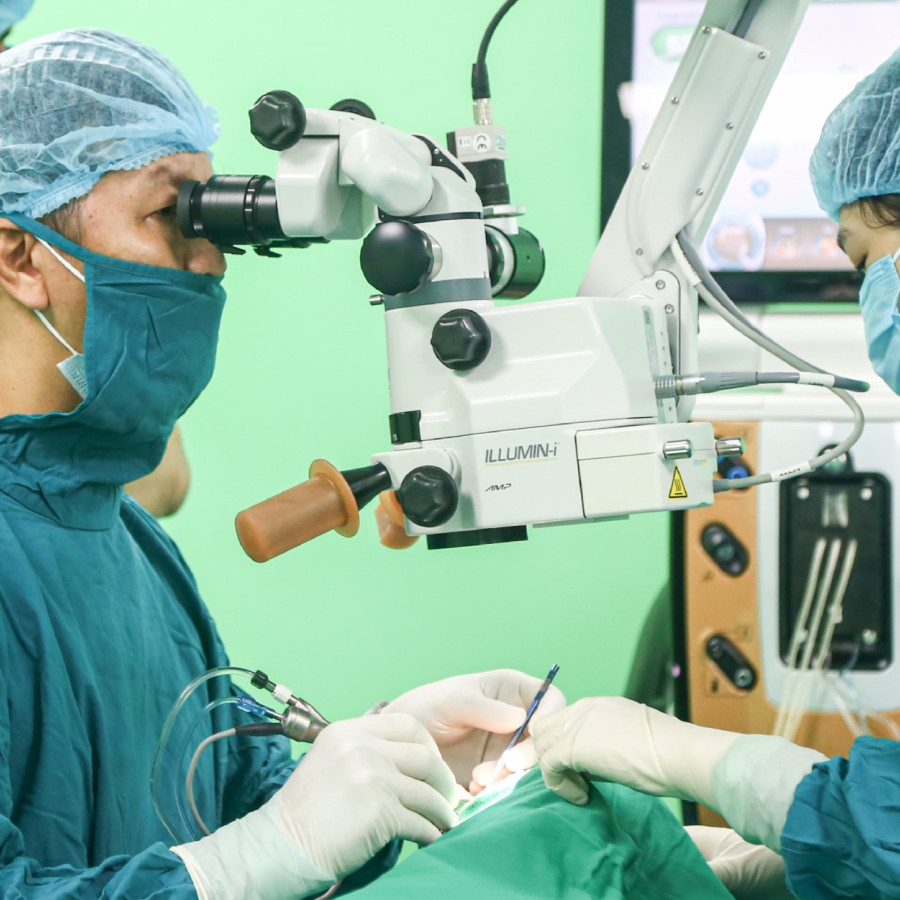
Phacoemulsification is offered for cataract treatment. The decision to operate should be based on how lens opacity affects daily function and whether another eye condition limits the likely benefit. Preoperative planning includes ocular measurements and discussion of the intraocular lens. Ask whether the proposed lens is monofocal, toric or another design, what visual range it targets and which additional costs are not covered by insurance.
Patients should understand the drop schedule, eye protection, activity restrictions and follow-up plan before leaving. Increasing pain, rapidly worsening vision, marked redness, flashes, a curtain-like shadow or nausea with eye pain after surgery requires urgent contact with an ophthalmology service.
Retina, vitreous and diabetic eye care
The current homepage lists vitreoretinal surgery using a Constellation Vision system, and the hospital publishes retinal screening information for people with diabetes. Retina conditions may need OCT, ultrasound, dilated examination or other imaging. Diabetic patients should bring recent medical information and keep systemic care coordinated with their diabetes clinician.
New flashes, a sudden shower of floaters, a dark curtain in the visual field or abrupt loss of vision can indicate a retinal emergency. Do not wait for a routine appointment. Call the hospital and seek immediate eye assessment; if the specialist service is unavailable, use an emergency department capable of arranging urgent ophthalmology care.
Glaucoma and ongoing eye disease
The doctor directory identifies glaucoma expertise, while the examination pathway includes intraocular-pressure and visual-field testing. Glaucoma monitoring often depends on trends across pressure readings, optic-nerve imaging and visual fields rather than one isolated result. Bring prior tests whenever possible so the doctor can compare change over time.
Do not stop prescribed glaucoma drops because symptoms are absent. Ask for generic medication names, dosing and storage instructions. Sudden severe eye pain, headache, halos, nausea and a red eye can be an acute emergency and should not wait for an ordinary clinic slot.
Children and general ophthalmology
The official team page states that physicians examine and treat eye conditions in adults and children. For a child, bring glasses, school or screening results and relevant birth or developmental history. Ask whether cycloplegic refraction, dilation or additional testing is expected so there is enough time for the visit.
Parents should seek urgent advice for eye trauma, chemical exposure, sudden squint, a white pupil in photographs, severe pain or sudden visual change. Routine refraction and myopia follow-up should not delay assessment of these warning signs.
Vietnamese health insurance
Viet An states that it accepts Vietnam’s national health insurance, known as BHYT, for eligible eye examination and treatment. Patients should present a valid insurance card and photo identification; children under six require a valid card under the hospital’s published guidance. Coverage and patient contribution depend on benefit level, referral status, diagnosis, treatment and applicable rules.
Not every eye service is covered. The hospital’s insurance information specifically notes exclusions affecting treatment for refractive errors and cosmetic services, subject to legal conditions. Refractive-surgery packages and premium lens choices should therefore be confirmed separately. Ask the hospital to distinguish covered medical care, non-covered materials and optional upgrades in writing.
Appointments, records and costs
The hospital accepts online appointment requests and publishes a mobile hotline, central hotline and email. Its form asks for the preferred date, time, doctor and reason for consultation. A submitted form should not be treated as a confirmed slot until the hospital responds. Routine hours are 07:30–17:00 from Monday to Saturday; Sunday hours are not published.
Request an itemised estimate before surgery and retain the prescription, examination results, imaging, operative note, implanted-lens details and discharge instructions. Viet An says it can provide discharge and surgery certificates, outpatient records, invoices, cost statements and test results where applicable. These documents are particularly important for insurance claims and for follow-up outside Vietnam.
Planning care as a visitor or expatriate
The hospital is on Nguyen Van Linh, a major road connecting Da Nang’s airport area with the city centre. People travelling from another province can ask about the hospital’s published support for accommodation, food and transport, but eligibility and exact arrangements need direct confirmation. Keep travel plans flexible around postoperative reviews.
Patients who do not read Vietnamese should request interpretation before consenting to surgery. Do not rely only on translated marketing pages or a companion for complex risks. Travellers comparing specialist access, insurance and procedures can also review Vietnam Clinic’s guide to eye clinics and hospitals in Da Nang.
When a general emergency department may be necessary
Viet An is an eye hospital, not a full general hospital. Eye trauma, chemical exposure and sudden vision loss need urgent ophthalmic advice. However, stroke symptoms, severe head injury, loss of consciousness, chest pain, breathing difficulty or a major multi-system accident require general emergency care even when vision is affected.
For chemical exposure, begin immediate rinsing with clean water and seek emergency care without waiting for an appointment. Bring the product container when safe. For a penetrating injury, do not press on the eye or remove an embedded object.
Verified services include eye examination, visual-acuity and refraction testing, intraocular-pressure measurement, visual-field testing, OCT, ocular ultrasound, FemtoSecond LASIK, ReLEx SMILE, phakic ICL, Phaco cataract surgery, glaucoma care and vitreoretinal surgery. The official pathway also documents laboratory testing, minor procedures, inpatient admission and postoperative education when clinically indicated.
Published equipment and facilities include refractive laser systems, a Constellation Vision vitreoretinal platform, OCT, visual-field, ultrasound and tonometry capability, clinical examination areas and surgical care. No current medical operating-licence number was found on the reviewed official pages, so the registry field remains empty rather than substituting a company number or promotional credential.
Services and facilities
- Comprehensive eye examination
- Visual acuity testing
- Refraction testing
- Intraocular pressure measurement
- Visual field testing
- Optical coherence tomography
- Ocular ultrasound
- FemtoSecond LASIK
- ReLEx SMILE surgery
- Phakic ICL surgery
- Phaco cataract surgery
- Vitreoretinal surgery
- Glaucoma assessment and treatment
- Retinal examination
- Diabetic retinopathy screening
- General ophthalmology
- Paediatric eye examination
- Minor ophthalmic procedures
Specialties
- Ophthalmology
- Refractive surgery
- Cataract surgery
- Retina and vitreous care
- Glaucoma care
- Paediatric ophthalmology
- Ophthalmic diagnostics
Languages
- Vietnamese