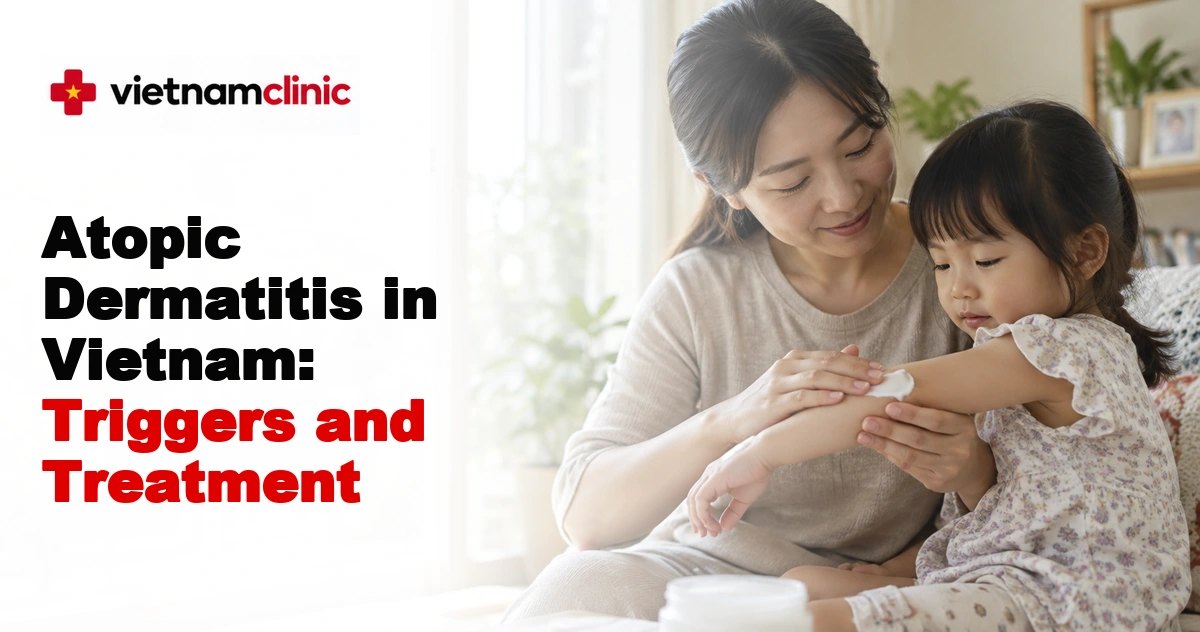
Atopic dermatitis, also called atopic eczema, is a long-term inflammatory skin condition in which dry skin and itch often alternate between quieter periods and flares. It is not contagious and is not caused by poor hygiene. Treatment can substantially improve comfort, sleep and skin health, even though there is no single permanent cure for everyone.
The condition often begins in childhood but can persist or first appear in adults. A useful plan combines regular barrier care with treatment of inflammation and recognition of complications. Simply changing moisturisers repeatedly may not control an active flare, while medication alone does not replace day-to-day skin care.
Why the skin becomes dry and inflamed
Atopic dermatitis involves both an impaired skin barrier and immune activity that promotes inflammation. The barrier loses water more easily and may allow irritants or allergens to enter more readily. Genetic factors, including differences in proteins involved in the skin barrier, can contribute, but not everyone has the same cause or trigger.
People with eczema may also have asthma, allergic rhinitis or food allergy. These associations do not mean every rash is caused by food or that everyone needs allergy testing. The relationship is more complex than one substance entering the body and producing all symptoms.
Scratching briefly relieves itch but can further damage the barrier, increasing inflammation and creating an itch–scratch cycle. Effective treatment aims to interrupt that cycle rather than blame a person for scratching while asleep or unable to resist intense itch.
What it looks like at different ages
In babies, eczema commonly affects the cheeks and other areas of the face, as well as the body. Older children often develop patches in the elbow and knee folds. Adults may have persistent flexural eczema, hand involvement, facial symptoms or more widespread disease.
Skin can be rough, cracked, scaly, thickened or occasionally weepy. The colour of inflammation differs with skin tone: it may look red, purple, grey or darker than surrounding skin. Relying only on bright redness can underestimate activity in darker skin.
After a flare settles, lighter or darker patches may remain for a while. These changes do not necessarily indicate ongoing infection or permanent scarring. Continued irritation from scrubs or unprescribed lightening products can make matters worse. Assessment should consider itch, texture, warmth and symptoms as well as colour.
Diagnosis and conditions that can resemble eczema
Diagnosis usually comes from the appearance, distribution and history of the rash. There is no single blood test that confirms all cases. A clinician may reconsider the diagnosis if treatment is not working or the pattern is unusual.
Contact dermatitis can coexist with atopic eczema, especially on hands, eyelids or areas exposed to particular products. Fungal infection, scabies, psoriasis and other skin conditions can also resemble it. A spreading ring-shaped rash or itch affecting several household members may require a different investigation and treatment.
Patch testing can help identify delayed contact allergy to substances such as fragrance or preservatives. It is different from skin-prick testing for immediate allergy. Broad internet allergy panels do not reliably identify the cause of eczema and can lead to unnecessary restrictions.
Moisturising as ongoing treatment
Use a fragrance-free emollient that is comfortable enough to apply consistently. Ointments are often useful for very dry skin, while creams may be easier to tolerate in warm weather or during the day. A product that stings persistently or causes a new rash may need to be changed.
Apply moisturiser generously and regularly, including when the skin looks clear. After bathing, gently pat the skin and apply the chosen product while some moisture remains. Smooth it on rather than scrubbing. Emollients help reduce water loss, but they may not adequately suppress established inflammation on their own.
Avoid contaminating a shared tub with unwashed fingers. Pumps or a clean utensil can help. Emollient residue on clothing and bedding can make fabric burn more readily; keep it away from cigarettes and open flames. Washing fabric reduces buildup but does not remove all fire risk.
Bathing, sweating and everyday irritants
Short baths or showers in lukewarm water are usually better tolerated than long hot washing. Use a gentle fragrance-free cleanser or an advised soap substitute, and avoid vigorous rubbing, bubble baths or harsh exfoliation. Moisturise afterwards rather than allowing the skin to dry out completely.
Heat and sweat can worsen symptoms for some people, which matters in Vietnam's hot weather. Lightweight comfortable clothing, cooling after activity and gently rinsing away sweat may help. Air conditioning can also dry the skin, so the best routine depends on the individual's pattern.
Frequent wet work, detergents and cleaning products can aggravate hand eczema. Suitable protective gloves may help, but prolonged sweating inside them can irritate too. Reduce unnecessary exposure and dry hands gently. Expensive antibacterial washes are not a routine solution for eczema.
Topical corticosteroids: matching treatment to the flare
Topical corticosteroids reduce skin inflammation and are a standard treatment for flares. The appropriate strength depends on age, body site, severity and duration. Thin areas such as the face and folds need different instructions from thickened skin on other parts of the body.
Use the prescribed amount and schedule. A clinician can demonstrate fingertip-unit measurements and specify where each preparation belongs. Using too little because of fear can leave inflammation uncontrolled; using a strong product too often or for too long can increase risks such as skin thinning.
Once control is achieved, some people use an intermittent preventive regimen on areas that repeatedly flare. This should be planned rather than improvised. Do not mix steroid products into a moisturiser tub or apply a potent cream to a baby's face because it worked on an adult's hand.
Addressing concerns about steroid withdrawal
Severe topical steroid withdrawal reactions have been reported, particularly after prolonged frequent use of stronger preparations. Burning and redness or other colour changes that extend beyond the original treated area may need assessment. A flare after stopping treatment is not automatically withdrawal; recurrent eczema, infection and contact allergy are other possibilities.
If symptoms worsen after reducing a long-used steroid, seek a review of the actual product, strength and history. Do not repeatedly increase potency or abruptly abandon all care based on an online comparison. A supervised plan can address both inflammation and possible adverse effects.
When correctly selected and used, topical corticosteroids have a favourable benefit–risk balance for many patients. Discussing realistic risks should help people use them appropriately, not leave severe eczema untreated indefinitely.
Non-steroid medicines and wet wraps
Tacrolimus ointment and pimecrolimus cream are topical calcineurin inhibitors that may be useful when steroids are unsuitable or for sensitive sites and longer-term control. They can cause temporary burning or stinging. Age limits, application sites and precautions depend on the product and prescribing guidance.
Other non-steroid topical medicines target different inflammatory pathways. Their availability and approved ages vary between countries; approval in the United States or Europe does not establish availability or authorization in Vietnam. A dermatologist can choose among appropriate local options.
Wet-wrap therapy can improve hydration and medication delivery during selected severe flares. Because covering a medicine can increase absorption, especially in children, use it with clear professional instructions about what to apply and for how long. Do not wrap suspected infected skin or use strong steroids under coverings without advice.
Itch, sleep and antihistamines
Keeping nails short, using cool compresses and treating inflammation can reduce damage from scratching. A regular bedtime routine and avoiding overheating may help sleep, but persistent night waking is also a sign that disease control needs review.
Antihistamines do not directly treat the main inflammatory process of atopic dermatitis. A clinician may occasionally use a sedating antihistamine for a short period when sleep is severely disrupted, but routine long-term use is not the foundation of treatment. Sedation can affect driving, work and school, and young children require particular caution.
Itch that continues despite apparently clear skin deserves discussion. It may reflect residual disease, another condition or a need to adjust treatment, rather than simply a habit that the person should be able to stop.
Food allergy and elimination diets
Most eczema is not fixed by removing a long list of foods. An immediate reaction after eating, such as hives, lip swelling, vomiting or breathing difficulty, raises a different concern and warrants allergy assessment. Breathing difficulty or collapse after food is an emergency.
Selected infants or children with persistent moderate-to-severe eczema despite good treatment may also need evaluation for food allergy, especially with poor growth or gastrointestinal symptoms. Testing should be guided by the history. A positive result can indicate sensitisation without proving that eating the food causes symptoms.
Do not remove milk, eggs, wheat or multiple other foods without a clear plan. Restriction can compromise nutrition and growth. If an exclusion is medically needed, a dietitian can help maintain adequate intake and plan reassessment. Changing a breastfeeding parent's diet is not a routine eczema treatment.
Recognising bacterial infection
Increasing pain, warmth, swelling, pus, rapidly worsening crusts or fever can suggest infection. However, eczema can weep or carry bacteria without a clinically important bacterial infection. Not every flare needs antibiotic cream or tablets.
NICE advises against routinely adding antibiotics for suspected secondary bacterial infection when the person is not systemically unwell, while taking severity and complication risks into account. Repeated unnecessary courses can promote resistance. A clinician may prescribe antibiotics when infection is significant, widespread or accompanied by illness.
Continue the advised treatment of the underlying eczema unless the clinician changes it. Recurrent or nonresponsive infection may need a swab and a review of the diagnosis. Rapidly spreading redness, severe pain or feeling very unwell requires urgent assessment.
Eczema herpeticum needs urgent care
Herpes simplex virus can cause a potentially serious infection called eczema herpeticum in skin affected by eczema. Warning signs include a sudden outbreak of painful, similar-looking blisters or punched-out sores, rapidly spreading lesions, fever or marked illness. It can occur even without a remembered previous cold sore.
Seek same-day urgent medical assessment if this is suspected. Antiviral treatment may need to begin promptly; antibiotics alone do not treat the virus. Eye involvement, eye pain or lesions close to the eye require urgent attention because vision can be at risk.
People with active cold sores should avoid kissing affected skin or sharing items that contact the sores, especially around babies and people with eczema. Good hand hygiene is helpful, but suspected eczema herpeticum should never be managed by hygiene measures alone.
When specialist treatment is needed
Persistent moderate-to-severe disease may need phototherapy or a medicine that works throughout the body. Options include targeted biologic medicines, oral JAK inhibitors and selected conventional systemic treatments. These can provide substantial benefit, but the choice depends on age, severity, other conditions and local approvals.
Different drugs require different precautions and monitoring. Some increase infection risk or require blood tests; some biologics can cause eye inflammation. Discuss pregnancy, vaccinations and relevant medical history as part of selecting treatment. Do not assume every systemic option has the same risk profile.
Routine systemic corticosteroids are discouraged in major atopic dermatitis guidelines because of adverse effects and the risk of rebound. Phototherapy is controlled medical light treatment, not a recommendation to use tanning beds or deliberately burn in the sun.
A plan that adapts over time
Control should be judged by itch, sleep, pain, skin condition and the ability to carry out daily activities. A small area on the hands or face can have a major effect even if total body involvement is limited. Emotional distress and disrupted school or work are valid reasons to review treatment.
A written plan should distinguish everyday moisturising, early flare treatment and signs that require medical help. If a treatment seems ineffective, check diagnosis, application and possible triggers before simply adding more products. Atopic dermatitis often changes over time; regular adjustment can reduce flares and make daily care more manageable.
Frequently Asked Questions
Why the skin becomes dry and inflamed?
Atopic dermatitis involves both an impaired skin barrier and immune activity that promotes inflammation. The barrier loses water more easily and may allow irritants or allergens to enter more readily.
What it looks like at different ages?
In babies, eczema commonly affects the cheeks and other areas of the face, as well as the body. Older children often develop patches in the elbow and knee folds.
What should you know about diagnosis and conditions that can resemble eczema?
Diagnosis usually comes from the appearance, distribution and history of the rash. There is no single blood test that confirms all cases.
What should you know about moisturising as ongoing treatment?
Use a fragrance-free emollient that is comfortable enough to apply consistently. Ointments are often useful for very dry skin, while creams may be easier to tolerate in warm weather or during the day.
What should you know about bathing, sweating and everyday irritants?
Short baths or showers in lukewarm water are usually better tolerated than long hot washing. Use a gentle fragrance-free cleanser or an advised soap substitute, and avoid vigorous rubbing, bubble baths or harsh exfoliation.
Sources

Writer
Tan Nguyen
Medical writer for Vietnam Clinic. MD, Vietnam National University Ho Chi Minh City.