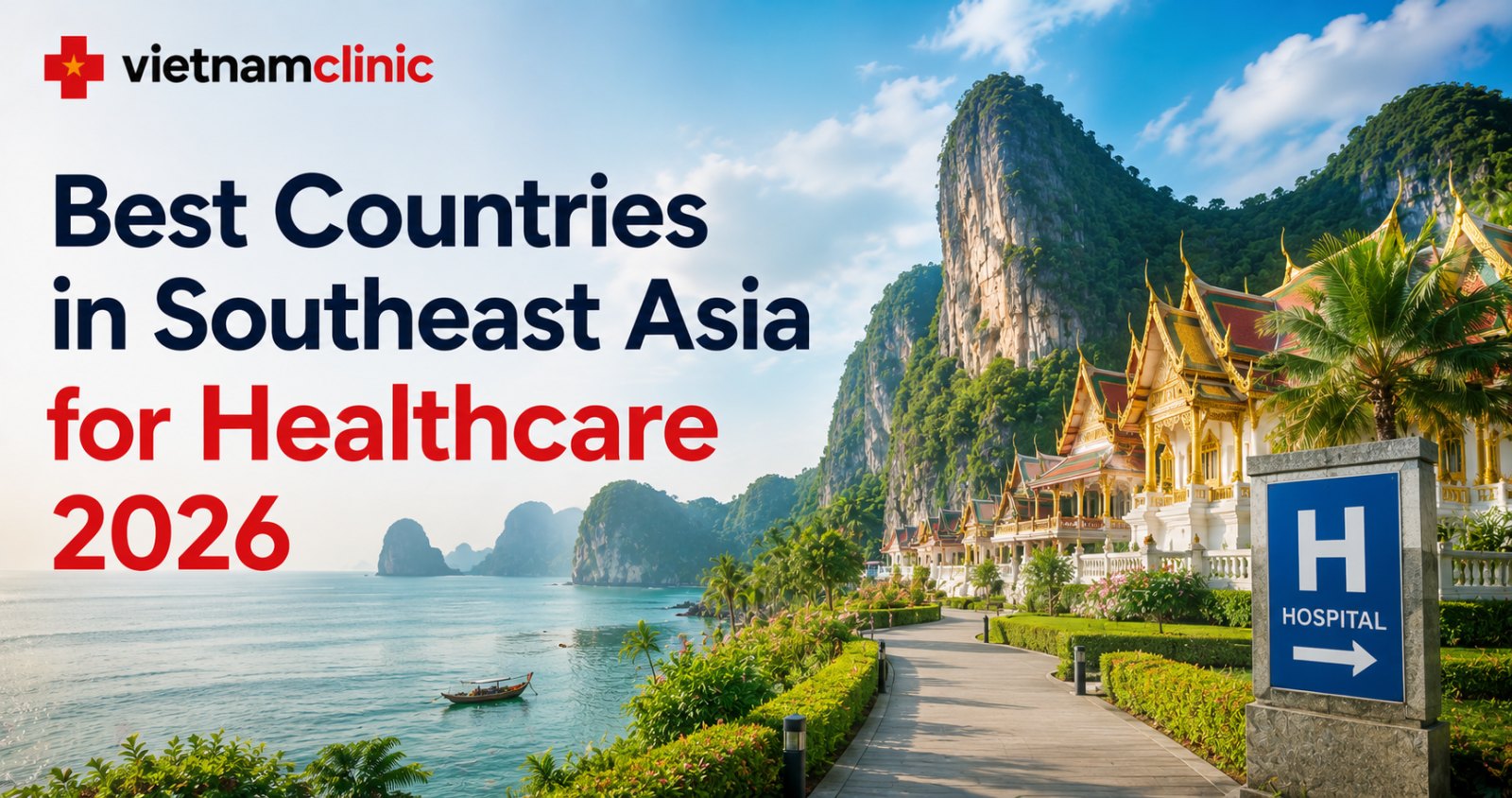
Southeast Asia offers very different healthcare experiences depending on where you live, travel or seek treatment. Singapore has one of the region's most developed healthcare systems, Thailand and Malaysia have established international medical sectors, while Vietnam is expanding private and international-facing care in major cities at comparatively accessible prices.
There is no single official ranking that can identify the best Southeast Asian healthcare system for every patient. A country that works well for complex surgery may not be the most practical choice for routine care, a long-term expatriate or someone prioritising affordability.
This 2026 guide compares Vietnam, Singapore, Thailand, Malaysia, the Philippines and Indonesia from the perspective of international patients. Rather than assigning a simplistic quality score, it looks at hospital infrastructure, international patient access, language, medical tourism, costs and the differences between major cities and the rest of each country.
1. Vietnam
Vietnam deserves a prominent place in a Southeast Asian healthcare comparison because its medical sector is developing quickly while remaining relatively affordable for many international patients.
Healthcare is available through a large public system alongside a growing private sector. For expatriates and travellers, private hospitals and international-facing clinics are often the easiest entry point because appointments, English-language communication, insurance administration and private rooms can be more straightforward.
Where healthcare is strongest in Vietnam
The broadest selection of private and specialist care is concentrated in:
- Ho Chi Minh City.
- Hanoi.
- Da Nang.
Large private healthcare groups and international-facing providers operating in Vietnam include Vinmec, FV Hospital, Family Medical Practice and Hanoi French Hospital. Each has different locations, specialties and capabilities, so their presence should not be treated as an endorsement or ranking.
Ho Chi Minh City and Hanoi provide the widest range of tertiary and specialist services. Da Nang has a smaller healthcare market but still offers private hospitals, international clinics and emergency services suitable for many common medical needs.
Why Vietnam can work well for international patients
Vietnam can be particularly attractive for:
- General medical consultations.
- Dental care.
- Eye care.
- Dermatology and aesthetic medicine.
- Health checks.
- Selected surgical procedures.
- Long-term expatriates who want access to private care at costs that may be lower than in Singapore and many Western countries.
English support is increasingly available in private facilities serving international patients, but it should never be assumed. Confirm that the specific doctor can consult in English or that interpretation is available.
Vietnam's health system also continues to develop. WHO reported further progress in essential healthcare access, vaccination and health-system development during 2025, while challenges remain between urban and rural healthcare capacity.
The main limitation
The quality and accessibility of care are not uniform throughout the country. Major urban hospitals can offer advanced services, while smaller provincial facilities may have fewer specialists, less English-language support and more limited equipment.
For complex conditions, patients living outside the major cities may need referral to Hanoi, Ho Chi Minh City or another specialist centre.
For practical information about accessing treatment, see Sick in Vietnam? What to Do and Where to Go. International patients can also use How to Choose an English-Speaking Clinic in Vietnam before booking.
2. Singapore
Singapore has the most highly developed medical infrastructure in Southeast Asia and is a regional centre for complex specialist medicine.
The healthcare system combines public hospitals, specialist centres, private hospitals and primary care clinics. Singapore General Hospital, National University Hospital and specialised national centres manage complex conditions across areas such as cardiology, oncology, neuroscience and transplantation.
Private hospital groups also serve residents and international patients.
Why Singapore stands out
Singapore can be particularly relevant for:
- Complex surgery.
- Cancer treatment.
- Cardiology.
- Neurology and neurosurgery.
- Advanced diagnostics.
- Highly specialised medical care.
- Second opinions for complicated conditions.
English is one of Singapore's official languages and is routinely used throughout healthcare, removing one of the main difficulties international patients can encounter elsewhere in the region.
The main limitation
Cost is the major disadvantage for international patients.
Foreign residents and non-residents using Singapore's public institutions are generally treated as private patients rather than receiving the same subsidies available to eligible Singapore residents. Singapore General Hospital, for example, explicitly classifies foreign residents and non-residents as private patients for specialist outpatient purposes.
Private health insurance or substantial financial preparation is therefore particularly important when planning major treatment in Singapore.
For an expatriate choosing a country primarily on access to advanced medicine rather than price, Singapore remains one of the strongest options in Asia. For routine outpatient care or elective treatment, however, neighbouring countries can be considerably more economical.
3. Thailand
Thailand has one of Asia's most established private healthcare and medical tourism sectors.
Bangkok contains a large concentration of private hospitals serving both Thai and international patients. Major tourist and expatriate destinations such as Chiang Mai, Phuket and Pattaya also have private hospital infrastructure, although the widest specialist choice remains in Bangkok.
WHO has described Thailand as one of the world's leading medical tourism destinations and notes the important role played by private hospitals alongside the country's extensive public health system.
Why international patients choose Thailand
Thailand has developed strong international patient services around areas including:
- Health screening.
- Orthopedic surgery.
- Cardiology.
- Dental treatment.
- Fertility care.
- Cosmetic and reconstructive surgery.
- Rehabilitation.
- Specialist consultations.
Large private hospitals often have international patient departments, interpreters and experience handling overseas insurance.
Cost and accessibility
Private medical treatment is generally more expensive than basic local healthcare but can remain attractive compared with equivalent private treatment in higher-cost countries.
The combination of large private hospitals, an established tourism sector and international flight connections has helped Thailand develop into a regional centre for patients travelling specifically for treatment.
However, quality varies between facilities. Thailand's reputation for medical tourism should not be used as evidence that every cosmetic clinic, dental practice or surgical provider meets the same standards.
Patients should verify the medical facility, treating doctor, procedure, total costs and postoperative arrangements independently.
4. Malaysia
Malaysia combines an established public healthcare system with a substantial private hospital sector and a government-supported healthcare travel industry.
Kuala Lumpur, Penang and several other urban centres have private hospitals accustomed to treating international patients.
The Malaysia Healthcare Travel Council, established to develop and coordinate the country's healthcare travel sector, is promoting Malaysia Year of Medical Tourism 2026 as part of the country's strategy to strengthen its position as an international healthcare destination.
Why Malaysia performs strongly
Malaysia can be attractive for:
- Health screening.
- Cardiology.
- Oncology.
- Orthopedics.
- Fertility treatment.
- Dental care.
- Specialist consultations.
English is widely used in private healthcare, which can make appointments and medical discussions easier for international patients.
Malaysia also has a mature private hospital sector with international patient departments designed specifically to assist people travelling for treatment.
Costs
Private healthcare costs vary considerably by procedure and hospital, but Malaysia generally competes on the combination of developed private facilities and prices below those typically encountered in Singapore.
The Malaysia Healthcare Travel Council provides information specifically for international patients and participating healthcare providers, making the country's healthcare travel infrastructure relatively easy to navigate.
As elsewhere, accreditation or participation in a healthcare travel programme does not remove the need to assess the individual doctor and proposed treatment.
5. Philippines
The Philippines has a large healthcare system with some highly developed private hospitals, particularly in Metro Manila and other major cities.
For many international patients, one important practical advantage is language. English is widely used by healthcare professionals and throughout medical education and private hospital administration.
Where care is concentrated
The most extensive private medical services are found in Metro Manila, with additional private hospital infrastructure in Cebu and other large cities.
The country offers specialist care in areas including:
- Cardiology.
- Oncology.
- Surgery.
- Orthopedics.
- Dentistry.
- Diagnostic medicine.
WHO and the Philippine Department of Health continue to work on healthcare reform, digital health, tuberculosis, maternal healthcare and other national health priorities.
The main limitation
As in Vietnam and Indonesia, the difference between major urban hospitals and healthcare available in more remote areas can be substantial.
An expatriate living in Metro Manila may have access to sophisticated private hospitals, while someone based on a smaller island could need transfer to a larger city for complex treatment.
For international residents, location within the Philippines can therefore matter almost as much as the country itself.
6. Indonesia
Indonesia has the largest population in Southeast Asia and an enormous healthcare system, but access and infrastructure differ substantially across its thousands of islands.
Jakarta has the country's deepest concentration of private hospitals and specialists. Bali also has a substantial healthcare sector serving residents and international visitors, including the newer Bali International Hospital development in the Sanur Health Special Economic Zone.
Why Indonesia is changing
Indonesia has historically seen some residents travel to Singapore or Malaysia for complex private treatment. Government initiatives are attempting to strengthen advanced healthcare domestically and develop medical tourism services inside Indonesia.
For routine healthcare, private hospitals are available in many major cities. More specialised treatment can require travel to Jakarta, Bali or another large urban centre.
The geography problem
Indonesia illustrates why national healthcare comparisons have limits. A patient in central Jakarta and a patient on a remote island are technically using the same national healthcare system but may have dramatically different access to specialists, advanced diagnostics and emergency care.
International residents should therefore evaluate the healthcare infrastructure of the specific city or island where they plan to live.
How do the countries compare?
For an international patient, the practical differences can be summarised like this:
| Country | Main advantage | Main limitation | Strongest locations for international care |
|---|---|---|---|
| Vietnam | Affordable private care and rapidly developing urban healthcare | Large differences between major cities and provincial areas | Ho Chi Minh City, Hanoi, Da Nang |
| Singapore | Advanced specialist and complex medical care | Highest costs in the region | Singapore |
| Thailand | Very established private hospitals and medical tourism infrastructure | Provider quality and pricing vary | Bangkok, Phuket, Chiang Mai, Pattaya |
| Malaysia | Strong balance of private healthcare, international services and cost | Advanced care concentrated in major urban centres | Kuala Lumpur, Penang |
| Philippines | Extensive use of English and strong private hospitals in major cities | Significant regional differences in access | Metro Manila, Cebu |
| Indonesia | Large and expanding private healthcare market | Geography creates major differences in access | Jakarta, Bali |
This is not a clinical quality ranking. The appropriate country depends on the patient's medical problem, budget, location and need for follow-up.
Which Southeast Asian country has the best healthcare?
If the priority is highly specialised medicine and cost is secondary, Singapore has the strongest overall case because of its advanced hospital infrastructure and specialist centres.
For international private healthcare with a stronger balance between medical infrastructure and cost, Thailand and Malaysia are particularly established choices.
Vietnam is increasingly competitive for routine private care, dentistry, diagnostics, selected procedures and expatriate healthcare, especially in Ho Chi Minh City, Hanoi and Da Nang. Its lower-cost environment can make it particularly relevant for people living in Vietnam who do not need to travel elsewhere for highly complex treatment.
The Philippines has the advantage of widespread English use, while Indonesia is investing in expanding its ability to retain patients who previously travelled abroad.
What about medical tourism?
Healthcare quality and medical tourism are related but not identical.
A country can have excellent hospitals without actively targeting foreign medical tourists. Singapore is a good example: its Ministry of Health has stated that public healthcare institutions prioritise the healthcare needs of Singaporeans and do not actively market public hospitals to foreign patients.
Thailand and Malaysia have much more explicit international healthcare sectors. Malaysia's government-supported Malaysia Healthcare Travel Council coordinates healthcare travel initiatives, while Thailand has long incorporated medical services into its international tourism economy.
Vietnam's medical tourism sector is less mature but has significant potential because private hospitals, dental clinics, eye centres and aesthetic providers increasingly serve overseas and expatriate patients.
If you are considering treatment specifically in Vietnam, compare the actual provider rather than assuming that a country's medical tourism reputation guarantees the quality of an individual clinic.
Costs should be compared procedure by procedure
It is tempting to label one country cheap and another expensive, but this can be misleading.
A general consultation, dental implant, MRI scan, cataract operation and cancer treatment have completely different cost structures. Hospital fees also vary between cities and between public and private providers within the same country.
Ask for an itemised quotation covering:
- Consultation.
- Diagnostic tests.
- Surgeon or specialist fees.
- Anaesthesia.
- Hospital charges.
- Medical devices or implants.
- Medication.
- Follow-up.
- Possible additional treatment.
Currency exchange rates and provider fees change, so prices published in comparative articles should never replace a current quotation from the hospital or clinic.
Insurance matters for expatriates
National healthcare systems in Southeast Asia are generally designed primarily around citizens and eligible local residents. Foreigners should not assume that moving to a country automatically gives them access to the same subsidised care available to citizens.
Eligibility depends on the country, residence status, employment and insurance system.
For long-term expatriates, private or international medical insurance can therefore be an important part of healthcare planning. Check:
- Which hospitals are included.
- Direct billing arrangements.
- Annual coverage limits.
- Outpatient coverage.
- Cancer and chronic disease coverage.
- Emergency treatment.
- Medical evacuation.
- Treatment outside the country.
A policy that works for routine healthcare in Vietnam or Indonesia may have different implications if you later need highly specialised treatment in Singapore or Thailand.
Choosing a country for a specific medical procedure
Do not select a destination based only on a country-level ranking.
Instead compare:
- The doctor who will treat you.
- The hospital or clinic where treatment takes place.
- Experience with your specific procedure or condition.
- Available diagnostic and intensive-care support.
- Language and interpretation.
- Total cost.
- Insurance arrangements.
- Follow-up after discharge.
- What happens if complications develop after you return home.
Medical tourism becomes particularly complicated when surgery requires several weeks or months of follow-up.
Frequently Asked Questions
The answers below address common questions from expatriates, travellers and international patients comparing healthcare systems in Southeast Asia. Healthcare access, insurance rules, hospital services and fees can change and should be confirmed directly before treatment.
Which country has the best healthcare in Southeast Asia?
There is no single official answer for every patient, but Singapore has the region's strongest concentration of advanced specialist infrastructure. Thailand and Malaysia are particularly established for international private healthcare, while Vietnam is increasingly competitive for affordable private care in major cities.
Is healthcare in Vietnam good for foreigners?
International patients can access private hospitals and clinics in Ho Chi Minh City, Hanoi and Da Nang that provide a broad range of services. Quality, specialist availability and English support vary by facility, so the individual provider should be checked before booking.
Is Thailand or Vietnam better for healthcare?
Thailand has a more mature international hospital and medical tourism sector, particularly in Bangkok. Vietnam can be attractive for residents and travellers seeking accessible private consultations, dental care, diagnostics and selected treatments without travelling to another country.
Is Malaysia good for medical tourism?
Yes. Malaysia has an established private hospital sector and a government-supported healthcare travel programme coordinated by the Malaysia Healthcare Travel Council. Malaysia Year of Medical Tourism 2026 is part of the country's current strategy to strengthen this sector.
Which Southeast Asian country is easiest for English-speaking patients?
Singapore and the Philippines have clear language advantages because English is widely used in healthcare. International hospitals and clinics in Thailand, Malaysia and Vietnam also commonly provide English support, but patients should confirm the language of the specific clinician.
Should I travel to another Southeast Asian country for medical treatment?
That depends on the condition and the services available where you are. For complex surgery or specialist treatment, comparing hospitals across countries can be reasonable, but the treating doctor, facility, costs, insurance and follow-up arrangements matter more than a general country ranking.
Conclusion
Singapore, Thailand, Malaysia, Vietnam, the Philippines and Indonesia all offer viable healthcare options for international residents and patients, but for different reasons.
Singapore provides the region's deepest concentration of advanced specialist care but at a higher cost. Thailand and Malaysia combine developed private hospitals with mature international patient services. Vietnam offers increasingly capable private healthcare at comparatively accessible prices, particularly in Ho Chi Minh City, Hanoi and Da Nang. The Philippines offers a significant language advantage for English-speaking patients, while Indonesia is expanding its domestic specialist and medical tourism infrastructure.
For someone already living or travelling in Vietnam, the practical first step is usually to determine whether suitable care is available locally before considering treatment in another country. What to Check Before a Medical Appointment in Vietnam provides a useful checklist for comparing individual providers.
Sources
- World Health Organization: Thailand
- World Health Organization: Malaysia
- Singapore Ministry of Health: Foreign Patients in Public Hospitals
- Singapore General Hospital: Planning for Your Clinic Visit
- Malaysia Healthcare Travel Council
- Malaysia Healthcare Travel Council: Malaysia Year of Medical Tourism 2026
- RUMAVI: Countries in Southeast Asia with the Best Medical Care in 2026

Writer
Tan Nguyen
Medical writer for Vietnam Clinic. MD, Vietnam National University Ho Chi Minh City.