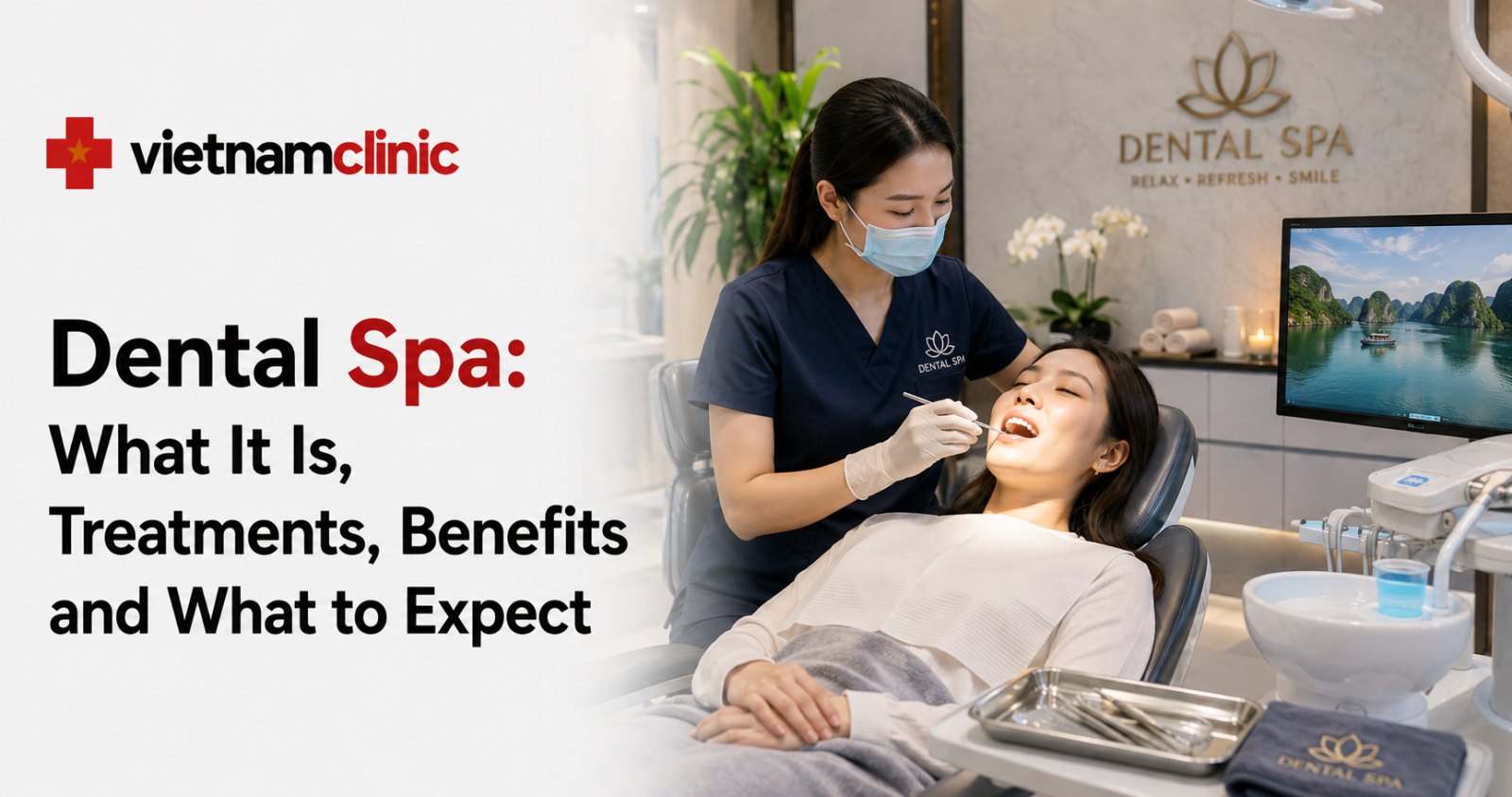
A dental spa combines professional dental care with elements designed to make the experience feel calmer, more comfortable and less clinical. Depending on the practice, that can mean anything from relaxing interiors and private treatment rooms to aromatherapy, headphones, massage chairs or other wellness-style amenities.
The important point is that a dental spa is still a dental healthcare facility. The spa element changes the patient experience, not the need for qualified dentists, proper diagnosis, infection control and appropriate treatment planning.
Dental spas are particularly popular among people who feel anxious about dental treatment, patients undergoing long cosmetic procedures and people who value a more premium environment than a traditional dental office.
What is a dental spa?
A dental spa is a dental practice that combines conventional dentistry with a stronger focus on comfort, relaxation and hospitality.
The concept does not refer to one standard medical category. Different practices use the term in different ways.
A dental spa may provide ordinary dental treatments such as:
- Dental examinations.
- Professional cleaning.
- Fillings.
- Root canal treatment.
- Crowns and bridges.
- Dental implants.
- Teeth whitening.
- Veneers.
- Cosmetic dentistry.
Alongside these services, the practice may provide comfort features such as:
- Relaxing music.
- Noise-cancelling headphones.
- Aromatherapy.
- Warm blankets.
- Eye masks.
- Massage chairs.
- Private treatment rooms.
- Refreshments.
- Calming reception areas.
Some dental spas may also operate alongside separate wellness or beauty services, although these should not be confused with the dental treatment itself.
Why dental spas are becoming more popular
For many people, the dentist is associated with discomfort, drills, injections and anxiety.
Dental spas are designed to reduce some of that psychological stress by changing the environment surrounding treatment.
This can be particularly appealing for:
- Nervous dental patients.
- People undergoing several hours of treatment.
- Cosmetic dentistry patients.
- Patients receiving multiple crowns or veneers.
- Dental implant patients.
- International dental tourists.
- People who prefer premium healthcare environments.
A calm environment does not eliminate every source of dental anxiety, but it may make treatment feel more manageable.
Dental spa vs traditional dental clinic
The main difference is usually how the care is delivered rather than what the dentist can do.
A dental spa and a conventional dental clinic can both provide high-quality dentistry.
| Dental spa | Traditional dental clinic |
|---|---|
| Greater emphasis on relaxation and comfort | Greater emphasis on straightforward clinical care |
| May include spa-style amenities | Usually fewer hospitality features |
| Often positioned toward cosmetic or premium dentistry | Can cover all areas of general dentistry |
| May offer longer, more private appointments | Appointment structure may be more conventional |
| Often markets strongly to anxious or international patients | Usually serves a broader general patient population |
Neither model is automatically better.
A simple clinic with an excellent dentist may provide better care than a luxurious dental spa with weaker diagnosis or treatment planning.
What treatments can a dental spa offer?
Dental spas can potentially offer most of the same services as other dental practices, provided the dentists and facility are appropriately qualified and equipped.
Preventive dentistry
Preventive services can include:
- Routine examinations.
- Professional cleaning.
- Oral hygiene advice.
- X-rays and diagnostic imaging.
- Periodontal assessment.
These appointments can be particularly suitable for patients who value a relaxed environment even when no complex treatment is required.
Restorative dentistry
Dental spas may provide treatment for damaged or decayed teeth, including:
- Composite fillings.
- Inlays and onlays.
- Crowns.
- Bridges.
- Root canal treatment.
Long restorative appointments are one area where comfort features may be especially appreciated.
Cosmetic dentistry
Cosmetic procedures are strongly associated with the dental spa model.
Common treatments can include:
- Teeth whitening.
- Porcelain veneers.
- Cosmetic bonding.
- Smile makeovers.
- Tooth-coloured restorations.
- Cosmetic crowns.
The spa environment fits naturally with cosmetic dentistry because patients are often seeking an elective improvement rather than urgent treatment for pain.
Dental implants
Some dental spas also provide implant dentistry.
Dental implants require much more than a luxury environment. Proper assessment may include three-dimensional imaging, evaluation of bone volume, surgical planning and long-term restorative follow-up.
Patients should therefore evaluate the implant dentist and treatment plan independently of the spa-style experience.
Are dental spas only for cosmetic dentistry?
No.
Although dental spas are often associated with veneers, whitening and smile makeovers, they may also provide general and restorative dentistry.
A patient could potentially visit a dental spa for:
- A routine cleaning.
- A filling.
- Gum care.
- Root canal treatment.
- A crown.
- An implant.
The exact range depends on the practice.
The word "spa" describes the style of patient experience rather than restricting the clinic to cosmetic treatment.
What makes the experience different?
A dental spa typically tries to make the entire appointment feel less medical from the moment the patient enters.
Instead of a traditional waiting room, the practice may use:
- Softer lighting.
- Comfortable seating.
- Relaxing scents.
- Music.
- Refreshments.
Treatment rooms may also include entertainment systems, headphones, blankets or other features intended to reduce stress during lengthy procedures.
Some practices offer longer appointments so patients feel less rushed.
The strongest dental spas integrate comfort into good clinical care rather than using luxury as a substitute for it.
Can a dental spa help with dental anxiety?
Potentially, yes.
For mild or moderate dental anxiety, reducing environmental stress can make a noticeable difference.
Helpful features can include:
- Clear communication before treatment.
- Quieter surroundings.
- Headphones or music.
- Comfortable positioning.
- More time for questions.
- Breaks during longer procedures.
- A less clinical atmosphere.
However, severe dental anxiety may require additional support.
Patients with a significant dental phobia should tell the dentist directly rather than assuming spa amenities alone will solve the problem.
The dentist may be able to adapt appointments or discuss appropriate anxiety-management options.
What are the potential benefits of a dental spa?
The main benefits are usually related to experience rather than improved medical outcomes.
Possible advantages include:
Reduced stress
A calmer environment may help people who dislike traditional dental settings.
Greater comfort during long procedures
Veneers, implant treatment and multiple restorations can require lengthy appointments.
Extra comfort can become more important when someone spends several hours in the dental chair.
More privacy
Premium dental spas may offer private rooms and fewer patients moving through shared treatment spaces.
Better experience for international patients
Dental spas may be particularly experienced in coordinating complex treatment schedules for people travelling from abroad.
Strong cosmetic focus
Many dental spas invest heavily in smile design, cosmetic restorations and patient communication around aesthetic goals.
What are the disadvantages?
Dental spas also have potential drawbacks.
Higher prices
Premium surroundings and additional services increase operating costs, which can be reflected in treatment fees.
Marketing can overshadow dentistry
A beautiful website, candles and a luxury waiting room do not prove that the treatment plan is appropriate.
Patients may treat medical decisions like beauty purchases
This is particularly relevant with irreversible cosmetic treatment.
Removing healthy enamel for veneers or crowns remains a permanent clinical decision regardless of how relaxing the environment feels.
The term is not standardised
One dental spa may provide only a comfortable waiting room, while another may offer a much broader wellness experience.
Always ask what the term actually means at the specific practice.
How much does a dental spa cost?
There is no universal dental spa price because the cost is driven primarily by the dental treatment.
A cleaning may cost relatively little, while multiple implants or a full-mouth cosmetic rehabilitation can cost thousands or tens of thousands of dollars depending on the country and clinic.
Dental spas may charge a premium because of:
- Longer appointment times.
- Private rooms.
- Premium facilities.
- Additional staff.
- Hospitality services.
- Higher-end restorative materials.
When comparing prices, ask whether spa-style amenities are included or charged separately.
More importantly, compare like-for-like dental treatment rather than simply comparing total quotes.
A luxury setting does not make dentistry safer
Safe dental care depends on clinical systems.
The CDC identifies Standard Precautions as fundamental to infection prevention in dental settings.
These include measures such as:
- Hand hygiene.
- Appropriate protective equipment.
- Safe injection practices.
- Instrument sterilisation.
- Sharps safety.
- Surface cleaning and disinfection.
A dental spa should have serious clinical systems operating behind the relaxing public-facing environment.
A treatment room can look beautiful and still have poor infection control. Conversely, a modest-looking clinic can operate excellent sterilisation procedures.
What should you look for before choosing a dental spa?
Start with the dentistry.
Check:
- Who will actually treat you.
- The dentist's qualifications.
- Experience with the procedure you need.
- Whether the clinic is properly registered or licensed in its jurisdiction.
- Diagnostic equipment available.
- Infection-control procedures.
- Materials or implant brands used.
- Whether you receive a written treatment plan.
- Total cost and possible additional fees.
- Follow-up arrangements.
Only after these questions are answered should features such as aromatherapy or massage chairs influence your decision.
Red flags to watch for
A dental spa should not escape the same scrutiny you would apply to any healthcare provider.
Be cautious if a practice:
- Recommends major cosmetic treatment immediately without adequate examination.
- Refuses to explain why healthy teeth need extensive preparation.
- Cannot tell you who will perform the procedure.
- Avoids discussing risks or alternatives.
- Will not identify implant brands or restorative materials.
- Uses extreme limited-time discounts to pressure you into irreversible treatment.
- Focuses almost entirely on appearance and luxury rather than clinical information.
A professional dental spa should be comfortable discussing both the benefits and limitations of treatment.
Dental spas and cosmetic smile makeovers
The dental spa concept is particularly common around smile makeovers.
These may involve combinations of:
- Whitening.
- Bonding.
- Veneers.
- Crowns.
- Orthodontics.
- Gum contouring where appropriate.
Before agreeing to extensive cosmetic treatment, ask how much natural tooth structure needs to be changed.
A dramatic cosmetic result does not automatically justify aggressive preparation of healthy teeth.
Ask whether more conservative alternatives exist.
Dental spas and dental implants
Implant dentistry deserves additional scrutiny because it combines surgery and restorative treatment.
Ask:
- What implant system will be used?
- Who performs the surgery?
- Is CBCT imaging used when appropriate?
- Is bone grafting required?
- How long is the healing period?
- Who will fit the final crown?
- What happens if the implant fails?
A comfortable environment is welcome during implant treatment, but it should never become the main reason for choosing the provider.
Dental spas and dental tourism
Dental spas fit naturally into the dental tourism market because international patients often value both clinical treatment and a smoother overall experience.
Someone travelling internationally for dental work may want:
- English-language communication.
- Several appointments coordinated into a short period.
- Private rooms.
- Help with local logistics.
- Long appointments completed comfortably.
- A more hospitality-oriented service.
Vietnam is one destination where private dentistry and wellness tourism increasingly overlap.
If you are considering travelling specifically for treatment, see Dental Tourism in Vietnam: Costs, Treatments and What to Expect for a detailed guide to implants, veneers, crowns, costs and follow-up.
Can a dental spa offer massage or beauty treatments?
Some may, depending on local regulations and how the business is structured.
Possible additional services might include:
- Massage.
- Facials.
- Hand treatments.
- Aromatherapy.
- Other wellness services.
However, dental treatment, beauty services and medical aesthetic procedures can be regulated differently.
Patients should not assume that every service offered under the same brand is performed under the same professional licence.
Can a dental spa offer Botox or fillers?
In Vietnam, Decree 96/2023/ND-CP places cosmetic services that use medicines, substances or devices to intervene in the body through injection, pumping, irradiation, waves, burning or other invasive procedures within the scope of appropriately licensed healthcare facilities. A dental licence and the label "dental spa" do not by themselves authorise Botox or dermal fillers. Before agreeing to an injectable, ask for the facility's operating licence, approved professional scope and the practitioner's authorisation.
Do dental spas provide sedation?
Some dental practices provide forms of anxiety management or sedation, but this depends on the clinic, procedure and local regulations.
Sedation is a clinical service, not a spa amenity.
Patients should ask:
- What type of sedation is offered?
- Who administers it?
- What monitoring is used?
- Whether they need someone to accompany them home.
- What fasting or medication instructions apply.
Do not confuse a calming environment with medical sedation.
Is a dental spa worth it?
That depends on what you value.
A dental spa may be worth paying more for if:
- You have dental anxiety.
- You are undergoing several hours of treatment.
- Privacy matters to you.
- You want a premium experience.
- You are having elective cosmetic dentistry.
- You are travelling internationally for care.
It may offer little additional value if you simply want a quick routine cleaning and feel comfortable in a conventional dental clinic.
The dentistry should justify the appointment first. The spa experience is an additional benefit.
Frequently Asked Questions
The answers below cover common questions about dental spas. The term is not standardised, so facilities, services and clinical capabilities vary between practices.
What is a dental spa?
A dental spa is a dental practice that combines professional dental care with a more relaxing, wellness-oriented environment. It may include comfort features such as aromatherapy, music, private rooms or massage chairs.
What is the difference between a dental spa and a dental clinic?
The main difference is usually the patient experience. Both can provide professional dentistry, but dental spas place more emphasis on relaxation, comfort and premium hospitality.
What treatments does a dental spa offer?
Depending on the practice, treatments can include dental examinations, cleaning, fillings, root canals, crowns, veneers, whitening, implants and other restorative or cosmetic procedures.
Are dental spas more expensive than regular dentists?
They can be. Premium facilities, longer appointments and additional comfort services may increase prices, although the main cost still depends on the dental procedure itself.
Are dental spas safe?
They can be safe when they operate as properly regulated dental facilities with qualified dentists, appropriate diagnosis, sterilisation procedures and sound clinical protocols. Spa branding itself does not guarantee safety or quality.
Are dental spas good for people with dental anxiety?
They can be particularly helpful for people with mild or moderate dental anxiety because the environment is designed to feel calmer and less clinical. Severe anxiety may still require additional support from the dentist.
Can a dental spa offer Botox?
Botox is a medical aesthetic procedure, so whether it can be offered depends on local healthcare laws and the practitioner's professional licence. A dental spa should not automatically be assumed to have permission to provide injectables.
Are dental spas good for dental tourism?
They can suit dental tourists because international patients often value coordinated appointments, private treatment rooms, language support and a comfortable environment during longer procedures.
Conclusion
A dental spa is essentially a dental clinic designed to provide a more relaxing, comfortable and hospitality-focused experience.
It can offer preventive, restorative and cosmetic dentistry, and some facilities also provide dental implants or additional wellness amenities.
The potential benefit is mainly the patient experience, particularly for anxious patients, cosmetic dentistry clients and people undergoing long appointments.
The most important rule is not to confuse luxury with clinical quality. Check the dentist, diagnosis, infection-control procedures, treatment plan, materials and follow-up arrangements first. If those are strong, the spa environment can make good dental care significantly more comfortable.
Sources

Writer
Tan Nguyen
Medical writer for Vietnam Clinic. MD, Vietnam National University Ho Chi Minh City.