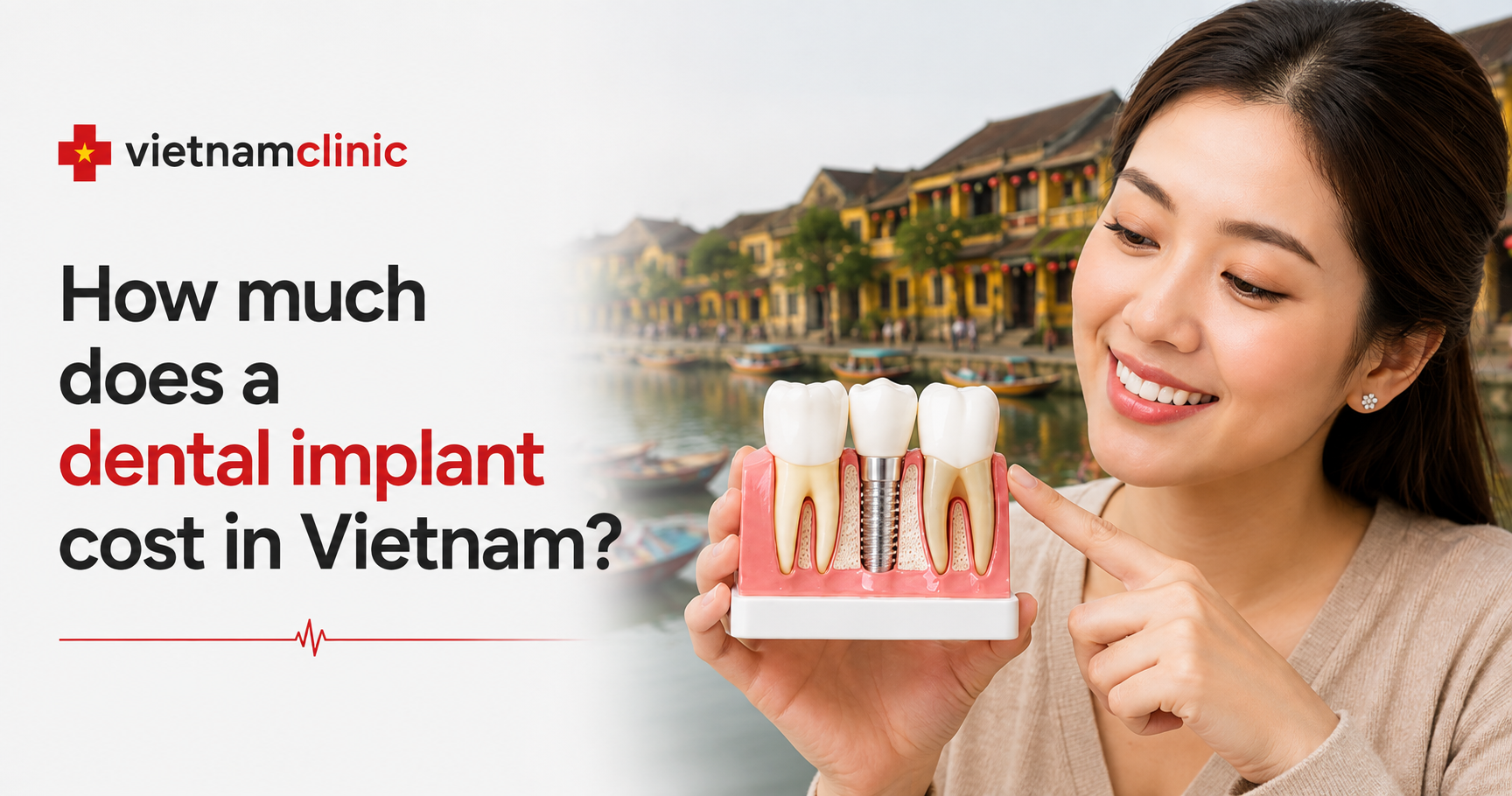
Dental implant prices in Vietnam can look simple at first, but the figure shown in an advertisement may refer only to the implant fixture. A complete single-tooth restoration normally involves the implant body, an abutment, a crown, imaging, surgery and follow-up. Some patients also need an extraction, bone graft or sinus lift.
For residents, expatriates and dental travellers, the most useful question is not only how much an implant costs, but what the quoted price includes. This guide explains realistic published price examples in Vietnam, the main cost drivers, the treatment timeline and the questions to ask before paying a deposit.
Typical dental implant costs in Vietnam
There is no single national tariff for private dental implants in Vietnam. Fees vary by clinic, city, implant system, crown material, clinician, laboratory work and case complexity.
As a practical planning reference, one established Ho Chi Minh City clinic publishes complete single-tooth packages from 30,000,000 to 46,000,000 VND. Its stated package includes one implant fixture, one abutment and one crown, but excludes additional treatment that may be required.
The same provider publishes full-arch All-on-4 and All-on-6 packages from 210,000,000 to 300,000,000 VND per arch, depending on the number and brand of implants. These are provider-specific prices, not a national average.
Another hospital publishes its fees in US dollars and separates the components. Its listed individual implant fixtures range from USD 750 to USD 1,400, while implant crowns range from USD 300 to USD 560. It also lists bone grafting, sinus lifting, sedation and other procedures separately. This shows why two apparently similar quotes can produce very different final totals.
A third international clinic publishes complete single-implant examples of USD 2,010 and USD 2,410 for an implant, custom abutment and full zirconia crown, with bone grafting or sinus lifting charged separately if needed.
These examples suggest that a straightforward single-tooth implant in Vietnam often requires a budget in the tens of millions of VND, while full-arch treatment can reach several hundred million VND. The safest comparison is always a written treatment plan using the same components and assumptions.
What should be included in a complete quote
A dental implant system has several parts. The fixture is surgically placed in the jawbone. The abutment connects the fixture to the visible restoration, and the crown, bridge or denture replaces the missing tooth or teeth.
Ask the clinic to itemise the following:
- Consultation and oral examination
- Panoramic X-ray or CBCT scan
- Tooth extraction, if required
- Implant fixture, including the exact brand and model
- Healing abutment or cover screw
- Final abutment
- Temporary tooth or temporary bridge
- Final crown, bridge or full-arch prosthesis
- Local anaesthesia, sedation or general anaesthesia
- Surgical guide, if used
- Bone graft, membrane or sinus lift
- Medicines supplied by the clinic
- Post-operative checks and stitch removal
- Final fitting and bite adjustments
- Warranty terms and scheduled maintenance
A low headline price may cover only the fixture. A more expensive quote may already include the abutment, zirconia crown, scans and review visits. Comparing only the first number can therefore be misleading.
Why the final cost changes
Implant brand and component availability
Clinics in Vietnam offer implant systems from several countries and at different price levels. The brand can affect the fee, but brand alone does not establish whether a treatment plan is appropriate or well executed.
Ask for the manufacturer, implant line, dimensions and component references. The US Food and Drug Administration advises patients to keep the brand and model of their implant system in their records. This can be especially important for expatriates who may need future maintenance in another country.
Crown and prosthesis material
A metal-ceramic crown is often priced differently from a full zirconia crown. For full-arch cases, acrylic, composite, zirconia and reinforced framework options can vary substantially in cost, weight, repairability and treatment time.
Ask whether the quoted restoration is temporary or final. In full-arch treatment, an advertised package may include a temporary fixed bridge but not the final prosthesis.
Bone grafting and sinus lifting
Not every patient has enough bone in the planned implant area. Bone grafting may be recommended to improve the available support, and an upper back-tooth implant may sometimes require a sinus lift.
These procedures add surgical fees, materials, healing time and follow-up visits. They should not be assumed from a photograph or remote message alone. A clinician normally needs an examination and appropriate imaging before confirming the plan.
Number and position of missing teeth
Replacing one tooth is different from replacing several adjacent teeth. Three missing teeth may sometimes be restored with two implants supporting a bridge, but this depends on the anatomy, bite and clinical assessment.
Full-arch treatment is also not priced simply by multiplying the cost of one implant. It includes several fixtures, special abutments, a temporary or final bridge, laboratory work and repeated fitting appointments.
Complexity, sedation and medical history
Fees may rise when treatment involves difficult extractions, infection management, limited bone, proximity to nerves or sinuses, a surgical guide, sedation or hospital facilities.
Tell the dental team about your medical conditions, allergies, medicines and smoking history. Overall health can affect candidacy, healing time and risk. This is a clinical assessment, not only a pricing issue.
The treatment timeline can affect your travel budget
Dental implants are often completed in stages. A typical plan may include assessment and imaging, implant placement, a healing period and later fitting of the final restoration. Authoritative patient guidance notes that healing can take several months, and some hospital pathways take six to twelve months from assessment to final restoration.
Some patients may qualify for immediate provisional teeth, but immediate loading is not suitable in every case. It depends on factors such as implant stability, bone condition, bite and the planned restoration.
Before booking flights, ask for a visit-by-visit schedule that states:
- How many trips or appointments are expected
- The minimum time required in Vietnam after surgery
- When stitches will be removed
- Whether a temporary tooth will be provided
- When the final crown or bridge will be fitted
- What happens if healing takes longer than planned
- Who manages complications after you leave Vietnam
Travel, accommodation, missed work and return flights may cost more than the difference between two clinic quotes. A cheaper clinical fee is not always the lower total cost.
How to compare dental clinics in Vietnam
Price should be considered alongside the treatment plan, clinician credentials, communication and follow-up arrangements.
Before choosing a provider, request:
- The full name and role of the dentist responsible for surgery
- The dentist's relevant qualifications and experience with the proposed procedure
- The clinic's licensed address and the location where surgery will occur
- The implant system and restoration materials
- A copy of the scan findings and written treatment plan
- Alternatives to implants, including bridges or dentures where appropriate
- The main risks and expected benefits in your case
- The process for handling implant failure, crown fracture or screw loosening
- Warranty exclusions and maintenance conditions
- Written confirmation of English-language support during consent, surgery and follow-up
Availability, fees, credentials, warranties and language support can change. Confirm them directly with the provider rather than relying only on an old price page, directory entry or social media advertisement.
For a broader checklist, see How to Choose an English-Speaking Clinic in Vietnam and What to Check Before a Medical Appointment in Vietnam.
Insurance and payment
Do not assume that private health or travel insurance covers dental implants. Many policies exclude planned restorative dentistry, while some may consider limited benefits after an accident or under a specific dental add-on.
Before treatment, send the insurer the diagnosis, itemised plan, clinician details and proposed dates. Ask whether pre-authorisation is required, whether the provider must be in a network and which records are needed for reimbursement.
Also confirm:
- Whether prices are stated in VND or another currency
- Whether card payments carry a surcharge
- When deposits and stage payments are due
- Whether the quote has an expiry date
- The refund policy if the plan changes
- Whether invoices and clinical records are available in English
Keep copies of receipts, scans, implant labels, prescriptions, consent forms and the final treatment summary.
Follow-up and warning signs
Implants require long-term cleaning and professional review. The FDA advises regular dental visits and careful oral hygiene around the implant and surrounding teeth.
Before leaving Vietnam, ask who to contact if you develop increasing pain, swelling, discharge, fever, a loose implant, a loose crown or a bite that suddenly feels wrong. If you have rapidly spreading facial swelling, difficulty breathing or swallowing, uncontrolled bleeding or severe systemic symptoms, seek immediate local medical or dental care.
A warranty is not a substitute for accessible follow-up. Check whether it covers the fixture, abutment and crown separately, and whether regular maintenance at the original clinic is required.
Practical next step
Start by obtaining two or three itemised plans based on an in-person examination and appropriate imaging. Compare the implant system, crown or prosthesis, additional surgery, number of visits, follow-up and warranty, not only the advertised starting price.
For a straightforward single tooth, published complete-package examples in Vietnam currently sit around 30,000,000 to 46,000,000 VND at one established provider, while other clinics separate the fixture, abutment, crown and grafting fees. Treat every online price as a planning figure until the clinic confirms a written total for your case.
Frequently asked questions
What is the average cost of one dental implant in Vietnam?
There is no official national average. One established clinic publishes complete single-tooth packages from 30,000,000 to 46,000,000 VND, while other providers list the fixture, abutment and crown separately.
Does the advertised implant price usually include the crown?
Not always. Some price lists cover only the implant fixture, while others include the fixture, abutment and crown. Ask for a written itemised quote before comparing providers.
How much does All-on-4 cost in Vietnam?
Published prices vary widely by implant system, temporary restoration, final prosthesis and case complexity. One provider lists All-on-4 packages from 210,000,000 to 260,000,000 VND per arch, but this should not be treated as a national rate.
Will I need a bone graft before an implant?
Not everyone needs one. A dentist normally decides after examining your mouth and reviewing appropriate imaging. If grafting or a sinus lift is required, it will increase the cost and may extend the timeline.
Can a dental implant be completed during one trip to Vietnam?
Sometimes a temporary restoration can be fitted quickly, but final treatment often involves a healing period of several months. Ask the clinic for a written appointment schedule before booking travel.
Does insurance cover dental implants in Vietnam?
Coverage depends on the policy and reason for treatment. Planned implants are often excluded, while accident-related or specifically insured dental care may be treated differently. Obtain written pre-authorisation where possible.
Sources
- US Food and Drug Administration: Dental Implants, What You Should Know
- Guy's and St Thomas' NHS Foundation Trust: Dental Implants
- Elite Dental: Dental Implant Pricelist
- Worldwide Dental and Plastic Surgery Hospital: Dental Pricing
- Westcoast International Dental Clinic: Dental Implants and Bone Reconstruction
- International Team for Implantology: Implant Placement and Loading Protocols

Writer
Tan Nguyen
Medical writer for Vietnam Clinic. MD, Vietnam National University Ho Chi Minh City.