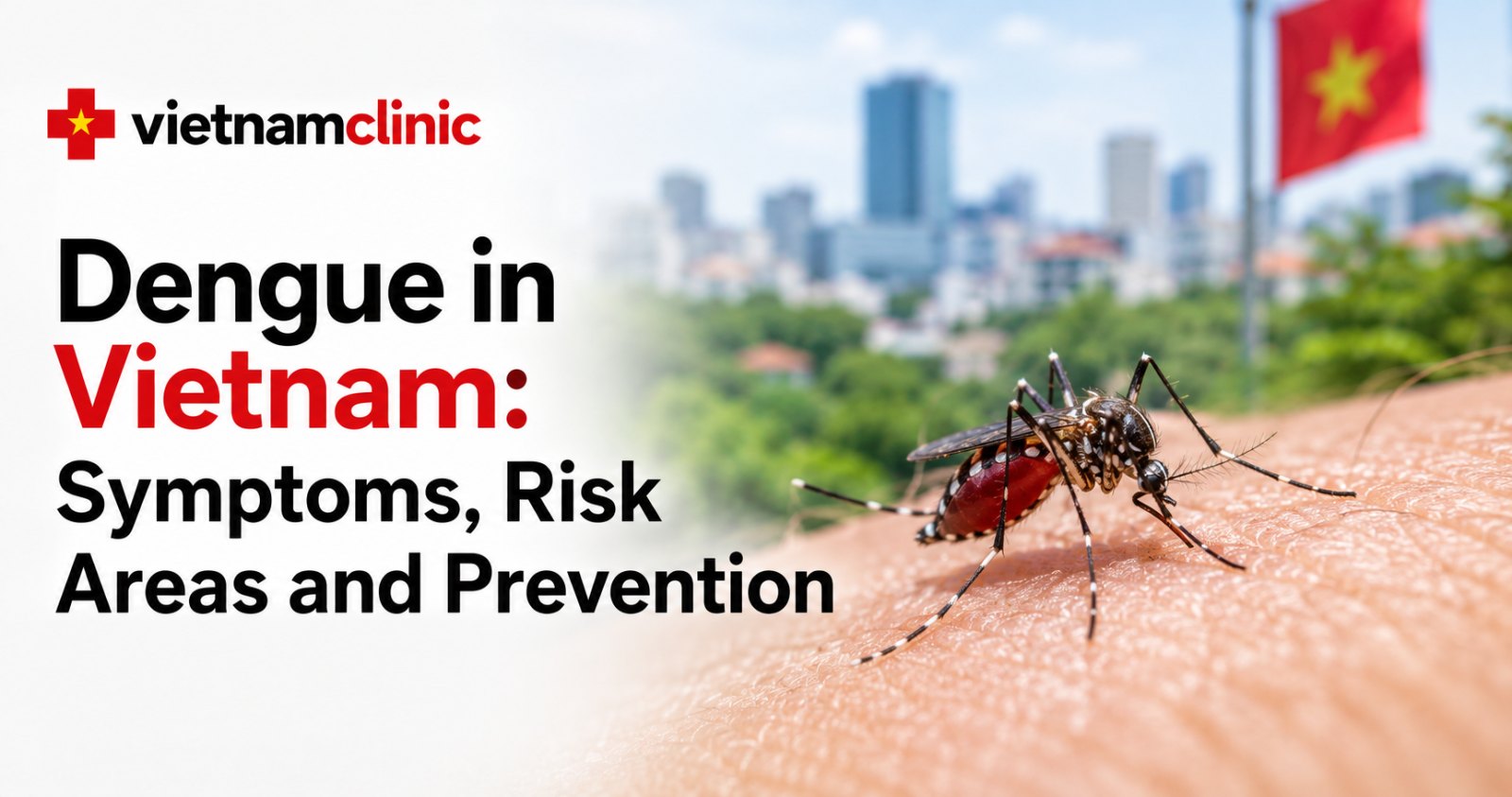
Dengue is one of the mosquito-borne infections travellers and residents should be aware of in Vietnam. Unlike malaria, which is concentrated mainly in particular rural areas, dengue can occur in urban as well as rural environments, including major Vietnamese cities.
Vietnam is considered a dengue-endemic country, and cases can occur throughout the year. Transmission usually increases during the wetter months, although the timing and intensity vary between regions and from one year to another.
This guide explains the risk of dengue in Vietnam, the symptoms to recognise, how to reduce mosquito bites and when a fever or other symptoms require medical assessment.
Is there dengue in Vietnam?
Yes. Dengue is endemic in Vietnam.
The disease is caused by dengue viruses transmitted primarily through the bites of infected Aedes mosquitoes. Unlike the mosquitoes responsible for most malaria transmission, dengue-carrying Aedes mosquitoes are well adapted to living around people and can thrive in cities and residential neighbourhoods.
WHO describes dengue as an established health problem in Vietnam, with transmission historically concentrated particularly in central and southern parts of the country.
CDC currently identifies dengue as a year-round risk in Vietnam and advises travellers to prevent mosquito bites.
This means dengue prevention is relevant even if your itinerary consists entirely of large cities and established tourism destinations.
When is dengue season in Vietnam?
Dengue can occur throughout the year, but Vietnam has a recognisable seasonal pattern.
WHO Vietnam states that dengue infections typically peak between June and October. Increased rainfall can create more places for Aedes mosquitoes to reproduce, particularly where water collects in containers around homes and buildings.
The exact timing varies according to location and weather. Southern Vietnam has a tropical climate with warm conditions throughout the year, while northern and central Vietnam have different seasonal patterns.
Travellers should therefore avoid treating June to October as the only period when dengue matters. Mosquito bite prevention is sensible throughout the year.
Where is dengue most common in Vietnam?
Dengue is not restricted to one small geographical area.
WHO Vietnam has historically reported that most cases and deaths occur in the central and southern regions of the country. Dengue transmission can also occur elsewhere, including northern Vietnam.
The mosquitoes that transmit dengue live particularly well in urban and semi-urban environments. This means the disease can occur in places such as:
- Ho Chi Minh City
- Hanoi
- Da Nang
- Nha Trang
- Can Tho
- Other cities and towns
- Rural communities
Dengue risk should therefore not be assessed in the same way as malaria risk. Staying in a major Vietnamese city does not eliminate dengue exposure.
If you are comparing dengue with other illnesses encountered by visitors, see 10 Most Common Illnesses in Vietnam.
Is there dengue in Ho Chi Minh City?
Yes. Dengue occurs in Ho Chi Minh City and other parts of southern Vietnam.
The urban environment can support Aedes mosquitoes because they breed in relatively small collections of water around homes and buildings. Suitable breeding sites can include buckets, plant containers and other objects capable of holding water.
Travellers staying in hotels or modern apartments are not completely protected simply because they are in an urban environment.
Using air-conditioned or screened accommodation can reduce exposure, but personal mosquito protection is still worthwhile.
Is there dengue in Hanoi?
Dengue also occurs in Hanoi.
Although the seasonal pattern differs from southern Vietnam, outbreaks can occur in the capital. Warm temperatures, rainfall and dense urban neighbourhoods can create suitable conditions for transmission.
For somebody spending several months in Hanoi, mosquito prevention should become part of normal daily habits rather than something reserved for countryside trips.
If you become unwell in the capital and need medical assessment, Sick in Hanoi? What to Do and Where to Go explains the main healthcare options.
Is there dengue in Da Nang?
Yes. Dengue can occur in Da Nang and elsewhere in central Vietnam.
This is another important difference from malaria. Current CDC malaria guidance lists Da Nang as having no malaria transmission, but that does not mean the city is free from mosquito-borne disease.
People living in or visiting Da Nang should still take precautions against daytime mosquito bites, particularly during periods of increased mosquito activity.
If you need to identify medical services in the city, see Vietnam Clinic’s comparison of hospitals in Da Nang.
Which mosquitoes transmit dengue?
Dengue is transmitted primarily by Aedes aegypti mosquitoes. Aedes albopictus can also transmit the virus.
These mosquitoes have behaviour that matters for travellers: they commonly bite during the daytime.
WHO notes that Aedes mosquitoes are especially active during the early morning and later afternoon, although bites can occur at other times as well.
This means precautions only taken at night are not enough for dengue prevention.
What are the symptoms of dengue?
Many dengue infections cause no symptoms or only mild illness.
When symptoms do occur, WHO states that they commonly begin around 4 to 10 days after infection and usually last for approximately 2 to 7 days.
Possible symptoms include:
- High fever
- Severe headache
- Pain behind the eyes
- Muscle pain
- Joint pain
- Nausea
- Vomiting
- Swollen glands
- Rash
These symptoms overlap with many other infections. Having fever and muscle aches in Vietnam does not automatically mean you have dengue.
A medical professional may need to consider dengue alongside influenza, COVID-19, other viral illnesses and additional causes of fever depending on your symptoms and travel history.
What is severe dengue?
A small proportion of infections progress to severe dengue, which can become life-threatening.
One particularly important point is that warning signs can appear after the fever starts to improve. A falling temperature does not necessarily mean that someone with dengue is safely recovering.
WHO identifies warning signs associated with severe dengue including:
- Severe abdominal pain
- Persistent vomiting
- Rapid breathing
- Bleeding from the gums or nose
- Blood in vomit or stool
- Marked weakness
- Restlessness
- Very intense thirst
- Pale or cold skin
Seek immediate medical care if these symptoms develop.
People experiencing difficulty breathing, significant bleeding, altered consciousness or rapid deterioration should receive urgent local medical assessment rather than waiting for a routine appointment.
Can dengue happen more than once?
Yes.
There are four dengue virus serotypes. Infection with one serotype does not provide permanent protection against all of the others.
WHO notes that people experiencing a second dengue infection have a greater risk of developing severe dengue.
This means somebody who previously had dengue in Vietnam, Thailand, Indonesia or another country should not assume that they are protected during future trips.
Past dengue infection is also useful medical information to tell a clinician if you become ill again.
How is dengue diagnosed?
Symptoms alone cannot reliably confirm dengue.
Doctors may use blood testing together with the clinical picture and the timing of symptoms. Different types of tests are useful at different stages of infection.
A healthcare professional may also order a complete blood count or other investigations to monitor the illness and assess for complications.
If you seek care, tell the clinician:
- When the fever began
- Where in Vietnam you have been
- Whether you recently travelled to another country
- Whether you have previously had dengue
- Which medicines you have taken
- Whether you have experienced vomiting or bleeding
For help preparing for a consultation, see What to Check Before a Medical Appointment in Vietnam.
Is there a treatment for dengue?
There is currently no specific antiviral treatment that eliminates dengue virus infection.
Medical care focuses on monitoring the patient, maintaining appropriate hydration and managing symptoms and complications. Early recognition of severe dengue and access to appropriate medical care are particularly important.
Most people with uncomplicated dengue recover within one to two weeks, although fatigue can continue afterwards.
Because dengue can occasionally deteriorate after several days of illness, follow the monitoring and return instructions given by the healthcare professional who assesses you.
Why aspirin and ibuprofen can be a problem with suspected dengue
Medication choice matters when dengue is possible because the infection can affect bleeding risk.
WHO advises avoiding aspirin and non-steroidal anti-inflammatory drugs such as ibuprofen in people with dengue because these medicines can increase the risk of bleeding.
Paracetamol, also called acetaminophen, is generally the medicine referred to in international dengue guidance for controlling fever and pain when appropriate.
This is general information rather than an individual treatment recommendation. If you have significant symptoms, other medical conditions or take regular medication, ask a healthcare professional what is appropriate for you.
How to prevent dengue in Vietnam
There is no method that removes all risk. Prevention focuses heavily on avoiding mosquito bites.
Useful measures include:
- Apply an effective mosquito repellent according to the label
- Wear loose clothing that covers more of the arms and legs when practical
- Use air-conditioned or screened rooms where available
- Keep doors and windows closed or screened
- Use mosquito nets when accommodation is not adequately protected
- Reduce standing water around longer-term accommodation
Because Aedes mosquitoes bite during the day, apply repellent before daytime sightseeing rather than waiting until sunset.
If you are staying in Vietnam for months, mosquito prevention is easier when it becomes part of your normal routine.
Does mosquito repellent really matter during the day?
Yes. This is one of the most important practical differences between dengue and malaria prevention.
Travellers often associate mosquitoes with evenings and use repellent only for dinner or nightlife. Aedes mosquitoes can bite throughout daylight hours, with activity often higher in the morning and late afternoon.
Use repellent during activities such as:
- Walking around cities
- Visiting markets
- Sitting at outdoor cafes
- Hiking
- Visiting parks
- Spending time around gardens
- Outdoor sightseeing
The fact that you cannot see mosquitoes does not mean they are absent.
Can you get a dengue vaccine before visiting Vietnam?
Dengue vaccination is more complicated than routine travel vaccines.
WHO currently recommends TAK-003, also known as Qdenga, for children aged 6 to 16 years in settings with high dengue transmission intensity. WHO does not currently recommend universal vaccination of all adult international travellers simply because they are visiting a dengue-endemic country.
Vaccine availability and national recommendations can differ between countries.
If you have questions about dengue vaccination because of long-term residence, previous dengue infection or another individual circumstance, discuss them with a travel medicine or infectious disease professional rather than assuming that vaccination is routinely required for Vietnam.
What should you do if you develop a fever in Vietnam?
A fever during a Vietnam trip has many possible causes.
If the fever is significant, persistent or accompanied by concerning symptoms, arrange medical assessment. Mention the possibility of mosquito exposure and tell the doctor where you have been.
Do not assume that fever is dengue simply because you have mosquito bites. Malaria, respiratory infections, gastrointestinal infections and other illnesses can also cause fever depending on the itinerary and symptoms.
Likewise, do not dismiss fever as an ordinary viral illness if your condition is worsening.
For general guidance on navigating care, see Sick in Vietnam? What to Do and Where to Go.
When should you seek urgent medical help?
Seek immediate medical care if suspected dengue is accompanied by warning signs such as severe abdominal pain, persistent vomiting, significant bleeding, rapid breathing, extreme weakness, confusion, cold or pale skin or rapid deterioration.
Do not wait for a scheduled appointment if symptoms appear severe.
The medical emergency number in Vietnam is 115. Language support may vary, so assistance from hotel staff, a Vietnamese-speaking contact or another local person can be useful when available without delaying urgent care.
Dengue versus malaria in Vietnam
Dengue and malaria are both transmitted by mosquitoes, but their risk patterns are different.
Malaria in Vietnam is now concentrated mainly in particular rural and forested areas. Several major cities have no malaria transmission according to current CDC guidance.
Dengue, by contrast, is well adapted to urban environments and can occur in major cities.
The mosquito biting patterns also differ. Dengue vectors commonly bite during the day, while malaria-transmitting Anopheles mosquitoes are particularly relevant from dusk through dawn.
These differences are why travellers should not assume that being in a malaria-free Vietnamese city means mosquito protection is unnecessary.
What travellers should remember about dengue in Vietnam
Dengue is a genuine year-round health consideration in Vietnam, including in major urban destinations. Risk usually rises during wetter periods, with WHO Vietnam describing a typical peak between June and October.
For most travellers, the practical approach is simple: reduce mosquito bites during the day as well as at night, pay attention to significant fever and know the warning signs that require urgent assessment.
Most dengue infections are mild or asymptomatic, but severe dengue can develop quickly in a minority of patients. If you become unwell, especially if symptoms worsen as a fever begins to fall, seek medical care and tell the clinician about your recent travel and mosquito exposure.
Frequently Asked Questions
Is dengue common in Vietnam?
Dengue is endemic in Vietnam and cases occur every year. Transmission can occur in both urban and rural areas, with WHO Vietnam describing a typical seasonal peak between June and October.
Is there dengue in Ho Chi Minh City?
Yes. Dengue occurs in Ho Chi Minh City and elsewhere in southern Vietnam. Urban accommodation does not eliminate risk because Aedes mosquitoes are well adapted to living around people.
Is there dengue in Hanoi?
Yes. Dengue outbreaks can occur in Hanoi as well as other parts of Vietnam. Risk varies over time, but travellers and residents should still take precautions against daytime mosquito bites.
Is there dengue in Da Nang?
Yes. Dengue can occur in Da Nang and other parts of central Vietnam. This differs from malaria, for which current CDC guidance lists Da Nang as having no transmission.
What are the warning signs of severe dengue?
Warning signs include severe abdominal pain, persistent vomiting, rapid breathing, bleeding, marked weakness, restlessness, intense thirst and pale or cold skin. These symptoms require prompt medical assessment.
Can you get dengue more than once?
Yes. Four dengue virus serotypes circulate globally, so previous infection does not provide permanent protection against all future dengue infections. WHO notes that a second infection can carry a higher risk of severe dengue.
Do dengue mosquitoes bite at night or during the day?
The Aedes mosquitoes responsible for most dengue transmission commonly bite during the daytime, particularly in the early morning and late afternoon. Mosquito protection should therefore not be limited to evenings.
Sources

Writer
Tan Nguyen
Medical writer for Vietnam Clinic. MD, Vietnam National University Ho Chi Minh City.