Is Street Food Safe in Vietnam? How to Choose Well
Vietnamese street food can be safe, memorable and excellent value. It can also be handled badly. Both statements are true because “street food” covers everything from a family phở counter that serves hundreds of bowls each morning to a tray of cut fruit sitting beside traffic in the afternoon heat.
The useful answer is therefore conditional: choose the stall, the dish and the moment, rather than treating all pavement food as safe or unsafe. You cannot inspect a kitchen laboratory-style, but you can watch one service cycle. What happens between raw ingredients, heat, utensils and your plate often tells you more than décor, price or an online rating.
Read the stall while someone else orders
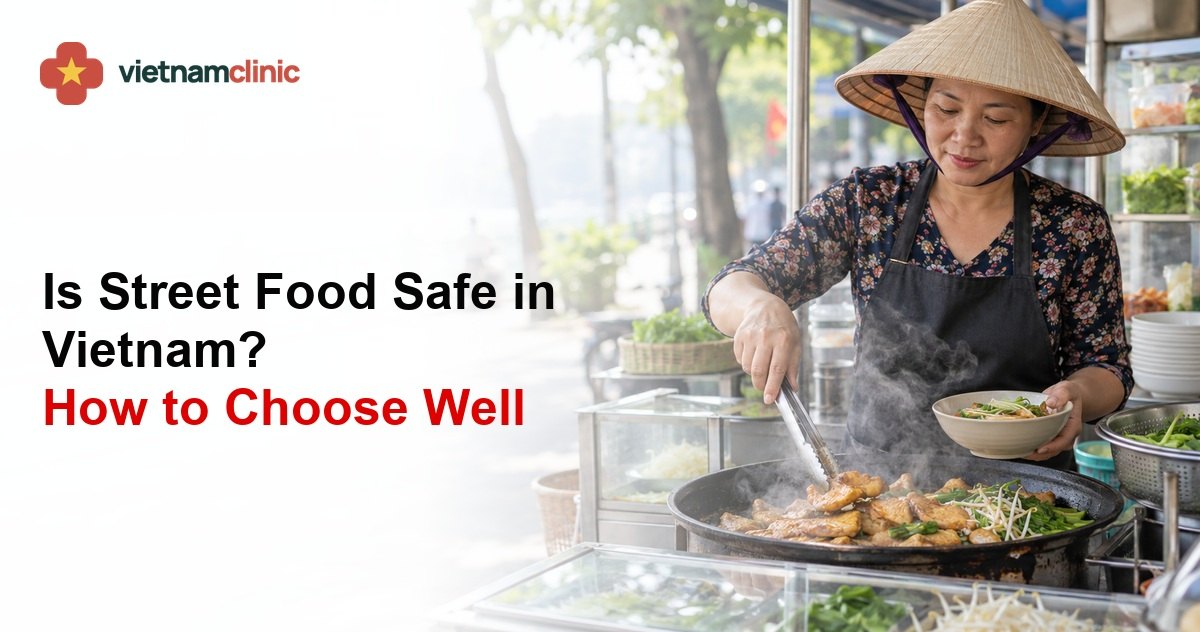
Pause for a minute before buying. A busy queue can be reassuring because ingredients move quickly, but popularity alone is not proof of hygiene. Watch how the vendor completes an order from start to finish.
Start with temperature. Soup should return to a vigorous simmer; meat on a grill should cook through rather than merely warm at the edges; rice, noodles and fillings should not spend hours lukewarm. Food cooked after you order and handed over steaming has less time in the temperature range where bacteria multiply. A pot can look hot while the ladle repeatedly dips into cooler liquid at the side, so observe the actual portion served.
Next, look for separation. Does the same board or pair of tongs move from raw chicken to cooked meat? Are ready-to-eat herbs placed where raw juices can drip onto them? A neat apron cannot compensate for cross-contamination. Conversely, a modest stall can manage risk well with separate containers, utensils and a clear workflow.
Then follow the hands. Money, phones, raw ingredients and cooked food should not be handled in one uninterrupted sequence. Gloves are helpful only if changed; the same glove touching cash and bánh mì is no cleaner than a bare hand. Tongs, chopsticks or a dedicated serving spoon are often the better sign.
Finally, notice water and waste. Vietnam’s food-safety rules for street vendors emphasize clean water, traceable ingredients and waste collection. A covered bin, a washing setup and ingredients protected from splash, flies and road dust do not guarantee safety, but together they show that hygiene has been built into the stall rather than added for appearance.
Turnover matters more than a polished sign
Freshness at a street stall is partly a question of time. A vendor serving one specialty during a short breakfast rush may prepare smaller batches and replace them rapidly. At a quiet stall with a large menu, cooked components may wait longer and be reheated repeatedly.
This is why locals often visit a particular dish at a particular hour. Phở and bún counters may be busiest early; a grilled-snack stall may make more sense in the evening when the coals are active and orders are constant. “Busy” is useful when it produces visible turnover—not when a crowd merely gathers while pre-cooked food sits at room temperature.
Ask for a fresh batch if something looks tired. Choosing the skewer going onto the grill is different from taking one that has been displayed for hours. If a vendor refuses to reheat a dish properly or serves chicken that remains pink near the bone, leaving is reasonable. There will almost always be another option nearby.
Choose a dish whose safety you can see
No Vietnamese dish is automatically safe or dangerous, but some offer a clearer last line of defense.
Lower-risk choices are usually cooked thoroughly and served immediately: bubbling noodle soups, freshly grilled meat, a hot bánh xèo straight from the pan, eggs cooked firm, or stir-fried dishes made to order. The key is not the name of the dish; it is the combination of sufficient heat and minimal waiting after cooking.
Higher-uncertainty choices have no final heating step or depend heavily on refrigeration. These include pre-cut fruit, raw shellfish, undercooked meat, raw blood dishes, mayonnaise or creamy fillings held warm, and cooked rice or noodles left at ambient temperature for long periods. CDC guidance specifically advises avoiding raw or undercooked meat and seafood and warns about dishes containing uncooked animal blood.
Fresh herbs and bean sprouts deserve a measured answer. They are central to Vietnamese food and are eaten safely every day, but they are ready-to-eat ingredients washed with water and receive no cooking step. A healthy adult may accept that residual risk at a well-run stall. A pregnant person, someone with reduced immunity or a traveler determined to avoid any stomach disruption may choose cooked garnishes, peeled fruit and fewer raw additions.
Raw or lightly prepared freshwater fish, crab, snails and aquatic plants carry risks beyond ordinary food poisoning, including foodborne flukes. Lime juice, alcohol, salting and quick pickling do not reliably replace thorough cooking.
Water, ice and sauces are part of the meal
A steaming bowl can be undermined by what is added afterward. Shared squeeze bottles, bowls of sauce, chopped chilli and spoons can become contaminated through repeated handling. Prefer condiments that look protected, are dispensed without fingers or used by a vendor who keeps the service area clean. A crusted bottle cap or spoon lying in diluted sauce all afternoon is a reason to skip the extra topping.
Ice is not identifiable as safe merely by its shape. Commercially manufactured ice may be made from treated water, and it is widely used by reputable businesses, but customers usually cannot confirm the whole production and handling chain. If uncertain, choose a sealed bottle or can opened in front of you and drink it without ice. Our guide to tap water and ice in Vietnam explains the distinction in more detail.
For smoothies and sugar-cane juice, consider every component: ice, water used to rinse equipment, fruit stored after cutting, and a machine cleaned between batches. A high-turnover vendor who washes the press and handles cups by their outside edge is more reassuring than a drink assembled beside stagnant rinse water.
Allergies require a different kind of caution
Food can be microbiologically safe and still be dangerous to someone with an allergy. Vietnamese dishes often use fish sauce, shrimp paste, peanuts, sesame, soy, egg or shellfish in stocks, marinades and garnishes that are not visible. A vendor may remove peanuts from the top while the sauce, spoon or pan still contains them.
People with severe allergies should carry prescribed rescue medication and a written Vietnamese allergy card naming the allergen and explaining that cross-contact matters. Ask about broth, sauces and cooking oil, not only the ingredients you can see. If communication is unclear or the vendor cannot separate utensils and surfaces, choose a restaurant better equipped to manage allergies. The CDC also cautions that unlabelled food in Vietnam can contain peanuts, fish or shellfish.
Vegetarian labels need similar context. “Không thịt” may mean no visible meat while broth or seasoning still contains fish sauce, shrimp or meat stock. State the ingredient that must be excluded rather than relying on a broad category.
Some diners should set a higher threshold
Healthy adults often recover from a mild foodborne illness, but the consequences can be greater for young children, older adults, pregnant people and anyone with reduced immunity, chronic kidney disease or significant liver disease. These groups should favor food cooked to order and served very hot, avoid raw animal products and be more selective with raw herbs, cut fruit, ice and unrefrigerated sauces.
Pregnancy also changes the concern from “Will this cause diarrhea?” to infections that can affect pregnancy even when symptoms are mild. Immunocompromised people may develop more severe or prolonged illness from organisms that a healthy person clears. Caution is therefore about the diner's vulnerability as well as the stall.
Vaccines can reduce particular travel risks, including hepatitis A and typhoid, but they do not make unsafe food safe and do not cover most causes of travelers’ diarrhea. Plan relevant vaccinations for Vietnam before travel while still using everyday food precautions.
If a meal is followed by illness
Timing can offer clues but rarely identifies the exact dish. Illness within a few hours may fit a preformed toxin; many bacterial and viral infections take longer, and parasitic illness can appear days or weeks later. Blaming the last thing eaten is tempting, yet the responsible exposure may have occurred earlier.
For mild watery diarrhea, the priority is fluid and salt replacement. Use safe water and oral rehydration solution when losses are significant. Continue light food as tolerated. Antibiotics are not automatically required, and anti-diarrheal medicines should not be used as a simple way to suppress bloody diarrhea or diarrhea with fever. See our practical guide to diarrhea in Vietnam.
Seek prompt medical care for blood or black stool, severe or localized abdominal pain, repeated vomiting, high or persistent fever, fainting, confusion, very little urine, breathing difficulty, weakness that is worsening or illness in a vulnerable person. Neurological symptoms after preserved food or severe symptoms after shellfish need urgent assessment.
If several people become ill after the same meal, keep the stall name, time, dishes, payment record and any photographs. Do not eat leftovers to “check” them. This information can help clinicians and public-health staff. Our food poisoning guide explains what to record and when to escalate care.
Enjoying Vietnamese street food without turning it into a test
Food safety advice can become so restrictive that it erases the point of eating in Vietnam. Street food is not a fringe activity here; it is part of daily routines, neighborhood identity and regional cooking. The goal is informed selection, not suspicion of every bowl or vendor.
Watch how the stall works, choose dishes with visible heat and turnover, be more cautious with raw additions, and adjust your threshold to your own health. A small counter with one constantly replenished pot may be a better choice than a polished venue with a long buffet held lukewarm.
No checklist can reduce risk to zero, just as a restaurant dining room cannot guarantee safety. But a minute of observation lets you make a much better decision. Choose a place where the workflow makes sense, order what is being cooked now, and then enjoy the meal while it is hot.
Frequently Asked Questions
Is street food in Vietnam safe?
It can be. Safety varies by stall, dish and time of service. Food cooked thoroughly after ordering, served very hot and handled separately from raw ingredients is generally a better choice than food held lukewarm or served raw.
Does a long queue mean a street-food stall is safe?
A queue can mean fast turnover, but it is not proof. Watch whether ingredients are actually replaced quickly, raw and cooked food stay separate, utensils are clean and each serving receives enough heat.
Are raw herbs and bean sprouts safe to eat?
They are common and widely eaten, but receive no final cooking step. Healthy adults may accept that residual risk at a well-run stall; pregnant or immunocompromised people may prefer cooked garnishes and peeled fruit.
How can I judge ice in a street drink?
Ice shape alone does not prove safety. If you cannot verify the water source and handling, choose a sealed bottle or can opened in front of you and drink it without ice.
When should I seek care after suspected food poisoning?
Seek prompt care for bloody or black stool, severe abdominal pain, repeated vomiting, persistent high fever, fainting, confusion, very little urine, breathing difficulty or illness in a vulnerable person.
Sources

Writer
Tan Nguyen
Medical writer for Vietnam Clinic. MD, Vietnam National University Ho Chi Minh City.