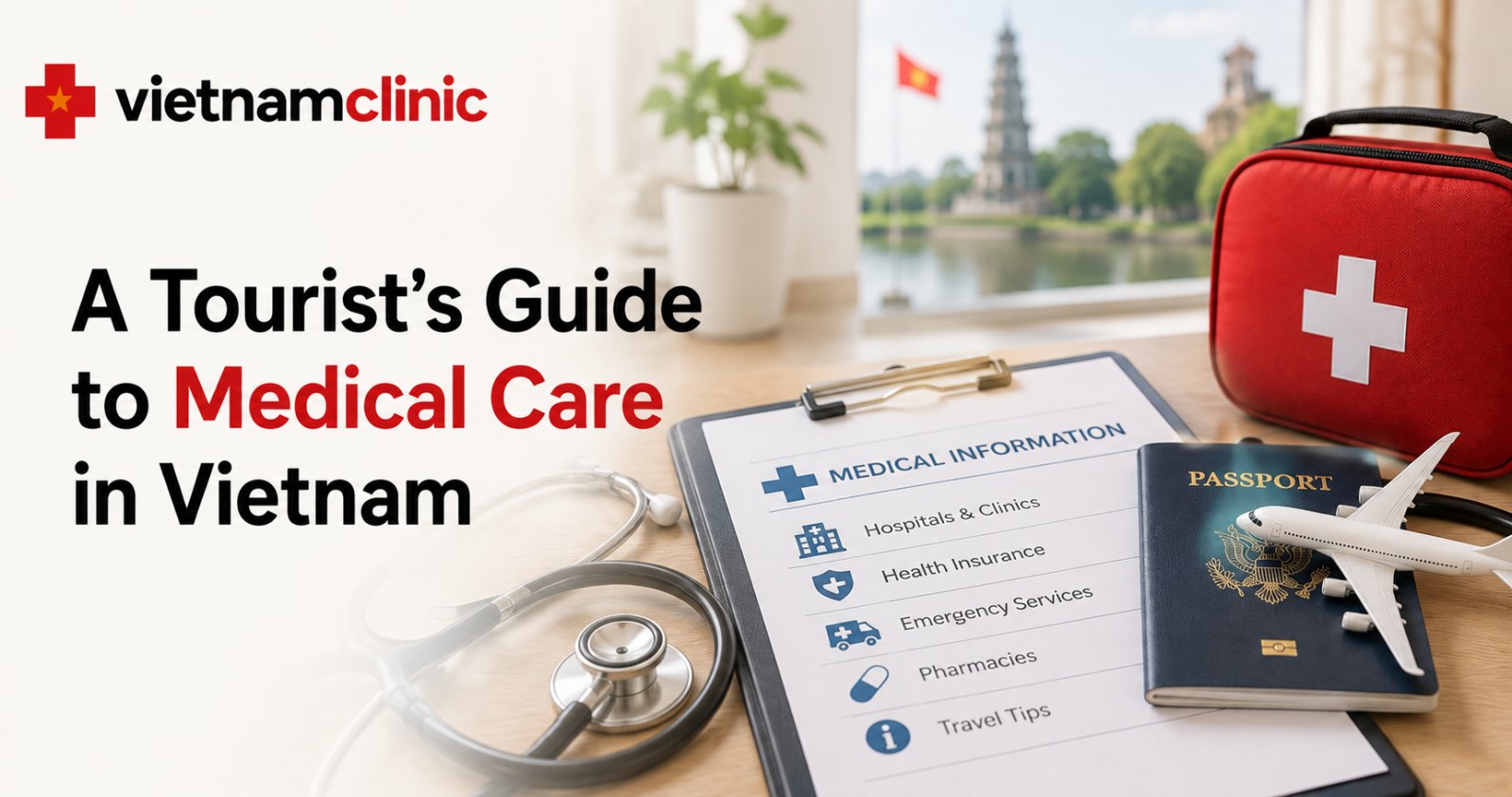
Most trips to Vietnam do not involve a hospital visit, but knowing how the healthcare system works can make a difficult day much easier. Tourists may need anything from a pharmacy or routine doctor consultation to diagnostic tests, emergency treatment or hospital admission.
Medical care is available throughout Vietnam, but the options vary considerably by location. Hanoi and Ho Chi Minh City have private hospitals and medical practices accustomed to international patients, while access to specialist and inpatient care can be more limited outside major urban centres. The CDC Yellow Book specifically advises travellers to consider medical evacuation insurance because some higher-level services may require transfer to another city or country.
This guide explains how to approach medical care in Vietnam for tourists, where to start when you become ill, what to bring, how payment and insurance may work, and what to check before leaving a clinic or hospital.
Know what level of care you need
The first decision is whether you need emergency treatment or whether the problem can be assessed through an ordinary outpatient appointment.
For mild or stable symptoms, a general medical clinic is often a practical starting point. A doctor can assess the problem, prescribe treatment when appropriate and refer you for laboratory tests, imaging or specialist care if needed. Vietnam Clinic’s comparison of general medical clinics in Vietnam is a starting point for reviewing available services.
You do not need to identify the correct medical specialty yourself before seeking help. When contacting a clinic, explain the main symptom, how long it has been present and whether you have an important medical condition or recent treatment.
What to do in a medical emergency
Vietnam's ambulance and medical emergency number is 115. UK government travel guidance confirms this number and advises travellers to contact their insurance company promptly if they are referred to a medical facility.
Emergency numbers in Vietnam are operated in Vietnamese, according to current UK government guidance. If communication is difficult, a hotel receptionist, tour operator, Vietnamese-speaking companion or local contact may be able to help make the call when circumstances permit.
Seek urgent medical help for potentially life-threatening symptoms such as:
- Severe difficulty breathing
- Severe or persistent chest pain
- Loss of consciousness
- Signs of stroke, including sudden facial weakness, arm weakness or difficulty speaking
- Major trauma
- Heavy or uncontrolled bleeding
- Seizures
- Severe allergic reactions involving breathing or the throat
- Severe confusion
- Rapidly worsening symptoms that appear medically serious
Do not delay emergency treatment while searching for a preferred English-speaking clinic or comparing prices.
Hospitals and clinics in major Vietnamese cities
Tourists will generally find the widest selection of private, international and major public healthcare facilities in Hanoi and Ho Chi Minh City.
Hanoi
Hanoi has large public hospitals as well as private hospitals and clinics serving international residents and visitors. Options range from general outpatient consultations to specialist and emergency care.
If you are staying in the capital, Vietnam Clinic’s comparison of hospitals in Hanoi can help you review facilities and then confirm current services directly with the hospital.
Some private hospitals provide international patient services or interpretation. Availability can vary by department, clinician and time of day, so English support should be confirmed before a non-emergency visit.
Ho Chi Minh City
Ho Chi Minh City also has a broad mix of public hospitals, private hospitals and international medical practices. Several facilities specifically publish information for foreign patients, including insurance and interpretation arrangements.
You can review hospitals in Ho Chi Minh City before contacting a facility about the specialty, appointment availability and language support you need.
FV Hospital, for example, states that interpretation support is available in English and several other languages upon request. This establishes the service published by that hospital, but it does not mean the same arrangements are available at every healthcare facility in Vietnam.
Da Nang and other destinations
Da Nang has public and private hospitals and is accustomed to international tourism, but the range of highly specialised care is smaller than in Hanoi or Ho Chi Minh City.
The differences become more important in smaller cities, islands and rural areas. CDC guidance notes that specialty services and inpatient care outside the largest cities may be more limited.
If a serious condition requires treatment that is not locally available, transfer to a larger Vietnamese city or medical evacuation outside Vietnam may be considered by the treating team and insurer.
Should tourists choose a private or public hospital?
There is no universal answer.
Large public hospitals can provide extensive specialist and emergency services and may be particularly important for complex cases. However, tourists who do not speak Vietnamese may find registration and communication more difficult.
Private hospitals and international clinics may offer easier appointment systems, more English-language information and greater familiarity with international insurance. Fees can also be substantially higher than at public facilities.
For a routine problem, you have time to compare location, specialty, communication and expected cost. In a serious emergency, getting appropriate care quickly is more important than choosing between public and private care.
English-language medical care in Vietnam
English-speaking doctors can be found in Vietnam, particularly in major cities and facilities that regularly see international patients. However, an English website does not guarantee that every doctor, nurse, receptionist or technician will speak English.
Before a planned visit, ask specifically:
- Does the doctor speak English?
- Is interpretation available?
- Does interpretation cost extra?
- Can prescriptions and discharge instructions be provided in English?
- Can medical reports be issued in English if you need follow-up at home?
For complex treatment, communication is more important than conversational convenience. You should be able to understand the diagnosis, proposed treatment, important risks, alternatives and follow-up plan.
The checklist in How to Choose an English-Speaking Clinic in Vietnam covers these questions in more detail.
What to bring to a doctor or hospital
Tourists can make registration and assessment easier by keeping essential information accessible.
Bring or have access to:
- Your passport or another form of identification accepted by the facility
- Travel or international health insurance information
- The insurer's assistance telephone number
- A list of current medicines
- Generic names and doses of regular medicines
- Details of allergies
- Important medical conditions
- Relevant laboratory results or medical records
- A payment card or another accepted payment method
CDC travel guidance recommends carrying prescription information and necessary medical supplies when travelling.
If you have a complex medical condition, a short medical summary in English can be more useful than carrying a large collection of unrelated records.
Medical costs and payment
There is no single tourist price for healthcare in Vietnam. Costs vary according to the provider, city, specialty, tests, procedures and whether hospital admission is required.
For non-emergency care, ask about the consultation fee before attending. Remember that the initial consultation may not include:
- Blood tests
- Diagnostic imaging
- Medicines
- Procedures
- Medical supplies
- Specialist consultations
- Emergency services
- Hospital admission
If further tests or non-urgent treatment are recommended, ask for an estimated cost before proceeding.
Travellers should also be prepared for the possibility of paying upfront. UK government guidance on receiving medical care abroad notes that patients may have to pay for treatment first even when they are insured.
Keep itemised invoices, receipts, prescriptions and medical reports for any insurance claim.
How travel insurance fits in
A travel insurance policy does not mean that every hospital can automatically bill your insurer.
Some private hospitals have direct billing arrangements with selected insurers. In other cases, the insurer may need to issue a guarantee of payment, or you may be asked to pay and claim reimbursement afterwards.
Before your trip, check whether your policy covers:
- Outpatient medical consultations
- Emergency treatment
- Hospital admission
- Prescription medicines
- Existing medical conditions
- Adventure activities you intend to do
- Medical evacuation
- Repatriation
Current UK travel advice recommends adequate insurance that includes medical treatment and, where relevant, air ambulance or repatriation costs.
If you need significant treatment, contact the insurer's emergency assistance service as soon as practical. Do not delay urgent stabilisation in order to obtain insurance approval.
Using pharmacies in Vietnam
Pharmacies are easy to find in Vietnamese cities and tourist areas, but they are not a substitute for medical assessment when symptoms are severe, persistent or unexplained.
For a familiar minor problem, a pharmacy may be useful for basic health products or for filling an appropriate prescription. For symptoms such as persistent high fever, significant breathing difficulty, severe abdominal pain, dehydration, neurological symptoms or rapidly worsening illness, seek medical assessment instead of repeatedly trying different medicines yourself.
If you need to replace a regular medication, take the original packaging or a copy of the prescription. Generic drug names are useful because the brand used in your home country may not be sold under the same name in Vietnam.
Tourists bringing their own prescription medicines should also check Vietnamese entry rules, particularly for controlled medicines. See Customs Rules for Prescription Medications in Vietnam before travelling with medication that may be subject to restrictions.
Common reasons tourists seek medical care
Visitors may need care for gastrointestinal illness, respiratory infections, fever, skin problems, injuries, allergic reactions or problems related to heat and dehydration. Vietnam also has mosquito-borne and other infectious diseases that travellers should understand before their trip.
CDC maintains destination-specific health guidance for Vietnam, including current information on vaccination and infectious disease risks.
Symptoms alone do not reliably identify the cause of an illness. For example, fever can result from many different infections and should not automatically be assumed to be food poisoning, influenza or dengue.
If you become ill and are uncertain what level of care you need, the broader guide Sick in Vietnam? What to Do and Where to Go explains the first practical steps.
If you need medical care outside a major city
Tourists often travel well beyond Hanoi and Ho Chi Minh City, including to mountain areas, islands and rural destinations.
Before travelling somewhere remote, identify where the nearest hospital is and check what your insurance covers if you need transfer. This is particularly relevant for trekking, motorbike travel, diving and other activities that can leave you far from higher-level medical facilities.
CDC's Vietnam guidance recommends adequate medical evacuation insurance because access to higher-level inpatient and specialist care is not uniform across the country.
An evacuation may mean transport to Hanoi or Ho Chi Minh City, or in some cases to a regional medical centre outside Vietnam. The medical team and insurer should make that decision according to the patient's condition and available services.
Before leaving the clinic or hospital
Once you have been assessed, make sure you understand the plan before returning to your hotel or continuing your trip.
Ask:
- What is the diagnosis or current working diagnosis?
- What medicines should I take and for how long?
- Are there activities, foods or travel plans I should temporarily avoid?
- When should I expect improvement?
- Which symptoms mean I should return urgently?
- Do I need another appointment?
- Are test results still pending?
- How will I receive those results?
- Can I obtain a medical report in English?
Keep copies of test results, imaging, prescriptions and discharge documents. They can be important if you need treatment in another Vietnamese city or after returning home.
A simple plan for tourists who need healthcare in Vietnam
For a mild or stable problem, identify a suitable clinic or hospital, call ahead when possible, confirm language support and bring your identification, insurance details and medication information. Ask about costs before non-emergency tests or procedures and keep the paperwork for your insurer.
For serious or rapidly worsening symptoms, seek emergency care immediately. Vietnam's ambulance number is 115.
Healthcare availability, clinician schedules, prices, insurance agreements and language support can change. Confirm practical details directly with the provider whenever your condition gives you time to do so.
Frequently Asked Questions
Can tourists use hospitals in Vietnam?
Yes. Tourists can receive care from public hospitals, private hospitals and clinics in Vietnam. The most suitable option depends on the medical problem, location, language needs and urgency.
What is the medical emergency number in Vietnam?
Vietnam's ambulance and medical emergency number is 115. Emergency telephone services operate in Vietnamese, so language assistance may be useful when available, but urgent care should not be delayed.
Are there English-speaking doctors in Vietnam?
English-speaking doctors are available, particularly in Hanoi, Ho Chi Minh City, Da Nang and facilities serving international patients. Language support varies by doctor, department and shift, so confirm it directly before a non-emergency appointment.
Do tourists have to pay for medical care in Vietnam?
Tourists should expect to pay for healthcare unless an insurer has arranged direct billing or a guarantee of payment. Even insured patients may be asked to pay upfront and claim reimbursement later.
Should I buy medical evacuation insurance for Vietnam?
It is worth considering, particularly if you will travel outside major cities. CDC guidance notes that some specialist and inpatient services outside Hanoi and Ho Chi Minh City may be limited and recommends adequate medical evacuation coverage.
Can I buy prescription medicine from a pharmacy in Vietnam?
Medicine availability and dispensing practices differ from those in other countries. If you need a regular prescription medicine, bring its generic name and your prescription or medical documentation, and seek medical advice when a replacement or new treatment requires clinical assessment.
Sources

Writer
Tan Nguyen
Medical writer for Vietnam Clinic. MD, Vietnam National University Ho Chi Minh City.