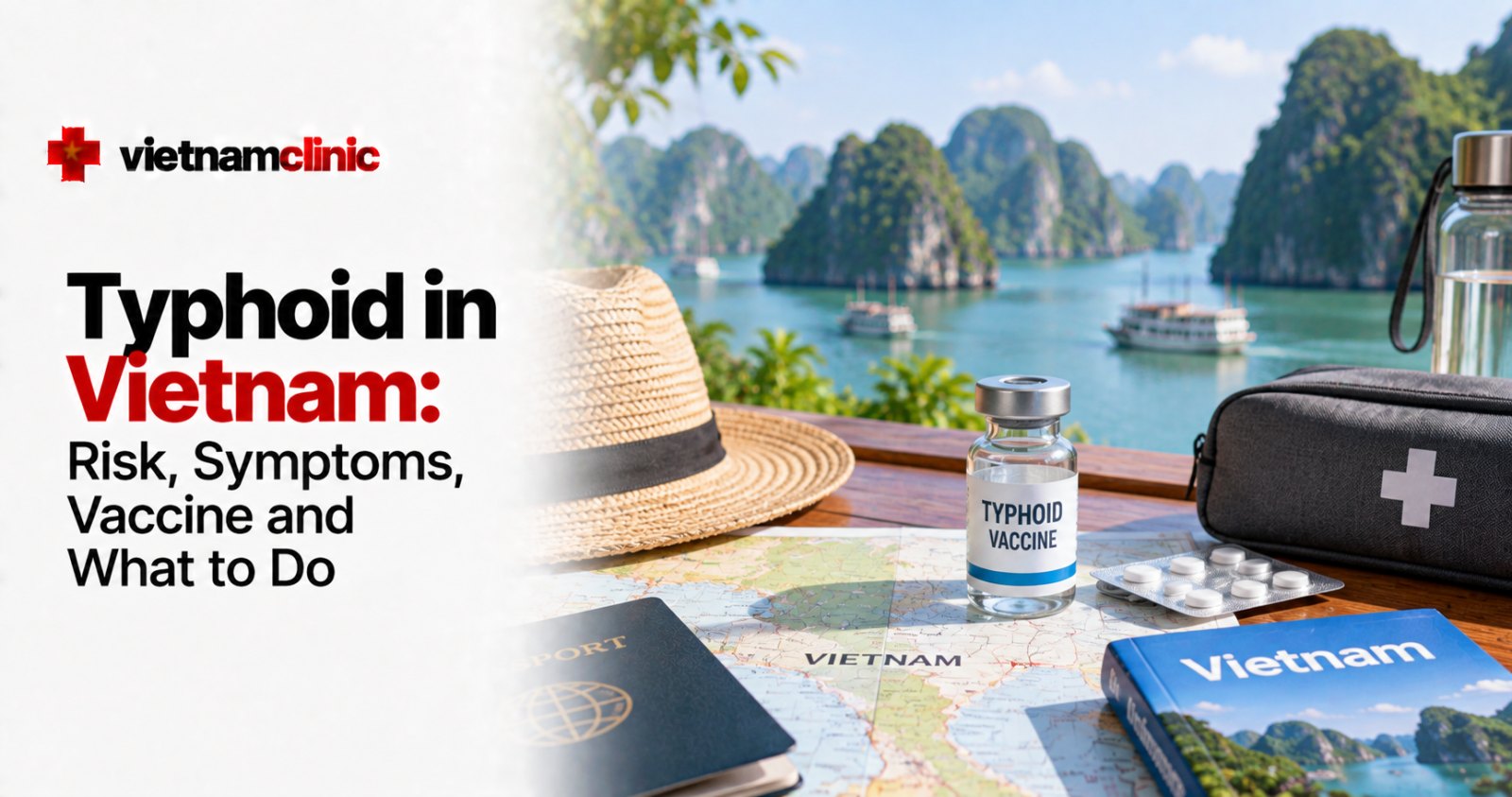
Typhoid fever remains a relevant health consideration for people travelling to Vietnam. The US Centers for Disease Control and Prevention currently recommends typhoid vaccination for most travellers to Vietnam, while also stressing that vaccination does not provide complete protection.
The infection is caused by Salmonella Typhi and spreads mainly through food or water contaminated with human faeces. Good food hygiene, safe drinking water and handwashing therefore remain important even if you have been vaccinated.
This guide explains the risk of typhoid in Vietnam, symptoms to watch for, vaccination, prevention, diagnosis and what to do if you become ill during or after your trip.
Is there a risk of typhoid in Vietnam?
Yes. Typhoid fever occurs in countries where safe water and sanitation are not consistently available, and Vietnam is considered a destination where travellers should take precautions.
The CDC currently recommends typhoid vaccination for most travellers to Vietnam. UK government health guidance has also described Vietnam as having a high risk of typhoid infection for travellers.
Risk is not identical for every visitor. It can depend on where you stay, what you eat and drink, the length and style of your trip, and whether you spend time in areas where sanitation or access to safe water is limited.
Someone staying briefly in a high-standard hotel and eating in carefully selected restaurants may have a different exposure profile from a traveller spending several weeks visiting rural communities or eating frequently from informal food outlets. However, no itinerary eliminates risk completely.
For a broader overview of infections and other conditions travellers may encounter, see 10 Most Common Illnesses in Vietnam.
What is typhoid fever?
Typhoid fever is a potentially serious bacterial infection caused by Salmonella Typhi. A related illness, paratyphoid fever, is caused by Salmonella Paratyphi.
The bacteria are usually transmitted when food or water has been contaminated by an infected person's faeces. Someone who has recovered from typhoid can sometimes continue carrying and shedding the bacteria, which means transmission can occur even when that person no longer feels ill.
Typhoid is different from the more familiar forms of Salmonella food poisoning caused by non-typhoidal Salmonella bacteria.
What are the symptoms of typhoid?
According to the World Health Organization, common symptoms can include:
- Prolonged fever
- Fatigue or weakness
- Headache
- Nausea
- Abdominal pain
- Constipation or diarrhoea
- Rash in some patients
Symptoms are not specific to typhoid. Dengue, influenza, COVID-19, gastrointestinal infections and several other illnesses can also cause fever or similar symptoms in Vietnam.
Do not try to identify typhoid based only on how the illness feels. A clinician may need your travel history, examination and laboratory testing to establish the cause.
How long after exposure can typhoid symptoms appear?
Typhoid does not necessarily make you ill immediately after eating or drinking contaminated food or water. Symptoms can appear after you have already moved to another city or returned home from Vietnam.
This makes your travel history important. If you develop persistent fever after travelling in Vietnam, tell the doctor where you have been and when you returned, even if the trip has already ended.
A clinician can then consider typhoid alongside other infections associated with travel.
Should travellers get a typhoid vaccine before Vietnam?
The CDC currently recommends typhoid vaccination for most travellers to Vietnam.
Ideally, discuss vaccination with a travel health professional before departure so there is enough time to receive the appropriate vaccine and review other travel health needs.
Different typhoid vaccines exist internationally, including injectable and oral vaccines, and schedules vary according to the product. The appropriate option can depend on your age, medical history, previous vaccination and where you live.
No typhoid vaccine is completely effective. The CDC specifically warns travellers that vaccination should be combined with careful food and water habits.
Does the typhoid vaccine protect against paratyphoid?
Standard typhoid vaccines are designed primarily to protect against Salmonella Typhi. They should not be assumed to provide reliable protection against paratyphoid fever.
This is another reason food and water precautions remain important after vaccination.
How to reduce your risk of typhoid in Vietnam
Because typhoid spreads through contaminated food and water, everyday choices matter.
Be careful with drinking water
Use water from a source you consider safe. When there is uncertainty about tap water, choose sealed bottled water or appropriately treated water.
Be cautious about ice if you cannot establish that it was produced from safe water. The same principle applies to drinks diluted with water.
Choose food carefully
Food that is thoroughly cooked and served hot is generally a safer choice than food that has been sitting at room temperature for long periods.
Be particularly cautious with:
- Raw or undercooked food
- Unwashed fruit and vegetables
- Food handled extensively after cooking
- Unpasteurised dairy products
- Food that appears to have been stored without adequate temperature control
Street food is an important part of travelling in Vietnam, but the hygiene conditions of individual vendors vary. Look at how food is stored, handled and cooked rather than assuming that every street stall is either safe or unsafe.
Wash your hands
Wash your hands with soap and water before eating and after using the toilet. When soap and water are not available, alcohol-based hand sanitiser can be useful until proper handwashing is possible.
These precautions also reduce the risk of several other gastrointestinal infections.
What should you do if you think you have typhoid in Vietnam?
Seek medical assessment if you develop a persistent or significant fever, particularly when it is accompanied by abdominal symptoms, marked fatigue, headache or diarrhoea or constipation.
Tell the clinician:
- When your symptoms began
- Which parts of Vietnam you have visited
- Whether you have recently travelled to another country
- What you have been eating and drinking
- Whether you received a typhoid vaccine
- Which medicines you are currently taking
- Whether you have already taken antibiotics
Do not assume that taking a typhoid vaccine rules the infection out.
If you are unsure where to seek care, Sick in Vietnam? What to do and where to go to get better explains the main healthcare options for travellers and international residents.
How is typhoid diagnosed?
A healthcare professional may suspect typhoid based on symptoms and travel history, but laboratory confirmation is important.
Blood culture is commonly used to identify Salmonella Typhi. Depending on the stage of the illness and the clinical situation, clinicians may use additional samples or tests.
Previous antibiotic use can affect bacterial cultures, so tell the doctor if you have already taken an antibiotic, including medicine obtained from a pharmacy without a prescription.
How is typhoid treated?
Typhoid fever is treated with antibiotics, but antimicrobial resistance has made treatment more complicated in many parts of the world.
The World Health Organization warns that resistance to different antibiotics is increasingly common. This is one reason not to self-treat a suspected case with whichever antibiotic is easiest to buy.
The appropriate antibiotic depends on factors such as local resistance patterns, disease severity, laboratory results and the patient's individual circumstances. Treatment should therefore be selected by a qualified clinician.
If antibiotics are prescribed, take them for the duration directed by the treating doctor unless that doctor changes the plan.
Why antibiotic resistance matters
Salmonella Typhi has developed resistance to multiple antibiotics in different parts of the world. This can make empirical treatment more difficult and increases the importance of appropriate diagnostic testing and medical supervision.
Buying an antibiotic and taking a partial course can also make diagnosis more difficult without guaranteeing effective treatment.
If you have already taken antibiotics before attending a clinic in Vietnam, tell the doctor the name, dose and number of doses if you know them. Bring the packaging or a photograph if possible.
Before attending an appointment, What to Check Before a Medical Appointment in Vietnam can help you prepare useful medication and medical information.
Can typhoid become serious?
Yes. Most people can recover with appropriate treatment, but untreated or severe typhoid can cause serious complications.
WHO notes that severe cases can lead to significant complications and death. Potential complications can affect the intestinal tract and other organs.
Seek prompt medical assessment rather than waiting several days with a persistent high fever if you are becoming progressively more unwell.
Seek immediate local medical help if you develop severe weakness, confusion, loss of consciousness, significant gastrointestinal bleeding, severe abdominal pain, difficulty breathing or another rapidly worsening symptom.
Vietnam's emergency medical number is 115.
What if you develop symptoms after leaving Vietnam?
Typhoid can become apparent after a traveller has returned home.
If you develop fever after a trip to Vietnam, tell your doctor about the trip rather than treating it as an unrelated illness. Mention when you travelled, where you stayed and whether you visited other countries during the same journey.
Travel history can influence which infections a clinician considers and which tests are appropriate.
Can you spread typhoid to other people?
Yes. An infected person can shed Salmonella Typhi in faeces and transmit the bacteria through poor hand hygiene or contaminated food.
WHO advises people being treated for typhoid to wash their hands carefully after using the bathroom and to avoid preparing or serving food to other people while they may still be infectious.
Some people can continue carrying the bacteria after their symptoms resolve. Your doctor may advise follow-up testing depending on your circumstances and local public-health requirements.
Typhoid versus ordinary traveller's diarrhoea
Typhoid should not be assumed every time someone develops diarrhoea in Vietnam. Many different bacteria, viruses and parasites can cause gastrointestinal illness, and typhoid can sometimes cause constipation rather than diarrhoea.
Persistent fever is an important reason to seek medical evaluation rather than treating the illness as routine food poisoning.
The distinction matters because diagnosis and treatment differ between infections.
Typhoid in Hanoi, Ho Chi Minh City and Da Nang
The CDC recommendation for most travellers applies to Vietnam as a destination rather than being limited to one Vietnamese city.
Your personal exposure may nevertheless vary according to accommodation, food, water and travel outside urban areas. Someone based in Ho Chi Minh City, Hanoi or Da Nang may also take weekend or regional trips that change their exposure profile.
Do not assume that staying in a major city means vaccination or food precautions are irrelevant. Discuss your complete itinerary with a travel medicine professional.
A practical plan before travelling to Vietnam
Before departure, check whether typhoid vaccination is appropriate for you and make sure routine vaccinations are current. During the trip, combine vaccination with careful food, water and hand hygiene rather than relying on the vaccine alone.
If you become ill with persistent fever, particularly with gastrointestinal symptoms or marked fatigue, arrange medical assessment and tell the clinician about your travel history. Avoid self-prescribing antibiotics because resistance can affect treatment choices and previous antibiotic use can complicate diagnostic testing.
For most travellers, prevention is straightforward: prepare before the trip, be selective about food and water, and know where to seek care if a significant fever develops.
Frequently Asked Questions
The questions below cover common concerns about typhoid fever and travel in Vietnam.
Is typhoid common in Vietnam?
Typhoid remains a recognised travel health risk in Vietnam. The CDC currently recommends typhoid vaccination for most travellers to the country, together with food and water precautions.
Do I need a typhoid vaccine for Vietnam?
The CDC recommends typhoid vaccination for most travellers to Vietnam. Discuss your itinerary, medical history and previous vaccinations with a travel health professional before departure.
Can I still get typhoid after being vaccinated?
Yes. Typhoid vaccines are not 100% effective, so vaccinated travellers should still take precautions with food, drinking water and hand hygiene.
What are the symptoms of typhoid in Vietnam?
Common symptoms include prolonged fever, fatigue, headache, nausea, abdominal pain and either constipation or diarrhoea. These symptoms can overlap with other infections, so persistent fever should be assessed rather than self-diagnosed.
How is typhoid treated in Vietnam?
Typhoid is treated with antibiotics selected according to the patient's clinical situation and relevant resistance patterns. Because antimicrobial resistance is an increasing problem, suspected typhoid should be assessed by a qualified clinician rather than treated with antibiotics chosen without medical advice.
When should I seek urgent care for suspected typhoid?
Seek prompt medical care for persistent fever or worsening illness. Severe abdominal pain, confusion, loss of consciousness, significant bleeding, breathing difficulty or rapidly worsening symptoms require immediate medical assessment.
Sources

Writer
Tan Nguyen
Medical writer for Vietnam Clinic. MD, Vietnam National University Ho Chi Minh City.