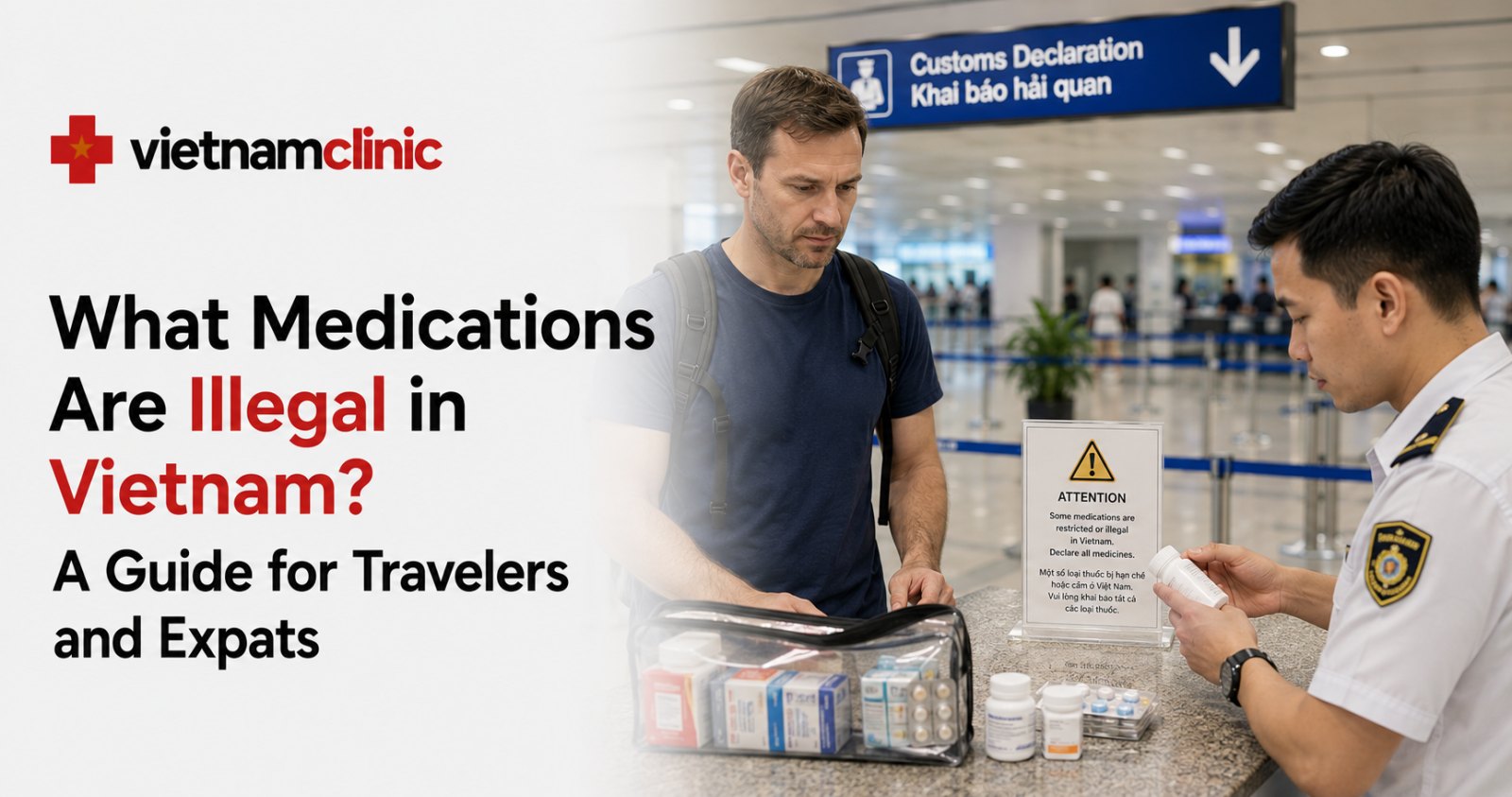
Vietnam has strict drug laws, but the phrase "illegal medications" can be misleading. Some substances are completely prohibited, while others are legitimate medicines that are legal only under tightly controlled medical conditions.
For travelers, this distinction matters. A prescription medicine that is routinely carried in another country may fall into Vietnam's controlled narcotic or psychotropic categories and require supporting medical documentation or additional compliance.
Vietnam updated its narcotics framework in 2026, including a new national list of narcotic substances and precursors under Decree 28/2026/ND-CP. Decree 28/2026/ND-CP took effect on 19 January 2026 and replaced the previous national schedules in Decree 57/2022 and its 2024 amendment. List I covers narcotic substances prohibited from ordinary medical and social use. List II covers substances whose use is restricted to authorised medical, research, testing, national defence or security purposes. A medicine in a controlled list is therefore not automatically the same as an illicit street drug, but it still requires separate handling from ordinary prescription or over-the-counter medicines. Travelers should check the active ingredient, not just the brand name, against the current schedules before bringing potentially controlled medication into the country.
Are any medications completely illegal in Vietnam?
Yes. Vietnam's current narcotics rules contain a category of substances that are strictly prohibited from ordinary medical and social use.
Under Decree 28/2026/ND-CP, List I covers narcotic substances that are prohibited from ordinary medicine and social life, except for narrowly controlled purposes such as approved research, testing or certain government activities.
Examples appearing within the prohibited category include substances associated with illicit drugs rather than ordinary prescription treatment.
This means travelers should never assume that a substance is acceptable simply because it is legal, decriminalised or medically available somewhere else.
Cannabis is not a normal legal medication in Vietnam
Cannabis deserves particular attention because international laws have changed quickly.
Vietnam's current controlled-substance list includes the cannabis plant and cannabis preparations containing tetrahydrocannabinol, or THC, within its strictly prohibited narcotics framework.
This is very different from countries that permit:
- Recreational cannabis.
- Medical marijuana.
- THC oils.
- Cannabis edibles.
- THC vape cartridges.
A foreign prescription or medical cannabis card should not be assumed to make a THC-containing product legal to bring into Vietnam.
Travelers should be especially careful with products bought legally in countries such as Thailand, Canada or parts of the United States before travelling onward to Vietnam.
CBD products can also create problems
CBD products are legally complicated internationally because formulations can contain different cannabinoids and varying amounts of THC.
Do not assume that a product labelled "CBD" is automatically safe to bring into Vietnam.
Products such as:
- CBD oil.
- Cannabis extracts.
- Gummies.
- Vape liquids.
- Full-spectrum CBD products.
may contain controlled cannabinoids or cannabis-derived substances.
If you cannot establish the exact ingredients and Vietnamese legal status, leaving the product at home is safer than attempting to carry it through customs.
Heroin and illicit opioids are strictly prohibited
Heroin appears on Vietnam's current List I of strictly prohibited narcotic substances.
Possession, transport or importation of illegal narcotic drugs can carry extremely serious legal consequences in Vietnam.
Travelers should distinguish these prohibited substances from legitimate opioid medications prescribed for pain, because some medical opioids fall into restricted categories rather than being absolutely prohibited.
That distinction does not mean prescription opioids can be brought into the country casually.
Prescription opioids are controlled, not necessarily completely banned
Some legitimate pain medicines contain controlled narcotic substances.
Vietnam's current lists include controlled substances used medically under restrictions, including examples such as:
- Codeine.
- Certain fentanyl-related medicines.
- Other opioid analgesics.
A medicine containing a controlled opioid may therefore be medically legitimate while still being subject to strict rules on possession, importation and personal use.
If you take strong pain medication, do not rely only on the pharmacy label.
Carry appropriate documentation and confirm the current rules before travel.
Codeine is controlled in Vietnam
Codeine is an especially useful example because travelers may not think of it as a controlled drug.
Vietnam's 2026 controlled-substance list includes codeine among narcotic substances that may be used in medicine under regulated conditions.
Codeine can appear in:
- Prescription painkillers.
- Combination analgesics.
- Some cough medicines in certain countries.
A medication being available over the counter in your home country does not determine how Vietnam classifies its active ingredient.
Check combination medicines carefully because codeine may not be obvious from the brand name.
Benzodiazepines are controlled psychotropic medicines
Travelers taking medication for anxiety, panic disorders, seizures or sleep should pay particular attention to benzodiazepines.
Vietnam's current controlled psychotropic list includes substances such as:
- Alprazolam.
- Diazepam.
- Bromazepam.
- Clonazepam and related controlled sedatives where listed under current regulations.
- Flunitrazepam.
- Other benzodiazepine-type substances.
Alprazolam is commonly sold internationally under brand names such as Xanax, while diazepam is widely known as Valium.
These medicines should not be treated like ordinary travel tablets simply because you have used them for years.
If prescribed, carry clear medical documentation and only an appropriate personal-use quantity.
Sleeping tablets may also be controlled
Some prescription sleeping medicines fall within psychotropic-control frameworks.
This can include certain benzodiazepines and related sedatives.
If you take medication for insomnia, check the active ingredient rather than searching only for the commercial brand.
Brand names can differ substantially between Europe, the United States, Australia and Southeast Asia.
A travel letter stating the generic name, dosage and medical reason for the medication is much more useful than relying on packaging alone.
ADHD medication requires extra checking
Some medicines used for attention deficit hyperactivity disorder contain stimulant substances that can be subject to controlled-drug rules internationally.
Travelers taking ADHD medication should check substances such as stimulant-based treatments carefully before entering Vietnam.
The correct question is not simply "Is my ADHD medication legal?" but:
- What is the active ingredient?
- Is it listed as a narcotic or psychotropic substance in Vietnam?
- How much can I carry for personal treatment?
- What prescription or medical documentation is required?
Do this before departure rather than trying to resolve the issue at the airport.
Psychiatric medication is not automatically illegal
It is important not to overstate Vietnam's restrictions.
Taking medication for depression, anxiety, bipolar disorder, psychosis or another mental health condition does not automatically mean the medicine is prohibited.
Many psychiatric medicines are legitimate pharmaceutical products.
The issue is that some psychiatric drugs are classified as controlled psychotropic medicines, particularly certain sedatives, anxiolytics and stimulants.
Common antidepressants should not automatically be confused with controlled benzodiazepines.
Check each active ingredient individually.
Prescription medication and illegal drugs are not the same category
Travel guides sometimes create unnecessary alarm by presenting a long list of prescription medicines as if possession of any of them were automatically criminal.
Vietnamese law distinguishes between:
- Strictly prohibited narcotic substances.
- Narcotic medicines used under medical controls.
- Psychotropic medicines used under medical controls.
- Precursor medicines.
- Ordinary prescription medicines.
- Non-prescription medicines.
The legal rules depend on which category applies.
A person carrying legitimate prescribed medicine for personal treatment is therefore in a very different situation from someone transporting an illicit narcotic substance.
Can travelers bring controlled medicine into Vietnam for personal use?
Vietnamese narcotics law explicitly recognises that people entering, leaving or transiting Vietnam may carry narcotic, psychotropic or precursor medicines for their own medical treatment, subject to government rules and control by Vietnamese authorities.
This means controlled medication is not automatically treated as illegal simply because a traveler enters Vietnam with it.
However, documentation and quantity restrictions can apply.
For detailed travel preparation, see Customs Rules for Prescription Medications in Vietnam.
What documents should you carry?
For prescription medicine, particularly controlled medication, it is sensible to travel with:
- The medicine in its original packaging.
- The pharmacy label where applicable.
- A copy of the prescription.
- A doctor's letter.
- The generic name of the active ingredient.
- The dosage.
- The medical reason for treatment.
- Your name matching your passport.
For a controlled medicine, the doctor's letter should ideally make clear that the medication is required for your personal medical treatment.
Documentation should be in English or accompanied by a suitable translation where practical.
Do not carry large quantities without checking the rules
A year's supply of a controlled drug can attract very different regulatory attention from a small amount required for a short trip.
Travelers should carry only a reasonable personal-use quantity and verify any applicable limits before travel.
This is especially important for:
- Narcotic pain medication.
- Benzodiazepines.
- Strong sleeping medicines.
- Controlled stimulants.
- Other psychotropic medication.
If you are relocating to Vietnam rather than visiting for a holiday, it may be more practical to investigate ongoing medical care and legitimate local prescribing arrangements.
Keep medicine in its original packaging
Avoid transferring prescription tablets into unlabelled pill organisers before international travel when the medicine may be controlled.
Original packaging helps establish:
- The drug name.
- Active ingredient.
- Strength.
- Manufacturer.
- Prescription information where printed.
You can still use a pill organiser during your stay if appropriate, but carrying controlled medicine through customs in clearly identifiable packaging reduces ambiguity.
Do not carry medication for another person
If a medicine is prescribed to someone else, carrying it across an international border can create unnecessary legal complications.
This is particularly serious when the medicine contains controlled substances.
Each traveler should carry their own prescribed medicine and supporting documentation.
A prescription issued to your partner or friend does not demonstrate that you have a legitimate medical reason to possess that medication.
What about medication bought legally in Thailand?
Legal availability in Thailand does not determine legality in Vietnam.
This is particularly important for travelers moving between the two countries because laws relating to cannabis and certain medicines differ significantly.
A substance bought legally from a pharmacy, cannabis shop or clinic in Thailand may still be prohibited or controlled when you cross into Vietnam.
Always check Vietnamese law independently before flying from Bangkok, Phuket, Pattaya or another Thai destination to Vietnam.
Buying medicine from a pharmacy in Vietnam does not automatically prove it is legal without a prescription
Another common misunderstanding comes from pharmacy availability.
Vietnam has historically experienced inconsistent enforcement of prescription-only sales at retail pharmacies.
The fact that a pharmacy sells you a medicine without asking for a prescription does not necessarily mean Vietnamese law classifies it as an over-the-counter drug.
Antibiotics are a good example. Vietnamese health authorities state that antibiotics should be used according to medical prescription requirements.
Travelers should therefore distinguish between what a pharmacy may be willing to sell and what the formal pharmaceutical rules require.
Are antibiotics illegal in Vietnam?
No. Antibiotics are not illegal drugs.
They are legitimate medicines, but many are prescription medicines and should be used under appropriate medical guidance.
This is completely different from narcotics such as heroin or prohibited cannabis preparations.
Do not confuse "prescription-only" with "illegal".
A medicine can be completely legal in Vietnam while still requiring a prescription.
Is Viagra illegal in Vietnam?
Sildenafil itself is not comparable to a prohibited narcotic substance simply because it is a prescription medicine in many jurisdictions.
The more relevant questions are whether a product is legally registered, genuine and being supplied according to applicable Vietnamese pharmaceutical rules.
Counterfeit erectile dysfunction products are a separate concern because they may contain incorrect dosages or undeclared ingredients.
Prescription status and drug prohibition are two very different issues.
Are steroids illegal in Vietnam?
The word "steroids" covers several different substances and medical uses, so it should not be treated as one legal category.
Corticosteroids prescribed for inflammation are very different from anabolic-androgenic steroids used for performance enhancement.
Travelers carrying hormonal or controlled medicines should verify the specific active ingredient and applicable Vietnamese rules rather than relying on a general internet statement that all steroids are either legal or illegal.
How do you check whether your medication is controlled?
Use the generic active ingredient, not the brand name.
For example:
- Xanax -> alprazolam.
- Valium -> diazepam.
- A codeine combination product -> check for codeine.
Then determine whether that ingredient appears in Vietnam's current controlled-drug schedules.
Vietnam's 2026 framework divides controlled substances into several lists according to whether they are prohibited or permitted only for restricted medical or other authorised purposes.
If your medicine appears on one of these schedules, check the current personal-use import requirements before travelling.
What if your medicine is not available in Vietnam?
Availability and legality are separate questions.
A medication may be legal but difficult to find because:
- The brand is not registered locally.
- The active ingredient is uncommon.
- Only certain hospitals stock it.
- A specialist prescription is required.
Long-term expats should ideally establish medical care before their existing supply runs out.
Vietnam Clinic's guide to How to Choose an English-Speaking Clinic in Vietnam can help if you need a local doctor to review ongoing medication.
What happens if customs questions your medication?
Remain calm and provide clear documentation.
Useful information includes:
- Your prescription.
- Doctor's letter.
- Original packaging.
- Exact quantity.
- Length of stay.
- Evidence that the medication is for personal treatment.
Do not conceal controlled medicine or provide misleading information about what you are carrying.
If a medication is prohibited or the quantity falls outside permitted personal-use rules, a foreign prescription may not automatically solve the problem.
Do not mail controlled medicines to yourself without checking first
Sending prescription medication by international courier or post is not necessarily governed by the same practical rules as carrying a personal supply in your luggage.
Import procedures, pharmaceutical regulations and customs controls can apply.
Do not assume that because you are permitted to carry a particular medicine personally, a family member can simply mail another supply to Vietnam later.
Check the relevant import rules first.
A practical medication checklist before flying to Vietnam
Before departure:
- List every prescription and non-prescription medicine you plan to carry.
- Write down each active ingredient.
- Check whether any ingredient is narcotic, psychotropic or otherwise controlled in Vietnam.
- Leave cannabis and THC-containing products behind unless you have confirmed a lawful exception through competent Vietnamese authorities.
- Keep medicines in original packaging.
- Carry prescriptions for prescription medicines.
- Obtain a doctor's letter for controlled medication.
- Carry only an appropriate personal-use quantity.
- Check whether declaration requirements apply.
- Keep important documentation in your hand luggage.
If anything is unclear, resolve it before travelling rather than assuming customs will accept the rules of your home country.
The most important distinction travelers should remember
When people ask, "What medications are illegal in Vietnam?", there are actually three separate questions:
Completely prohibited substances
These include drugs placed in Vietnam's strict prohibition lists, such as heroin and cannabis preparations containing THC under the current narcotics framework.
Controlled medicines
These can include legitimate medical substances such as codeine, alprazolam and diazepam. They can be used medically under restrictions but require much more care when travelling.
Ordinary prescription medicines
These are legal pharmaceutical products but may require a valid prescription or appropriate medical supervision.
Confusing these three categories can lead either to unnecessary fear or serious legal mistakes.
Frequently Asked Questions
The answers below provide general guidance about medicines and controlled substances in Vietnam. Drug classifications and import rules can change, so travelers carrying controlled medicines should confirm current requirements before departure.
What medications are illegal in Vietnam?
Vietnam distinguishes between strictly prohibited narcotic substances, controlled medicines and ordinary prescription medicines. Prohibited substances under the current framework include heroin and cannabis or cannabis preparations containing THC. Some prescription medicines are controlled rather than completely banned.
Is cannabis legal in Vietnam?
No. Vietnam's current controlled-substance framework lists the cannabis plant and THC-containing cannabis preparations within its strictly prohibited narcotics category. Travelers should not assume that a foreign cannabis prescription makes these products legal in Vietnam.
Can I bring Xanax to Vietnam?
Alprazolam, the active ingredient in Xanax, is listed as a controlled psychotropic substance in Vietnam. Travelers using it medically should check current personal-use requirements and carry appropriate prescription and medical documentation.
Can I bring diazepam to Vietnam?
Diazepam is included in Vietnam's controlled psychotropic lists. It may have legitimate medical use, but travelers should carry suitable documentation and verify applicable quantity and import requirements.
Is codeine illegal in Vietnam?
Codeine is not simply treated as an ordinary unrestricted medicine. It appears in Vietnam's controlled narcotic schedules and may be used medically under regulated conditions. Travelers carrying codeine-containing medication should check the current rules.
Are antibiotics illegal in Vietnam?
No. Antibiotics are legitimate medicines, but many are prescription-only. Prescription status is different from a medicine being prohibited as an illegal narcotic.
Can I bring prescription medication to Vietnam?
Many prescription medicines can be carried for personal medical use, but controlled narcotic, psychotropic and precursor medicines are subject to additional regulation. Keep medicines in original packaging and carry appropriate medical documentation.
Can I bring CBD oil to Vietnam?
Travelers should be cautious with CBD and cannabis-derived products because formulations can contain THC or other controlled cannabinoids. If the exact ingredients and Vietnamese legal status cannot be confirmed, it is safer not to bring the product.
Conclusion
Vietnam has strict narcotics laws, but not every prescription medicine that is controlled is completely illegal.
The most serious category includes substances prohibited from ordinary medical and social use. Vietnam's current 2026 lists include cannabis and THC-containing cannabis preparations, heroin and numerous other narcotic and psychotropic substances in this framework.
Other substances, including codeine, alprazolam and diazepam, can have legitimate medical uses but remain controlled and should not be carried into Vietnam casually or without appropriate documentation.
The safest approach is to identify every medication by its active ingredient, keep it in original packaging, carry a prescription and obtain additional medical documentation for controlled medicines. Never assume that a drug is acceptable in Vietnam simply because it is prescribed or legal in another country.
Sources
- Vietnam Ministry of Health: Decree 28/2026/ND-CP on Lists of Narcotics and Precursors
- Vietnam Law on Prevention and Control of Narcotic Substances 2025
- Vietnam Ministry of Health: Antibiotics Must Be Used According to Medical Prescription
- Vietnam legal database. Decree 28/2026/ND-CP
- Vietnam Ministry of Health. Controlled substances lists

Writer
Tan Nguyen
Medical writer for Vietnam Clinic. MD, Vietnam National University Ho Chi Minh City.