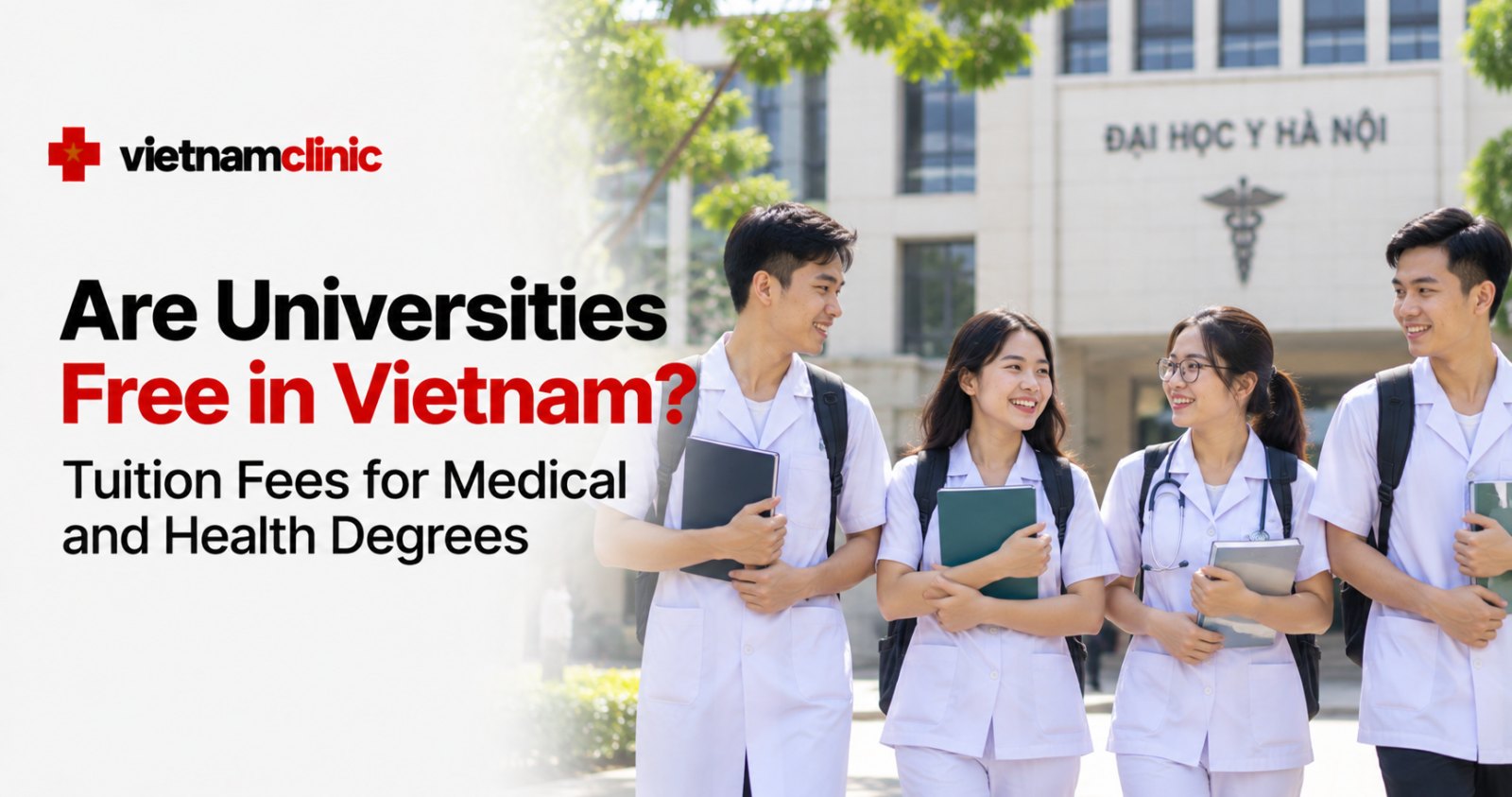
No, universities in Vietnam are not generally free. Students at both public and private universities normally pay tuition, although public institutions are heavily subsidised and can be significantly cheaper than private universities or international programmes.
The cost varies considerably by subject. Medicine, dentistry, pharmacy and some other health-related degrees tend to sit toward the higher end of public university tuition because they require laboratories, clinical training, specialist teaching and hospital placements.
There are scholarships, tuition reductions and exemptions for some students, but these should not be confused with a national system of free university education. Anyone considering a medical or health degree in Vietnam should check the current tuition schedule for the specific university and programme before applying.
Are universities free in Vietnam?
For most students, university education in Vietnam requires tuition payments.
Vietnam has a large public higher education sector, but public does not mean free. Government funding helps subsidise universities, while students contribute through tuition fees.
Private universities establish their own tuition structures and generally charge more than traditional public institutions. International programmes taught partly or entirely in English can also be substantially more expensive.
Vietnamese tuition policy includes mechanisms for:
- Tuition fee ceilings at certain public institutions
- Scholarships
- Tuition reductions
- Tuition exemptions for eligible groups
- Financial support for some students
Eligibility depends on the student's circumstances and the programme involved.
How do public university fees work in Vietnam?
Public universities can have different levels of financial autonomy.
This matters because financially autonomous universities may be permitted to charge higher tuition than public institutions that depend more heavily on direct government funding.
Under Vietnam's tuition framework, maximum tuition levels are divided according to subject groups. Health sciences have traditionally been separated into categories including medicine and pharmacy and other health-related programmes.
For the 2025 to 2026 academic year, the government framework set a tuition ceiling for non-autonomous public universities of approximately:
- 2.66 million VND per student per month for other health-related subject groups
- 3.5 million VND per student per month for medicine and pharmacy
Public universities with greater financial autonomy can operate under higher permitted ceilings.
These figures should be understood as part of the regulatory framework rather than a guarantee of what a particular student will pay. Universities publish their own tuition schedules, and fees can change between academic years.
Why are medical degrees more expensive?
Medical education requires resources that are not needed to the same extent in many classroom-based degrees.
Costs can include:
- Anatomy and laboratory facilities
- Clinical skills centres
- Medical equipment
- Hospital-based teaching
- Specialist academic staff
- Clinical placements
- Simulation equipment
- Practical examinations
Medicine also normally takes longer to complete than a standard undergraduate degree.
A medical student may therefore pay tuition for six years rather than the three or four years common in many other university programmes.
For a more detailed breakdown, see Medical School Cost in Vietnam: Tuition Fees and What Students Should Know.
How much does medical school cost in Vietnam?
There is no single medical school fee for the whole country.
Costs depend on:
- University
- Public or private status
- Degree
- Academic year
- Financial autonomy of the institution
- Vietnamese or international programme
- Student nationality
Public medical universities can still charge tens of millions of VND per academic year.
The University of Medicine and Pharmacy at Ho Chi Minh City, for example, publishes annual tuition schedules for its undergraduate and postgraduate programmes rather than offering tuition-free education.
Hanoi Medical University likewise requires tuition for its medical and health programmes.
Students comparing institutions can start with Vietnam Clinic's guide to the best medical schools in Vietnam, which covers major universities offering medical education across the country.
Are medical universities in Hanoi free?
No. Hanoi's major medical universities generally charge tuition.
Hanoi Medical University is a public institution, but students still have tuition obligations unless they qualify for a specific exemption, scholarship or other form of support.
Other institutions offering medicine, pharmacy, nursing and health sciences in the capital have their own fee structures.
Students specifically considering the capital can compare programmes in our ranking of medical universities in Hanoi.
When comparing universities, check the fee for the actual programme rather than assuming that all degrees at a public university cost the same.
Medicine, nursing, preventive medicine, dentistry and medical technology can each have different tuition rates.
Are private medical universities more expensive?
Usually, yes.
Private universities do not operate under the same tuition model as standard state-subsidised institutions and can charge substantially higher fees.
A private or internationally oriented health programme may cost several times more than a conventional public programme.
Students may be paying for features such as:
- Smaller classes
- Modern teaching facilities
- International faculty
- English-language instruction
- Overseas partnerships
- Exchange opportunities
- International curricula
Those features do not automatically mean that a programme is the right choice for every student.
For medicine in particular, accreditation, clinical training arrangements and whether the qualification will be recognised where you intend to practise should take priority over campus facilities or marketing.
Is studying medicine cheaper in Vietnam than abroad?
For many Vietnamese students, studying at a public medical university can be substantially cheaper than paying international tuition in countries such as the United States, Australia or the United Kingdom.
However, comparing headline tuition alone can be misleading.
Students should consider the full cost of a medical degree, including:
- Tuition over the entire programme
- Accommodation
- Food
- Books and study materials
- Medical equipment
- Uniforms
- Health insurance
- Transport
- Clinical placement expenses
- Examination fees
International students may also face visa, language and document-recognition costs.
Is nursing university free in Vietnam?
Nursing degrees are also generally tuition-based.
Nursing normally falls within the broader health sciences category, although the exact fee depends on the university.
Public nursing programmes may be cheaper than medicine or dentistry, but students should still expect to pay tuition unless they qualify for financial assistance.
The same applies to degrees such as:
- Midwifery
- Medical laboratory technology
- Medical imaging
- Rehabilitation
- Nutrition
- Public health
What about physiotherapy degrees?
Physiotherapy and rehabilitation education is available through several Vietnamese universities and medical schools.
These programmes are not normally free either.
Costs vary depending on whether the degree is offered by a public medical university, another public institution or a private university.
Students interested specifically in this field can compare options in Best Physiotherapy Universities in Vietnam.
Clinical placement arrangements are especially important when comparing physiotherapy programmes because practical training is a major part of professional preparation.
Are pharmacy degrees free in Vietnam?
No. Pharmacy students normally pay tuition.
Pharmacy is often grouped alongside medicine within the higher-cost public university tuition categories because of laboratory requirements and specialist teaching.
Universities offering pharmacy can set different annual fees depending on their financial model and programme structure.
Students should also distinguish a full university pharmacy degree from shorter vocational pharmacy qualifications, which follow different admission and tuition structures.
Are dental degrees free in Vietnam?
Dentistry, generally referred to as Odonto-Stomatology or Rang Ham Mat in Vietnamese university programmes, is also tuition-based.
Dental education can be relatively expensive because students require extensive practical training, clinical facilities and dental equipment.
Admission is also highly competitive at major public medical universities.
A student considering dentistry should compare the complete programme cost rather than only the first-year tuition because fees can change during a multi-year degree.
Can students study for free through scholarships?
Some students can substantially reduce or even eliminate their personal tuition costs through scholarships or exemptions.
Possible sources of support include:
- University scholarships
- Academic merit scholarships
- Government support
- Need-based financial assistance
- Scholarships from companies or foundations
- International exchange programmes
Private universities may also offer large merit scholarships to attract high-performing students.
A 50% or 100% scholarship can make a programme effectively tuition-free for an individual recipient, but this does not mean the university itself is free.
Scholarship conditions should be checked carefully. Some awards continue only if the student maintains a particular grade point average or academic performance level.
Who can receive tuition exemptions?
Vietnamese law provides tuition exemptions or reductions for certain eligible groups.
The precise categories and conditions are established under government education policy and can change.
Students should check the current rules directly with the university because eligibility may depend on factors such as family circumstances, social policy categories or specific educational programmes.
Vietnam's current tuition framework is governed in part by Decree 238/2025/ND-CP, which covers tuition policies, exemptions, reductions and educational support.
A separate 2026 decree also introduced free textbooks in general education and tuition-related provisions for national defence and security education, but this should not be interpreted as making ordinary university degrees free nationwide.
Do international students pay the same tuition?
Not necessarily.
Universities may establish separate fee arrangements for international students, especially when the programme is taught in English or specifically designed for foreign applicants.
An international student may encounter:
- Different tuition rates
- Application fees
- Vietnamese language requirements
- Foundation courses
- Visa costs
- Health insurance requirements
- Document translation and legalisation costs
Medical education presents additional complications because many Vietnamese medicine programmes are primarily taught in Vietnamese.
Foreign students should therefore verify the language of instruction and admissions policy before comparing tuition.
Can foreigners study medicine in Vietnam?
It may be possible at selected universities and programmes, but foreign applicants should not assume that every Vietnamese medical university accepts international students into its standard medical degree.
Important questions include:
- Does the university accept foreign applicants?
- What language is the degree taught in?
- Is Vietnamese proficiency required for clinical placements?
- What academic qualifications are required?
- Is there an entrance examination?
- Is the degree recognised in your home country?
- What is the international tuition rate?
Language is particularly important in clinical education because medical students need to communicate with patients and hospital staff.
Are postgraduate medical programmes free?
Generally not.
Vietnamese universities charge tuition for postgraduate medical education such as master's programmes, specialist training and other advanced qualifications.
For example, the University of Medicine and Pharmacy at Ho Chi Minh City published 2026 to 2027 postgraduate tuition of 73.5 million VND for several medical postgraduate categories, illustrating that postgraduate medical education involves significant tuition costs.
Fees differ according to programme and university.
Tuition is only part of the cost of studying medicine
A student deciding whether medical school in Vietnam is affordable should calculate the entire cost of attendance.
For someone studying away from home, major expenses can include:
- Rent or university accommodation
- Food
- Transportation
- Textbooks
- Laptop and study equipment
- Clinical clothing
- Medical instruments
- Health insurance
- Personal expenses
Living costs vary substantially between cities. Ho Chi Minh City and Hanoi are generally more expensive than smaller Vietnamese cities, particularly for private accommodation.
How to compare medical universities in Vietnam
Price should be one factor, but not the only one.
Before applying, compare:
- Recognition of the university
- Degree offered
- Admission requirements
- Tuition for every academic year
- Clinical teaching hospitals
- Language of instruction
- Programme duration
- Internship arrangements
- Scholarship opportunities
- International recognition if you plan to work abroad
For students still deciding where to apply, Best Medical Schools in Vietnam provides a broader comparison of established medical universities.
So, are universities free in Vietnam?
For most students, no. Vietnam's public universities are subsidised, but students generally pay tuition. Private and international universities also charge tuition and are usually more expensive.
Medical and pharmaceutical programmes tend to have some of the highest fees within the public university system because of the cost of laboratories, clinical training and specialist education. Nursing, physiotherapy and other health programmes also normally charge tuition.
Scholarships and statutory exemptions can reduce or eliminate costs for individual students, but they are exceptions rather than evidence of a universally free university system.
Anyone planning to study medicine or another health profession in Vietnam should confirm the latest tuition directly with the university before applying because fees, scholarships and admission policies can change from one academic year to the next.
Frequently Asked Questions
Are public universities free in Vietnam?
No. Public universities in Vietnam are subsidised by the state, but most students still pay tuition. Fees vary according to the university, subject and level of financial autonomy.
Is medical school free in Vietnam?
No. Medical students generally pay tuition at both public and private universities. Medicine and pharmacy are among the higher-cost subject groups within the public university system.
How much does a public medical university cost in Vietnam?
Costs vary considerably. Government frameworks establish tuition limits for some public institutions, while financially autonomous universities can charge higher fees. Individual medical universities publish their own annual tuition schedules.
Can you study at university for free in Vietnam with a scholarship?
Yes, some students receive scholarships or tuition exemptions that cover part or all of their fees. Eligibility depends on the university, scholarship scheme and student's circumstances.
Are nursing and physiotherapy degrees free in Vietnam?
Generally not. Nursing, physiotherapy and other health science programmes normally charge tuition, although fees may be lower than medicine or dentistry at some public universities.
Can foreigners study medicine in Vietnam?
Some programmes may accept foreign students, but admission policies vary. Applicants should confirm the language of instruction, Vietnamese language requirements for clinical training, international tuition and whether the degree will be recognised where they intend to practise.
Are private universities expensive in Vietnam?
Private and internationally oriented universities generally charge more than traditional public universities. Tuition varies widely and can be substantially higher for English-language or international programmes.
Sources
- Government of Vietnam: Decree 238/2025/ND-CP on Tuition Policies, Exemptions and Educational Support
- Ministry of Education and Training: Public University Tuition Framework
- University of Medicine and Pharmacy at Ho Chi Minh City: 2026-2027 Undergraduate Tuition Notice
- Government of Vietnam: Decree 271/2026/ND-CP

Writer
Jonathan García-Allen
Psychologist, book author and digital strategist specializing in mental health. He co-founded Psicología y Mente, one of the world’s most visited mental health websites, with more than 20 million visits per month. He has more than 10 years of experience creating health content and helping psychologists, therapists and clinics grow their online presence through content, SEO and digital marketing

Medical review
Tan Nguyen
Medical writer for Vietnam Clinic. MD, Vietnam National University Ho Chi Minh City.